🕷️ Water scorpions: ambush predators
🧾 Quick Facts
Water scorpions belong to the family Nepidae and are known for their ambush predatory behavior in aquatic environments. Despite the name, they are not true scorpions. These fascinating creatures are notable for their elongated bodies and raptorial forelegs.
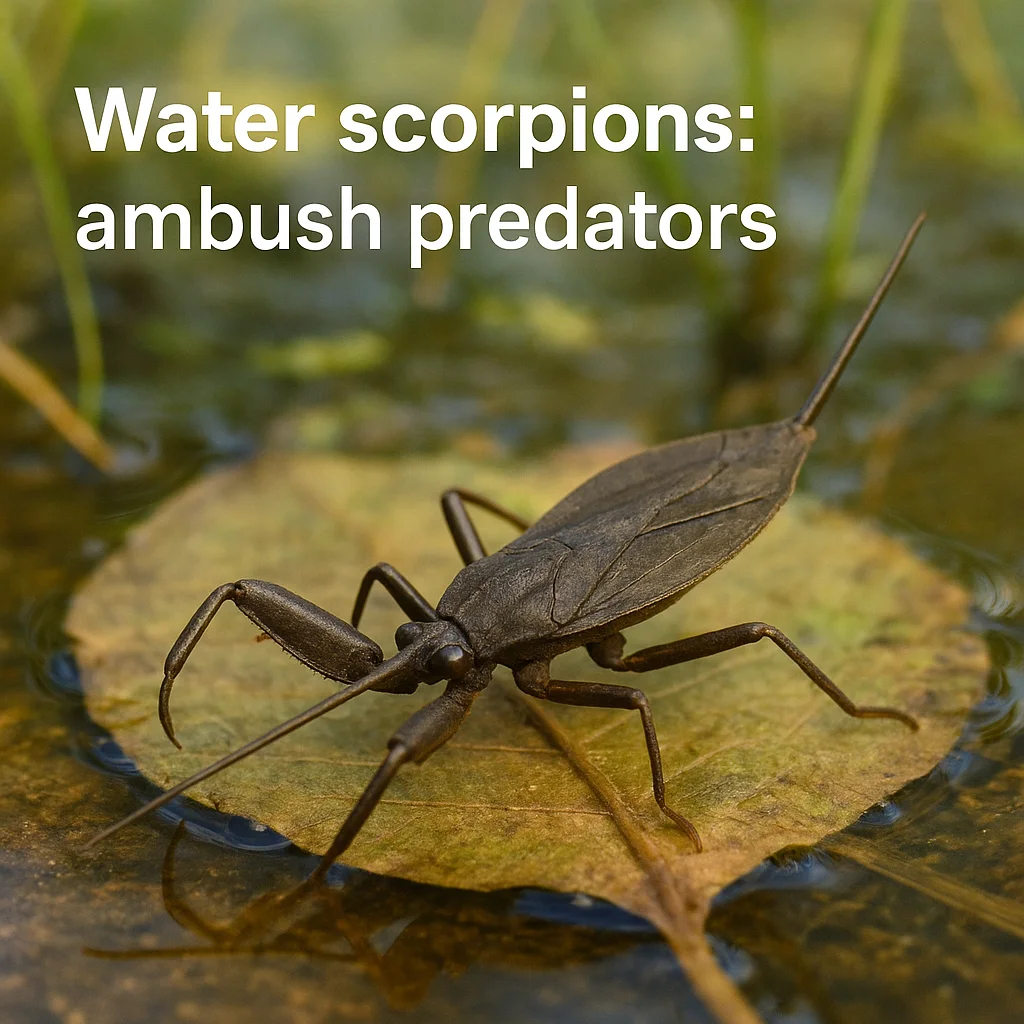
- Common names: Water scorpions
- Scientific name: Varies (commonly in the genus Ranatra or Nepa)
- Insect or not: Insect (arthropod, invertebrate)
- Order / Family: Hemiptera / Nepidae
- Typical size range: 2 to 7 cm in length
- Key colors/patterns: Brown, green, or gray with a slender body
- Activity: Primarily active during the day
- Typical habitats: Freshwater ponds, lakes, and slow-moving streams
- Where in the world it occurs: Found globally, especially in temperate and tropical regions
- Seasonality: Most visible during warmer months, varies by region
🔍 Identification
Recognizing water scorpions requires attention to their unique body structures. They have elongated, thin bodies and a tubular breathing siphon extending from their abdomen. These insects resemble twigs or plant stems, aiding in camouflage within their habitats.
- Body shape and silhouette: Long, slender with a visible siphon
- Antennae type: Short and not easily noticeable
- Wing features: Forewings are hardened and cover their membranous hind wings
- Leg traits and movement style: Raptorial forelegs for grabbing prey, hind legs for swimming
- Distinguishing look-alikes: May be confused with true scorpions or stick insects
🧠 Basic Body Structure
The basic body structure of a water scorpion follows the typical insect anatomy, including a distinct head, thorax, and abdomen. These insects possess six legs and an exoskeleton, which they periodically molt as they grow. Although they have wings, they are primarily adapted for breeding and dispersal.
As invertebrates, water scorpions rely on their exoskeleton for structural support and protection.
🌍 Habitat & Distribution
Water scorpions thrive in aquatic habitats such as freshwater ponds, lakes, and slow-moving streams. They prefer environments with abundant plant debris where they can easily camouflage. Their geographic range spans temperate and tropical regions worldwide, adapting to varying climatic conditions.
Changes in habitat such as pollution and wetland drainage can impact their populations, making them less common in heavily altered environments.
📅 Seasonal Appearance & Activity
Water scorpions are primarily seen during the warmer months when they are most active. They are typically diurnal creatures, meaning they are active during the day, although regional differences may influence this pattern. Temperature and water levels in their habitats also play roles in their visibility.
- Best Time to Spot It: Spring and summer months
- During daylight hours
- In warmer climates, activity may continue late into fall
- Occasionally seen in early evenings
- After rainfall in marshy areas
🥚 Reproduction & Egg-Laying
The mating behavior of water scorpions involves a male grasping a female with his forelegs. Females lay eggs in aquatic environments, often attaching them to submerged plant stems or logs. The number of eggs laid can vary, and dependence on water conditions influences their reproductive success.
🌀 Metamorphosis & Life Cycle
Water scorpions undergo incomplete metamorphosis, consisting of three stages: egg, nymph, and adult.
During the egg stage, eggs are usually laid in clusters and may take several weeks to hatch depending on water temperature. Nymphs resemble adults but lack full wing development, growing and molting several times. They use their specialized forelegs to capture aquatic prey, such as small fish and insects. Adult water scorpions reach full maturity after their final molt and continue their predatory lifestyle while searching for mates.
🍽️ Diet & Feeding Behavior
Water scorpions are predatory insects that feed on a variety of aquatic organisms, including small fish, tadpoles, and other aquatic insects. They possess piercing-sucking mouthparts that allow them to inject enzymatic saliva into their prey, liquify the tissues, and then ingest the nutrient-rich fluids.
Their role as predators helps control populations of other aquatic life, maintaining a balanced ecosystem.
🦉 Predators & Defense
Water scorpions have several natural predators, including birds, larger fish, and amphibians. Their primary defense mechanisms include camouflage, resembling twigs or plant debris to avoid detection. When threatened, they can also use the sharp spines on their forelegs as a deterrent.
- Defense Highlights: Camouflage
- Threatening posture with forelegs
- Hiding among aquatic plants
- Rapid diving movement
👥 Social Behavior & Swarms
Water scorpions are generally solitary creatures. They do not form colonies or swarms, and interactions among them are mostly limited to mating. Their solitary nature means they establish individual territories and often compete for resources within their aquatic niches.
🧭 Senses & Communication
Water scorpions have fairly developed senses that aid in their predatory lifestyle. They possess moderate vision and are sensitive to vibrations within the water, which helps them detect prey. Communication between individuals primarily occurs through tactile interactions and possibly chemical signals during mating.
🌱 Role in the Ecosystem
As aquatic predators, water scorpions play a significant role in controlling other insect populations, contributing to the balance of aquatic ecosystems. They also serve as prey for larger animals, integrating into the food webs of their habitats. Changes in water quality and habitat structure can impact their ecological roles significantly.
📉 Population & Conservation Notes
Water scorpions are commonly found in suitable freshwater environments, but some populations may be at risk due to habitat degradation, pollution, and the effects of climate change. Maintaining healthy wetland habitats is essential for their preservation.
- How to Help (Low-Impact): Preserve wetland habitats
- Avoid pesticides in aquatic environments
- Support conservation efforts for freshwater bodies
- Encourage native plant growth near water bodies
⚠️ Human Interaction & Safety
While water scorpions have a fearsome name, they pose little threat to humans. They can deliver a mild bite if handled improperly, but it is generally not harmful. If bitten, it is recommended to wash the area with water, avoid scratching, and seek professional advice if there is a severe reaction.
When observing water scorpions, it is best to do so respectfully without disturbing their natural behaviors, and refrain from collecting them from their habitats.
📌 Summary
- Water scorpions are aquatic predators resembling twigs
- Found globally in freshwater habitats
- Active mostly in spring and summer during the day
- Undergo incomplete metamorphosis
- Feed on aquatic insects and small vertebrates
- Natural predators include birds and fish
- Solitary with limited social behavior
- Play key roles in aquatic ecosystems
- Common but affected by water quality
- Pose minimal risk to humans; observe without interference