🕷️ Are water bugs dangerous? (real risk)
🧾 Quick Facts
Water bugs are a diverse group of insects that inhabit aquatic environments. Their potential danger to humans varies depending on the species.
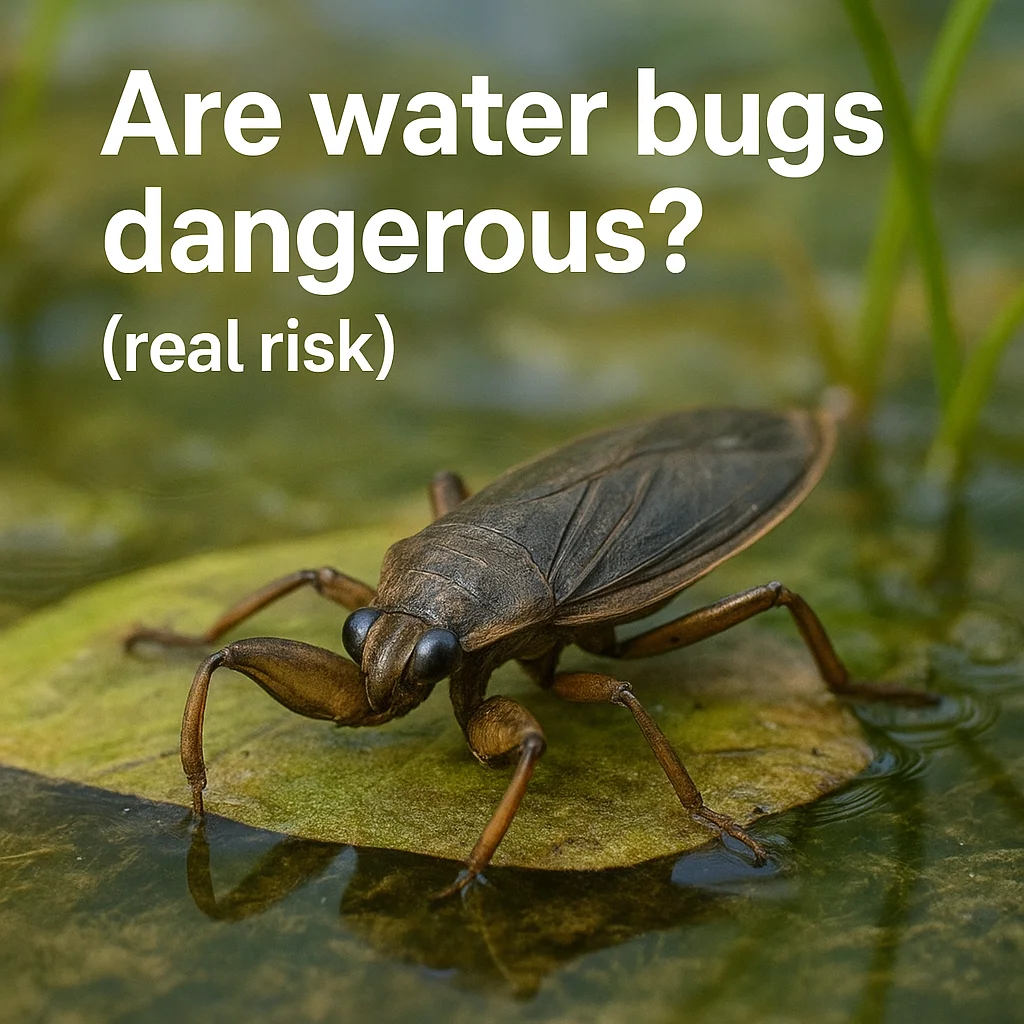
- Common names: Water bug, Giant water bug, Toe biter
- Scientific name: Varies (includes family Belostomatidae)
- Insect status: Yes, water bugs are insects and thus invertebrates
- Order / family: Hemiptera / Belostomatidae
- Typical size range: 2 cm to 12 cm (adult)
- Key colors/patterns: Brown, gray, sometimes mottled with aquatic camouflage
- Activity: Mostly nocturnal
- Typical habitats: Freshwater pools, streams, ponds, lakes
- Where in the world it occurs: Globally, in suitable aquatic habitats
- Seasonality: Varied; adult sightings peak in warmer months
🔍 Identification
Water bugs can be recognized by their large, flat, and oval bodies. They have short, stumpy antennae and powerful front legs adapted for grabbing prey. Their hind legs are flattened for swimming.
- Body shape and silhouette: Broad, flat oval
- Antennae type: Short, often hard to see
- Wing features: Folded over the back, may be visible
- Leg traits and movement style: Strong front legs for grasping, swimming hind legs
- Distinguishing look-alikes: Often confused with cockroaches and beetles
- Top ID Tips:
- Look for strong, claw-like forelegs
- Check for a flat, oval body in water
- Observe swimming motion; hind legs resemble oars
- Not typically iridescent or shiny
- No jump or leap ability; crawls and swims
- Often hides under debris or rocks in water
🧠 Basic Body Structure
The water bug is a typical insect with a body divided into three parts: the head, thorax, and abdomen. It has six legs covered by a tough exoskeleton that provides protection and structure. This structure allows them to molt as they grow.
Water bugs are invertebrate creatures meaning they do not have a backbone. Instead, they rely on their exoskeleton for support and protection.
🌍 Habitat & Distribution
Water bugs thrive in freshwater environments including ponds, lakes, marshes, and slow-moving streams. They often inhabit areas with abundant vegetation where they can hide and hunt.
Globally, they are found in warm regions with suitable aquatic habitats. Changes in water levels, pollution, and temperature can affect their distribution and abundance.
📅 Seasonal Appearance & Activity
Water bugs are primarily nocturnal and most active during the warmer months. Their visibility is influenced by temperature, water availability, and humidity.
- Best Time to Spot It:
- Warm, summer nights
- In the twilight or nighttime hours
- Northerly regions during late spring and summer
- Near shorelines of fresh water bodies
🥚 Reproduction & Egg-Laying
Mating involves complex behaviors where males often carry eggs on their backs, ensuring their security and aeration. Females lay eggs on plants, rocks, or directly onto a male’s back depending on the species.
Egg count and reproductive strategies can vary significantly between species, with some females laying a few large eggs and others many small ones.
🌀 Metamorphosis & Life Cycle
Water bugs undergo incomplete metamorphosis with three stages: egg, nymph, and adult. The nymphs resemble adults but are smaller and lack fully developed wings. They molt several times as they grow, living in similar habitats to the adults.
The nymphal stage lasts several weeks to months, depending on environmental conditions, during which they feed and grow before reaching maturity.
🍽️ Diet & Feeding Behavior
Water bugs are opportunistic predators and scavengers. They feed on small fish, amphibians, and other aquatic insects. They use piercing-sucking mouthparts to inject digestive enzymes into prey, then suck out the liquefied contents.
As impactful predators, they help control populations of various aquatic organisms.
🦉 Predators & Defense
Common predators include fish, birds, and larger aquatic insects. Water bugs defend themselves with camouflage, their formidable front legs, and a powerful bite, which while not life-threatening to humans, can be painful.
- Defense Highlights:
- Strong, defensive forelegs
- Camouflage with water surfaces
- Swift swimming escape
- Can bite if handled
👥 Social Behavior & Swarms
Water bugs are generally solitary except during mating. They do not form colonies or swarms and typically tolerate only temporary aggregations during favorable feeding conditions.
🧭 Senses & Communication
Water bugs rely on vision and vibrations for detecting prey and danger. Their sense of smell and taste help locate food, while touch is vital for hunting and mating. Communication among these insects is minimal, primarily related to mating and aggression.
🌱 Role in the Ecosystem
As predators, water bugs play a critical role in regulating populations of aquatic insects and small fish. They serve as prey for higher trophic levels, contributing to a balanced ecosystem. Additionally, they may unknowingly assist in pollination when they move through flowers seeking nectar.
📉 Population & Conservation Notes
Water bugs are not typically threatened species and are often found in common freshwater habitats. However, factors like habitat destruction, pollution, and climate changes pose threats to local populations.
- How to Help (Low-Impact):
- Protect wetland habitats
- Limit pollution and debris in water bodies
- Maintain natural vegetation around water edges
- Avoid pesticide use near aquatic habitats
⚠️ Human Interaction & Safety
Water bugs can bite if handled or threatened, causing mild pain. It's advisable to respect their habitat and observe from a distance. If a bite occurs, clean the area, avoid scratching, and seek professional advice if irritation persists.
Encouraging respectful observation contributes to understanding and preserving aquatic ecosystems without disrupting wildlife.
📌 Summary
- Water bugs belong to the family Belostomatidae and are commonly found in freshwaters worldwide.
- They're identifiable by their flat, oval bodies and grasping front legs.
- Most active during warm, nocturnal periods.
- Reproduction involves unique egg-carrying behaviors by males.
- They undergo incomplete metamorphosis with nymphs resembling small adults.
- Predators of small aquatic animals, they prevent overpopulation.
- Defense includes biting, camouflage, and rapid swimming.
- Solitary except during mating; minimal communication.
- Crucial in food webs, serving both as predator and prey.
- Painful bite potential, care advised during observation.