🕷️ Aquatic bug habitats: ponds and streams
🧾 Quick Facts
Aquatic bugs are fascinating creatures found in the small, yet vibrant environments of ponds and streams. They play an essential role in the ecosystem, participating in food chains and contributing to the biodiversity of their habitats. These bugs can vary significantly in appearance and behavior, making them a diverse group worth exploring.
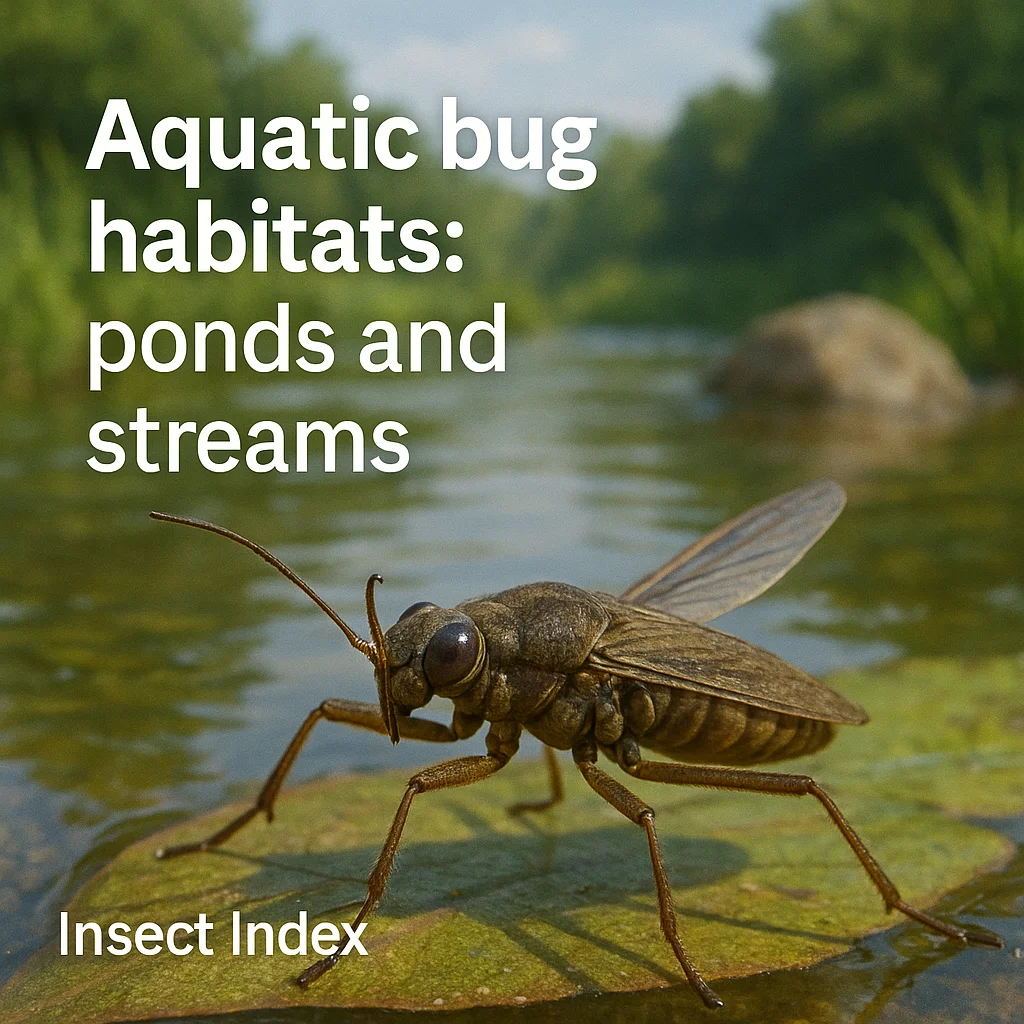
- Common names: Water striders, backswimmers, water boatmen
- Scientific name: Varies (includes families such as Gerridae, Notonectidae, Corixidae)
- Insect or not: Insects, i.e., invertebrates with six legs
- Order / family: Varies (e.g., Hemiptera for true bugs)
- Typical size range: 1.5 mm to 30 mm (adult)
- Key colors/patterns: Brown, green, black; often camouflaged
- Activity: Mostly diurnal; some nocturnal species
- Typical habitats: Freshwater ponds, streams, marshes
- Where in the world it occurs: Worldwide, in freshwater regions
- Seasonality: Spring to autumn in temperate zones; variable in tropics
🔍 Identification
Aquatic bugs are recognized by their body shape and movement on water surfaces. Generally, they have streamlined, elongated bodies adapted for life in or on water. The antennae can be short and unobtrusive to get the best of their hydrodynamic form.
Wings are common, though their use varies: one species might glide over the water surface, while another flies to disperse between water bodies. Legs are particularly adapted with long, hydrophobic hairs for easy gliding or swimming.
While they might be confused with beetles or other insects, true aquatic bugs have sucking mouthparts rather than chewing mandibles.
- Long, slender body, often hydrodynamic
- Short, tucked-in antennae
- Some species have two pairs of wings
- Legs adapted for skating or swimming
- May appear similar to beetles but lack hardened wing covers
- Presence of piercing-sucking mouthparts
🧠 Basic Body Structure
Aquatic bugs, like other insects, are divided into three main parts: the head, thorax, and abdomen. They have six jointed legs, which are crucial for their movement across water surfaces and in swimming contexts. These insects are equipped with an exoskeleton that supports and protects their soft internal organs. Periodic molting is necessary for growth as they shed the exoskeleton and form a new one.
As invertebrates, aquatic bugs lack a backbone, making their structure dependent on the strength and flexibility provided by their exoskeleton.
🌍 Habitat & Distribution
Aquatic bugs can be found in tranquil freshwater habitats such as ponds, slow-moving streams, marshes, and wetlands. They thrive in areas where water is abundant and relatively still, often inhabiting the vegetation at the water's edges, which offers shelter and hunting grounds.
Their distribution is global, from temperate to tropical climates. Fluctuations in local climate and habitat changes like pollution can significantly affect their ability to thrive and be observed.
📅 Seasonal Appearance & Activity
Aquatic bugs are most visible during warmer months. In temperate zones, they emerge in spring, peaking in summer, and continue until early autumn. Many are diurnal, actively hunting during the day when the sun enhances their capacity to navigate the water.
- Visible from spring to early autumn
- Activity peaks during warmer months
- Diurnal activity is common
- Best seen in calm weather
- High visibility on warm, sunny days
🥚 Reproduction & Egg-Laying
Aquatic bugs often engage in intricate courtship displays to attract mates. Some species exhibit striking uses of surface tension and vibration to signal readiness. Post-mating, females lay eggs on submerged plants or substrates. The number of eggs can vary from tens to hundreds, depending on the species and environmental conditions.
🌀 Metamorphosis & Life Cycle
Aquatic bugs undergo incomplete metamorphosis, developing through three stages: egg, nymph, and adult. Nymphs, which resemble small adults but without wings, are aquatic and feed in the same way as adults. This stage can last from a few weeks to several months, depending on the availability of food and environmental conditions.
Once they mature through several molts, they develop into adults. Adults are capable of reproduction and often develop wings to migrate to new habitats.
🍽️ Diet & Feeding Behavior
Aquatic bugs are primarily predators, utilizing piercing-sucking mouthparts to feed on other invertebrates. Some are opportunistic scavengers. Nymphs and adults may feed on different prey sizes; while adults attack larger prey, nymphs focus on smaller organisms.
Their role as predators helps control populations of other aquatic insects, maintaining ecological balance.
🦉 Predators & Defense
Aquatic bugs have many natural enemies, including birds, fish, frogs, and larger insects. Their primary defense mechanisms include camouflage to blend with the aquatic environment and quick darting movements to evade capture. A few may emit unpleasant chemicals to deter predators.
- Use camouflage for concealing
- Quick movements to escape
- Emits chemicals as a defense
- Relies on water surface tension for movement advantage
👥 Social Behavior & Swarms
Most aquatic bugs are solitary, with short interactions for mating or territorial disputes. However, some species can be seen in loosely associated groups where resources are ample. Swarming is not typical, though mass movements can occur when searching for new water bodies in dry conditions.
🧭 Senses & Communication
Aquatic bugs have adapted vision and tactile senses to navigate water surfaces. They communicate through vibrations that they create on the water's surface, effectively transmitting signals among conspecifics or signaling to potential mates.
🌱 Role in the Ecosystem
Aquatic bugs are crucial in controlling populations of other invertebrates, thus maintaining ecosystem balance. They are also food sources for numerous animals, linking aquatic and terrestrial food webs. Their presence indicates healthy water systems.
Some aquatic bugs have mutualistic relationships with water plants, which provide habitats and surfaces for egg-laying.
📉 Population & Conservation Notes
Aquatic bugs are generally common in suitable habitats, but their populations can decline due to habitat loss, pollution, or climate change. Freshwater conservation, monitoring of pollution, and reducing pesticide runoff are crucial for maintaining their populations.
- Plant native aquatic vegetation
- Avoid pesticides near water bodies
- Support wetland conservation efforts
- Engage in citizen science for monitoring
⚠️ Human Interaction & Safety
Aquatic bugs are harmless to humans and do not bite unless provoked or mishandled. It's advisable to observe them respectfully in their natural habitats to prevent stress or harm to the insects.
In case of any irritation from handling, wash the affected area and avoid scratching. Seek professional advice if a severe reaction occurs.
📌 Summary
- Aquatic bugs are diverse, thriving in ponds and streams
- Identified by streamlined bodies and surface-skimming legs
- Most active from spring to autumn; mainly diurnal
- Reproduce by laying eggs on water plants
- Undergo incomplete metamorphosis
- Predators that help balance ecosystems
- Camouflage and darting movements for defense
- Essential for aquatic food webs and biodiversity
- Conservation needed due to habitat loss and pollution
- Harmless and should be observed respectfully