🕷️ Kissing Bugs What They Are And Safety Basics
🧾 Quick Facts
Kissing bugs, also known as conenose bugs, are intriguing insects with a presence spanning several continents. Widely recognized for their feeding habits, they play a unique role in their ecosystems. Below are some essential facts about these insects.
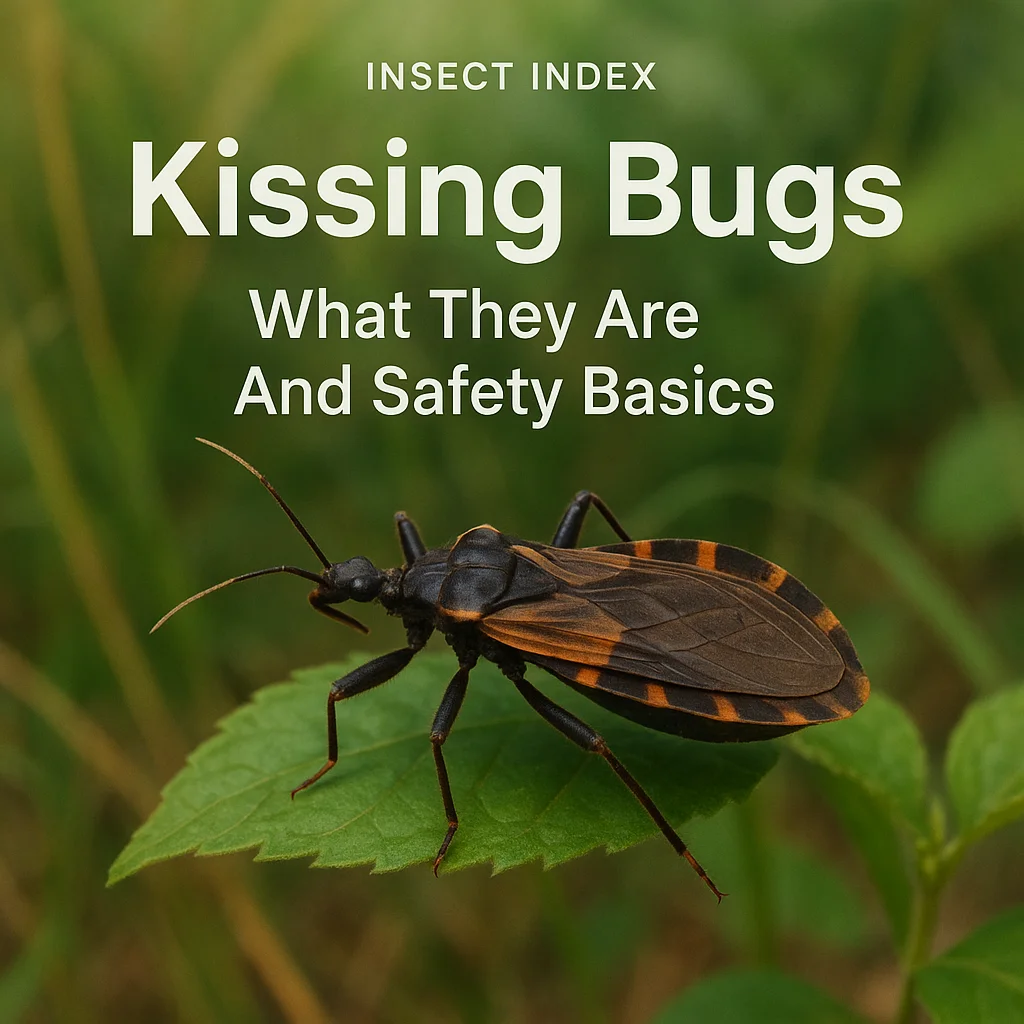
- Common Names: Kissing bugs, conenose bugs, vampire bugs
- Scientific Name: Varies (Triatominae subfamily)
- Insect or Not: Insect; a member of the invertebrate class
- Order / Family: Hemiptera / Reduviidae
- Typical Size Range: 12 to 35 mm (adult)
- Key Colors/Patterns: Brown or black with potential red, orange, or yellow stripes or markings
- Activity: Mostly night (nocturnal)
- Typical Habitats: Forests, grasslands, domestic areas
- Where in the World It Occurs: Primarily in the Americas, from the southern United States to parts of South America
- Seasonality: Most active during warm months
🔍 Identification
Kissing bugs can be identified by their distinct shape and markings. Their body is characteristically elongated with a pointed head.
- Body Shape and Silhouette: Oval-shaped, slightly flattened body with a pointed head
- Antennae Type: Long, slender antennae that are proportionate to their body length
- Wing Features: Wings lie flat over the body, with a noticeable border, crossing colors visible when spread
- Leg Traits and Movement Style: Long legs with grasping capabilities, generally moving with a slow, deliberate crawling motion
- Distinguishing Look-Alikes and Common Confusion: May be confused with non-biting insect species such as stink bugs
- Top ID Tips
- Look for their prominent proboscis
- Note the pointed head, unlike other similar bugs
- Inspect the markings; often vibrant along edges
- Observe hiding during the day in secluded areas
- Check for coloration and size differences among species
- Discover them near resting areas of potential prey (mammals)
🧠 Basic Body Structure
Kissing bugs, like all true insects, have a three-part body plan consisting of a head, thorax, and abdomen. They possess six legs and an exoskeleton that offers protection and structural support. As invertebrates, they lack a spine. Their body undergoes molting to grow, shedding old exoskeleton layers. A notable feature includes their wings, lying flat on their back when at rest, and they may or may not use these for flight.
🌍 Habitat & Distribution
Kissing bugs thrive in a variety of environments, adapting from natural biomes to human-altered landscapes. They inhabit forested areas, grasslands, and even urban settings, where they can find hosts and shelter. Their microhabitats often include hiding under bark, in rodent nests, or within human-made structures. Geographically, they are prevalent in the Americas, especially in warmer climates. Changes in habitat due to urbanization and climate shifts may impact their sightings and distribution.
📅 Seasonal Appearance & Activity
These bugs are predominantly active during warmer seasons due to their nocturnal habits, as they seek prey during the night. Environmental factors such as temperature and humidity greatly impact their activity, favoring warm, humid nights.
- Best Time to Spot It
- Warm months in temperate zones
- Nocturnal searches late at night
- After warm rainy spells
- In areas where mammals rest overnight
🥚 Reproduction & Egg-Laying
Kissing bugs engage in fairly secretive mating practices, which can take place in a range of secluded environments. The female typically lays eggs in hidden areas such as cracks and crevices in human habitations or in the wild. The number of eggs laid per clutch can vary significantly depending on species and environmental conditions, though collective egg-laying figures can be substantial due to ongoing reproductive cycles.
🌀 Metamorphosis & Life Cycle
Kissing bugs undergo incomplete metamorphosis, featuring three distinct stages: egg, nymph, and adult.
The egg stage spans a couple of weeks, usually in safe, sheltered places. Nymphs emerge and go through several molts over some months, needing blood meals to transition through stages. They generally reside close to their host's sleeping areas. Upon reaching adulthood, their habitat choices largely expand. The adult phase encompasses most of their active life as they reproduce and feed extensively.
🍽️ Diet & Feeding Behavior
Kissing bugs primarily rely on piercing-sucking mouthparts to extract blood from vertebrates, including humans, various mammals, and birds. As they rely heavily on blood, they act as opportunistic feeders, seeking hosts from dusk until dawn.
🦉 Predators & Defense
Various animals, including certain birds, reptiles, amphibians, spiders, and other insects, prey upon kissing bugs. They employ several defense strategies, such as avoiding detection by hiding during the day and utilizing chemical signals to deter predators.
- Defense Highlights
- Use camouflage effectively in shadows
- Secrete chemicals to repel attacks
- Enhance survival by being nocturnal
- Escape predators by swiftly retreating into crevices
👥 Social Behavior & Swarms
Kissing bugs are mostly solitary but will congregate in favorable habitats, particularly if resources are abundant. Mating encounters and feeding locations occasionally bring them together, but they do not form complex social structures or swarms.
🧭 Senses & Communication
Kissing bugs heavily rely on their keen sense of smell to locate hosts, using pheromones and other chemical cues to navigate the environment. Their vision, while present, is less emphasized in dark conditions. Communications are nonsocial, primarily involving detection and evasive actions.
🌱 Role in the Ecosystem
In ecosystems, kissing bugs play both beneficial and challenging roles. They function as part of the food web, serving as prey to many predators. However, as blood-feeders, they can carry diseases affecting livestock and humans. Despite this, their presence indicates a stable predator-prey balance in their ecosystems.
📉 Population & Conservation Notes
While kissing bugs are common in their suitable habitats, exact population dynamics are less documented due to their varied distribution and secretive lifestyles. Broad attention to habitat management, consistent damp environments, and limiting insecticide usage could foster balanced populations.
- How to Help (Low-Impact)
- Plant native species to support natural balances
- Avoid using broad-spectrum insecticides
- Encourage uncontrolled, untouched natural refugia
- Maintain environmental conditions conducive to biodiversity
⚠️ Human Interaction & Safety
Kissing bugs can bite when seeking blood meals; however, their bites often go unnoticed. Simple first-aid measures include washing the affected area and avoiding scratching. If a severe reaction occurs, seeking professional advice is recommended. Observing these insects should be done respectfully, without capturing or harming them in their natural surroundings.
📌 Summary
- Kissing bugs are notable blood-feeding insects from the Triatominae subfamily
- These insects inhabit varied environments and display marked nocturnal activity
- Identifying them involves recognizing elongated shapes and distinct proboscis
- Their life cycle comprises egg, nymph, and adult stages, feeding chiefly on blood
- They face prey-driven threats from various animals and exert camouflaged defenses
- Handling potential human-wildlife conflicts entails non-intrusive observation methods
- Ecosystem roles include positions in food webs, with both pros and cons for nearby habitats
- Conservation options focus on supportive natural habitats and avoiding chemical interventions