🕷️ How to remove stink bugs without smell
🧾 Quick Facts
Stink bugs, part of the family Pentatomidae, are common around the world and known for their unique defense mechanism: the release of an unpleasant odor when threatened. Here are some quick facts about these fascinating creatures:
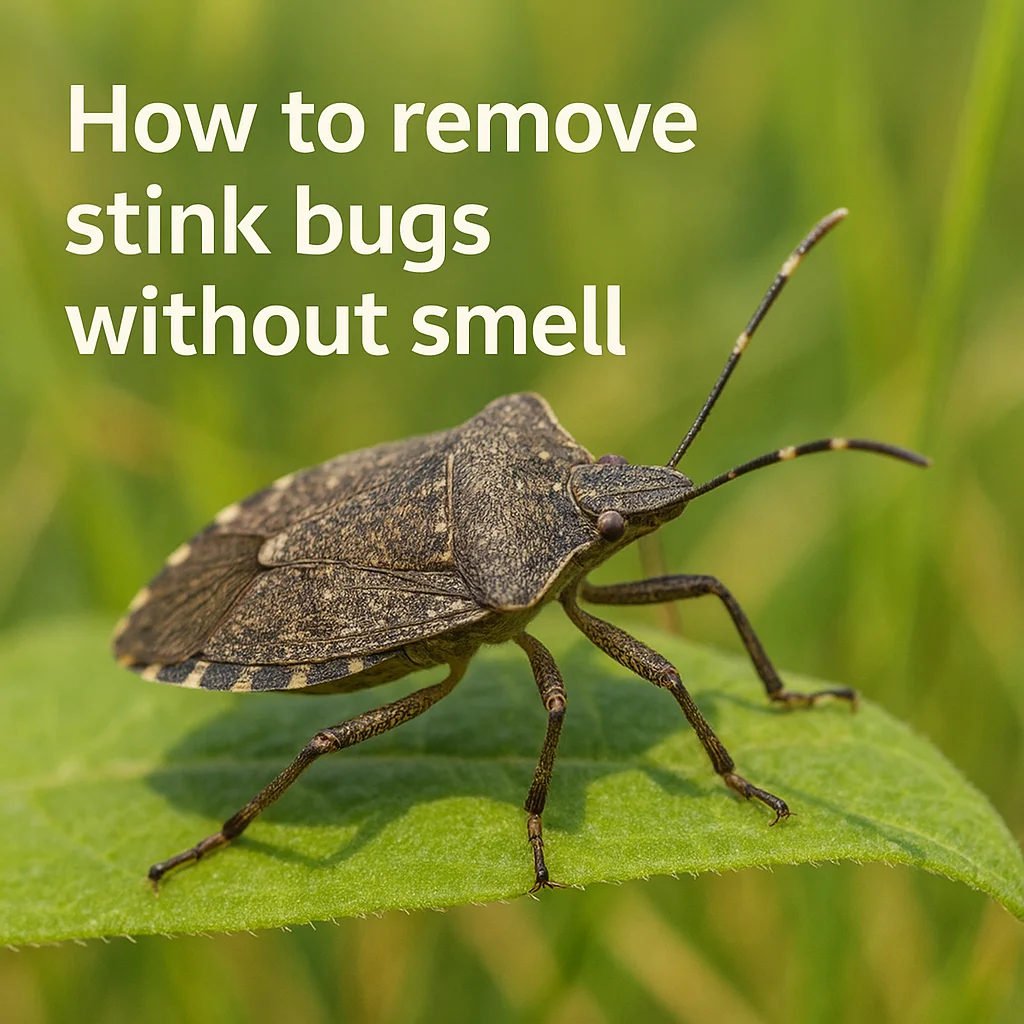
- Common Names: Stink bugs, Shield bugs
- Scientific Name: Varies by species
- Insect or Not: Yes, they are insects, specifically invertebrates
- Order / Family: Hemiptera / Pentatomidae
- Typical Size Range (Adult): 12-17 mm in length
- Key Colors/Patterns: Green, brown, marbled; often with distinct shield shape
- Activity: Mostly diurnal (active during the day)
- Typical Habitats: Gardens, fields, forests, urban areas
- Where in the World It Occurs: Found globally, particularly in temperate and subtropical regions
- Seasonality: Most visible from spring through fall
🔍 Identification
Stink bugs are easily recognizable by their distinct shield-like body shape. They have long, segmented antennae and a set of membranous wings that lie flat over their backs at rest, often overlapping to form an 'X' pattern. Their legs are built for walking and climbing rather than jumping or running.
Though they may be confused with other bugs, stink bugs can be distinguished by their wide abdomen and the presence of stink glands. Some may mistake them for other members of Hemiptera, like the similar-looking leaf-footed bugs.
- Top ID Tips:
- Look for a shield-shaped body.
- Notice the distinct 'X' pattern on their backs.
- Check for long, segmented antennae.
- Observe the horizontal movement style.
- Identify by their characteristic odor when disturbed.
- Distinguish from closely related bugs by their broader bodies.
🧠 Basic Body Structure
Like all insects, stink bugs possess a three-part body structure: head, thorax, and abdomen. They have six legs and an exoskeleton, which is a hard outer layer that provides protection and support. As stink bugs grow, they undergo molting, shedding their exoskeleton to accommodate their increased size. They have wings that allow for flight, though they may not always exhibit this behavior.
Stink bugs are invertebrates, meaning they lack a spine. Instead, their rigid exoskeleton acts as a supportive framework for their bodies.
🌍 Habitat & Distribution
Stink bugs thrive in a wide range of environments, from temperate forests and grasslands to urban gardens and fields. They are often found on the undersides of leaves or amongst the foliage of various plants. Microhabitats include the crevices of bark, within leaf litter, and on plant surfaces. Their distribution is global, with a notable presence in North America, Europe, Asia, and parts of Africa, favoring temperate to subtropical climates.
Human-altered landscapes, such as agriculture and urban areas, influence sighting frequencies, as stink bugs are attracted to a variety of crops and garden plants.
📅 Seasonal Appearance & Activity
Stink bugs are most frequently observed from spring to fall. They are diurnal insects, typically active during the daylight hours. Weather conditions such as warm temperatures and moderate humidity can increase their activity, while colder weather signals them to seek shelter for overwintering.
- Best Time to Spot It:
- Spring months for emerging adults.
- Late summer to early fall for observation in gardens.
- Sunny days when they actively feed.
- Crisp autumn evenings as they seek warm shelter.
🥚 Reproduction & Egg-Laying
Stink bugs exhibit a relatively straightforward mating process, primarily driven by pheromone signals that help males locate receptive females. Courtship occurs through a combination of scent cues and vibrational signals. Female stink bugs typically lay eggs on the undersides of leaves, attaching neat clusters in a grid-like pattern.
Egg counts can vary significantly depending on species and environmental conditions, with many species depositing tens to hundreds of eggs across several clusters during a season.
🌀 Metamorphosis & Life Cycle
Stink bugs go through incomplete metamorphosis, comprising three stages: egg, nymph, and adult. After hatching, nymphs resemble smaller, wingless versions of adults and gradually develop through several molts. Nymphs primarily feed on plant juices and gradually grow over weeks or months, depending on environmental conditions.
Adulthood is reached after the final molt, at which point stink bugs develop fully functional wings and reproductive capabilities. Adults continue to feed on plants while seeking mates to continue the cycle.
🍽️ Diet & Feeding Behavior
Stink bugs are primarily herbivores, using their piercing-sucking mouthparts to extract juices from a vast range of plants. They play a notable role in agricultural systems, as they can target various crops, including fruits, vegetables, and ornamentals. During their nymph stages, stink bugs feed similarly to adults, focusing on fruits and leaves.
While their diet largely consists of plant material, certain species may occasionally exhibit opportunistic feeding behaviors as scavengers on dead or decaying matter.
🦉 Predators & Defense
Among their natural enemies, stink bugs face predation from birds, spiders, and some species of small mammals. To defend themselves, stink bugs release a pungent odor through specialized glands, deterring many of these predators. They also rely on their distinctive shield shapes and drab colors for camouflage against plant surfaces.
- Defense Highlights:
- Release of a foul-smelling chemical.
- Camouflage within foliage.
- Hard exoskeleton provides physical protection.
- Ability to drop to the ground when threatened.
👥 Social Behavior & Swarms
Stink bugs are solitary insects that typically interact with others primarily for mating. They can sometimes gather in larger groups, especially during overwintering, when they aggregate in sheltered locations to hibernate through cold months. This behavior is triggered by environmental cues such as changing temperatures and daylight hours.
🧭 Senses & Communication
Stink bugs utilize a variety of senses to navigate their environment. They rely on vision to locate host plants and detect movement. Chemical communication through pheromones plays a crucial role in mating, helping potential partners find each other. Stink bugs also employ vibrational signals during courtship, which are transmitted through plant material to communicate with mates.
🌱 Role in the Ecosystem
In the ecosystem, stink bugs serve as both consumers and prey. By feeding on plants, they can influence plant populations and dynamics. Additionally, they are prey for a range of animals, integrating them into the broader food web. While they may also act as occasional pollinators, their most significant ecological role remains their impact on plant health and as a food source for predators.
Though often seen as pests in agriculture due to their feeding on crops, stink bugs can also contribute to pest control by preying on other harmful insect species.
📉 Population & Conservation Notes
Stink bugs are generally common and widely distributed in suitable habitats. However, local populations can fluctuate due to factors like pesticide use and habitat modification. While not considered endangered, data on specific population dynamics is limited, and abundance varies geographically.
- How to Help (Low-Impact):
- Plant native species to support local habitats.
- Avoid excessive use of pesticides where stink bugs are part of the ecosystem.
- Maintain natural leaf litter and vegetation in gardens.
- Encourage habitat diversity to naturally balance insect populations.
⚠️ Human Interaction & Safety
Stink bugs do not bite or sting humans, making them generally harmless. However, their odor can be an annoyance if they are crushed or mishandled. Should a reaction occur from touching or being around stink bugs, washing the affected area with soap and water is advisable. If symptoms persist, seeking medical advice is recommended.
It is important to observe stink bugs respectfully in nature, avoiding collection or handling that may harm them. Appreciating their role in the ecosystem underscores their importance beyond potential nuisances.
📌 Summary
- Stink bugs have a characteristic shield shape and produce a defensive odor.
- They inhabit a range of environments globally, especially temperate areas.
- These insects are most active from spring through fall, during the day.
- Stink bugs undergo incomplete metamorphosis: egg, nymph, adult.
- Their diet primarily includes plant juices, impacting crops.
- Predators include birds and spiders; defense includes odor release and camouflage.
- Part of the ecosystem's food web; impact both beneficially and detrimentally on agriculture.
- Considered common but face population pressures from habitat change and pesticide use.