🕷️ Common true bug look-alikes
🧾 Quick Facts
Common true bug look-alikes are a diverse group of insects and other invertebrates that mimic the appearance of true bugs. They exhibit various adaptations for survival across many habitats and regions.
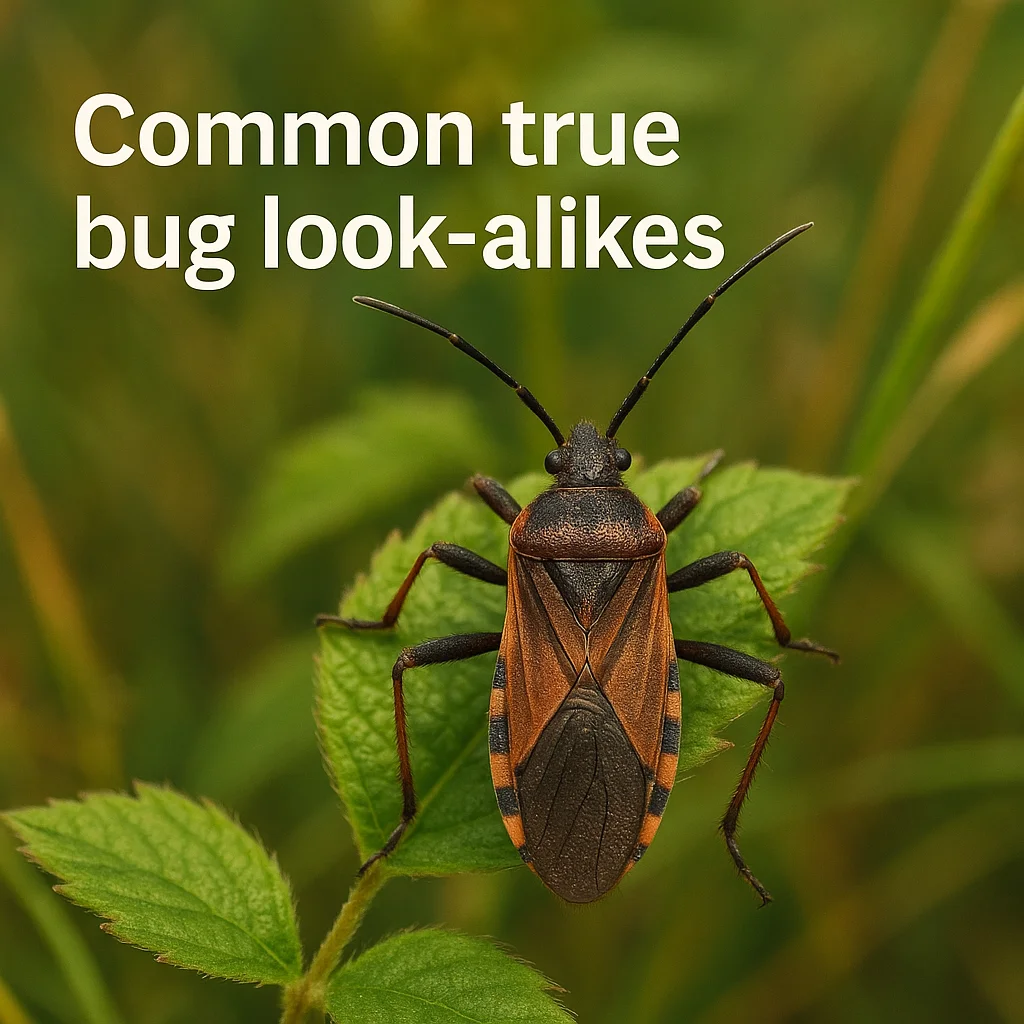
- Commonly known as: Variable by species
- Scientific name: Varies
- Insect status: Invertebrate (some may not be true insects)
- Order/Family: Varies
- Typical size range (adult): 3 mm to 25 mm
- Key colors/patterns: Mottled browns, greens, with some vibrant spots
- Activity: Mostly diurnal
- Typical habitats: Forests, grasslands, gardens, wetlands
- Geographical distribution: Worldwide, with concentration in temperate to tropical regions
- Seasonality: Spring to late summer, varies by species
🔍 Identification
Recognizing true bug look-alikes in the field can be challenging due to their diverse appearance and mimicry patterns. Typically, these insects have oval to elongated bodies with partially overlapping wings, and many have narrow, forward-projecting antennae. Look for differences in body size and leg positioning to distinguish them from true bugs.
- Top ID Tips:
- Check for an elongated or shield-like body shape
- Look for long, segmented antennae
- Observe wings, which may overlap slightly
- Notice the barbs on legs, which may aid in movement
- Compare with true bugs by looking at specific wing markings
- Examine movement—true bugs are slow compared to some mimic species
🧠 Basic Body Structure
These look-alike species typically have the fundamental body structure of insects with a head, thorax, and abdomen. They possess six legs attached to the thorax and a tough exoskeleton. Wings may be present and shed during growth. They are invertebrates, lacking a backbone.
🌍 Habitat & Distribution
Common look-alikes are adapted to a wide array of environments, such as forests, garden beds, and wetlands. They inhabit microhabitats including under logs, leaf litter, and among flowers. Their distribution is global, thriving in numerous climates. Habitat alteration due to human activity can affect their local abundance, creating pockets of high visibility.
📅 Seasonal Appearance & Activity
The majority of these species are active during the warmer months, when they are most likely to be spotted in their natural habitats. Temperature and humidity can influence their activity levels and visibility.
- Best Time to Spot It:
- Spring and summer months
- Warm, sunny days are ideal
- Look in early morning or late afternoon
- Check after light rain for increased activity
🥚 Reproduction & Egg-Laying
Mating behaviors among these look-alikes often involve courtship displays involving pheromones or visual signals. Eggs are laid in secure locations like plant stems, soil crevices, or under leaves. The number of eggs varies significantly from species to species, with some laying clusters and others a single egg.
🌀 Metamorphosis & Life Cycle
These insects undergo incomplete metamorphosis, transitioning from egg to nymph to adult. Nymphs resemble miniature adults but may have different coloration and lack wings. They are often found feeding in the same areas as adults, and their development time depends on environmental conditions.
Nymphs typically feed on the same plant species as the adults, relying on piercing or sucking mouthparts for nutrition. While the nymph stage duration can vary, it often spans several weeks. Adults again feed and reproduce to perpetuate the cycle.
🍽️ Diet & Feeding Behavior
Most of these look-alikes are herbivorous, using their piercing-sucking mouthparts to extract plant sap. They can also play roles as pollinators when visiting flowers for food. The diversity of their feeding habits ensures their role in the larger ecosystem, balancing plant populations and contributing to nutrient cycles.
🦉 Predators & Defense
These mimic insects face predation from various birds, reptiles, amphibians, spiders, and even small mammals. Their primary defenses include camouflage and mimicry, allowing them to blend in with foliage or appear threatening to predators. Some may produce chemical deterrents or rely on quick, erratic movements to evade danger.
- Defense Highlights:
- Camouflage against leaves and bark
- Mimicry of more dangerous species
- Quick, darting movements
- Occasional chemical sprays
👥 Social Behavior & Swarms
Most of these species lead solitary lives, with interactions limited to mating seasons. Some species may be attracted to lights at night, appearing in swarms. Climate conditions or food abundance can trigger mass movements, though this is rare and more characteristic of specific look-alikes.
🧭 Senses & Communication
Their primary senses include vision and smell, crucial for identifying plants and mates. Communication often involves releasing pheromones to signal territory or readiness to mate. Sound or vibration is less commonly used but may occur as part of defensive tactics or intraspecies signaling during mating.
🌱 Role in the Ecosystem
These insects play crucial ecological roles—pollinating plants, decomposing organic matter, and serving as a food source for other wildlife. Their presence is integral to maintaining plant health and supporting biodiversity. In agricultural areas, they can act as both beneficial pollinators and minor pests, depending on populations.
📉 Population & Conservation Notes
While many of these look-alikes are deemed common in suitable habitats, some face challenges due to habitat loss, pesticides, and climate change. Data specific to individual species is often limited, requiring localized study for accurate assessments.
- How to Help (Low-Impact):
- Encourage native plant growth in gardens
- Use organic pest control methods
- Preserve natural habitats like leaf litter
- Minimize light pollution at night
⚠️ Human Interaction & Safety
These insects typically do not bite or sting humans. If contact occurs, simple measures such as washing the area and avoiding irritation are sufficient. Seek professional advice if a severe allergic reaction is suspected. Observing these creatures respectfully in their natural settings is encouraged to preserve their populations.
📌 Summary
- Identification through shape, antennae, and wing features is important
- Found in varied habitats worldwide, from forests to wetlands
- Most active in warmer months; influenced by temperature
- Incomplete metamorphosis includes egg, nymph, and adult stages
- Primarily herbivorous, benefiting ecosystems as pollinators
- Camouflage and mimicry are key defensive strategies
- Solitary, with limited social interactions outside mating
- Contribute to plant health and food chains, with some agricultural impact
- Conservation actions focus on habitat preservation and chemical reduction