🕷️ Bed bugs: basics and prevention overview
🧾 Quick Facts
Bed bugs, often associated with human dwellings, are notorious for their persistence and adaptability. Although small in size, they are a significant pest worldwide.
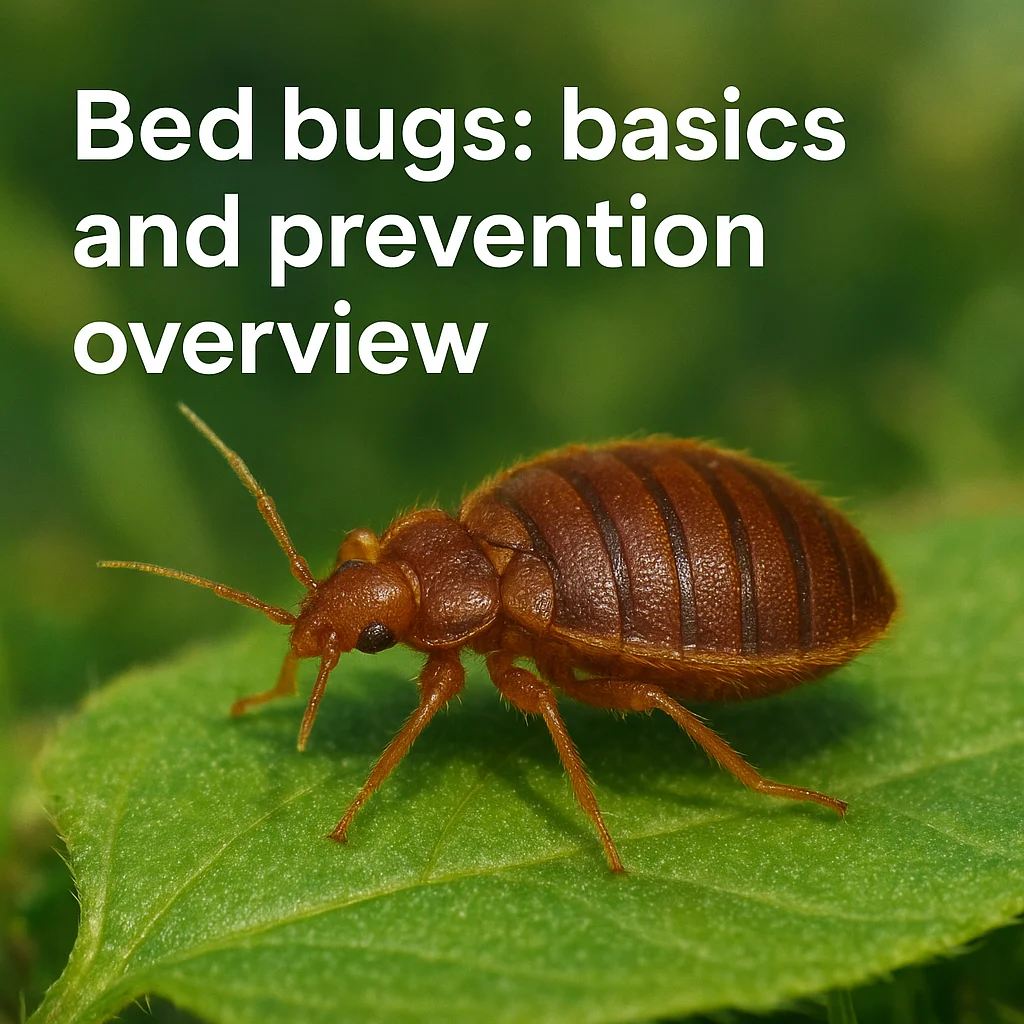
- Common names: Bed bug
- Scientific name: Cimex lectularius (varies by region and species)
- Insect or not: Yes, they are insects
- Order / family: Hemiptera / Cimicidae
- Typical size range: 4–5 mm (adult)
- Key colors/patterns: Reddish-brown, oval-shaped body
- Activity: Nocturnal
- Typical habitats: Human dwellings, especially beds, furniture, and cracks
- Where in the world it occurs: Worldwide, especially in temperate regions
- Seasonality: Indoor populations active year-round
🔍 Identification
Bed bugs are small, reddish-brown insects with flat, oval-shaped bodies, typically about the size of an apple seed. They lack wings but possess elongated, segmented antennae. Bed bugs are often confused with ticks or baby cockroaches due to their shape and size, but key distinctions include their notorious hospitability around human environments and lack of wings.
- Oval, flat body
- Small, typically 4–5 mm in length
- No wings, can't fly
- Segments visible with a close look
- Long, segmented antennae
- Reddish-brown in color
- Slow-moving, but quick to hide
🧠 Basic Body Structure
As insects, bed bugs have bodies divided into three main sections: head, thorax, and abdomen. They possess three pairs of legs, totaling six, like all true insects. Their exoskeleton provides protection and support, and like many insects, they undergo molting during their growth stages. Bed bugs are invertebrates, meaning they lack a vertebral column.
🌍 Habitat & Distribution
Bed bugs are highly adaptable and can survive in a range of environments but thrive in human dwellings where they have access to their preferred source of food: blood, predominantly from humans. They are commonly found in bedding, furniture, cracks, and crevices where they lay their eggs. Geographically, they are found worldwide, heavily concentrated in temperate climatic zones where human habitation is dense.
📅 Seasonal Appearance & Activity
Bed bugs are not particularly seasonal as they often reside indoors. However, their presence might be noted more frequently in warmer temperatures when human activities increase. Bed bugs are nocturnal, mainly active during the night when hosts are at rest.
- Most active and noticeable during nighttime
- Indoor habitats mean year-round appearances
- Increased sightings in warm weather due to human travel
- Prefer dark, hidden areas during the day
🥚 Reproduction & Egg-Laying
Reproduction in bed bugs involves a process known as traumatic insemination, where males pierce the female's abdomen to inseminate directly. Females lay eggs in secluded spots like mattress seams or in crevices. A single female may lay over 200 eggs in her lifetime, and eggs take approximately 6 to 10 days to hatch under optimal conditions, although these numbers can vary greatly.
🌀 Metamorphosis & Life Cycle
Bed bugs experience incomplete metamorphosis, evolving from egg to nymph, and finally to adult. In the nymph stages, bed bugs must feed on blood to advance to the next stage. Each nymphal stage takes about a week to complete under favorable conditions, and the entire life cycle from egg to adult can be completed in about a month.
Nymphs are smaller versions of adults, lighter in color, and gain their reddish-brown hue after feeding and throughout their molting process.
🍽️ Diet & Feeding Behavior
Bed bugs primarily feed on blood using piercing-sucking mouthparts. In their various life stages, they seek human hosts or other warm-blooded animals to obtain the nutrients required for development and reproduction. They feed at night, preferring exposed skin areas. Bed bugs are not predators or herbivores but are parasitic, relying on other organisms for sustenance.
🦉 Predators & Defense
Though not many predators target bed bugs specifically, generalist predators such as spiders, certain ants, and other insects might consume them. Bed bugs rely on hiding to defend themselves, primarily through rapid concealment in small spaces inaccessible to potential threats. They also limit their exposure by mostly acting under the cover of darkness.
- Camouflage by hiding in cracks
- Quickly retreat from light or disruption
- Resist pest control due to resistance in some populations
- No active defense mechanism like venom or stings
👥 Social Behavior & Swarms
Bed bugs are generally solitary travelers that only associate closely with others during mating and in aggregation for hiding. They do not form swarms but can rapidly infest an area due to easy reproduction and spreading capabilities.
🧭 Senses & Communication
Bed bugs have well-developed senses for locating hosts, especially relying on body heat and carbon dioxide emissions. They communicate mainly through chemical cues or pheromones to aggregate and mark territories. While vision is not well-developed, their chemoreceptors help them locate food sources effectively.
🌱 Role in the Ecosystem
In the natural ecosystem, bed bugs play a limited role due to their preference for human environments. However, they do serve as a minor part of the food web, providing sustenance for some predators. Their parasitic behavior places them in a unique niche largely shaped by their relationship with mammals, most notably humans.
📉 Population & Conservation Notes
Bed bugs are not considered at risk of extinction due to their vast worldwide presence and ability to adapt to human environments. They are often considered pests rather than a conservation concern. Effects of control measures vary, with increased resistance to pesticides a growing issue.
- Minimize clutter to reduce hiding spots
- Regular, thorough cleaning of living areas
- Seal potential entry points in homes
- Utilize non-chemical control measures where possible
⚠️ Human Interaction & Safety
Bed bugs do not transmit diseases but can cause irritation through their bites. Most bites result in red, itchy welts that may require no more than washing and avoiding scratching. In case of severe reactions or allergies, seeking professional medical advice is recommended. Observing bed bugs respectfully without attempting to collect them is advised, stressing the importance of not disturbing their natural habitat.
📌 Summary
- Bed bugs are small, reddish-brown insects typically found in human habitation areas.
- They are globally distributed, with higher incidences in temperate climates.
- Best visible at night, bed bugs hide in cracks and fabrics during the day.
- These insects undergo incomplete metamorphosis, requiring blood at all life stages.
- Human blood is their primary diet, employing piercing and sucking mouthparts for feeding.
- Predators include spiders and certain ants, while defense primarily involves hiding.
- They exhibit solitary behavior except during mating periods.
- Human interactions are common but mostly result in skin irritation.