🕷️ Cicada predators: birds and more
🧾 Quick Facts
Cicadas are an intriguing group of insects often known for their loud calls. This field guide profile provides an overview of their natural predators and more.
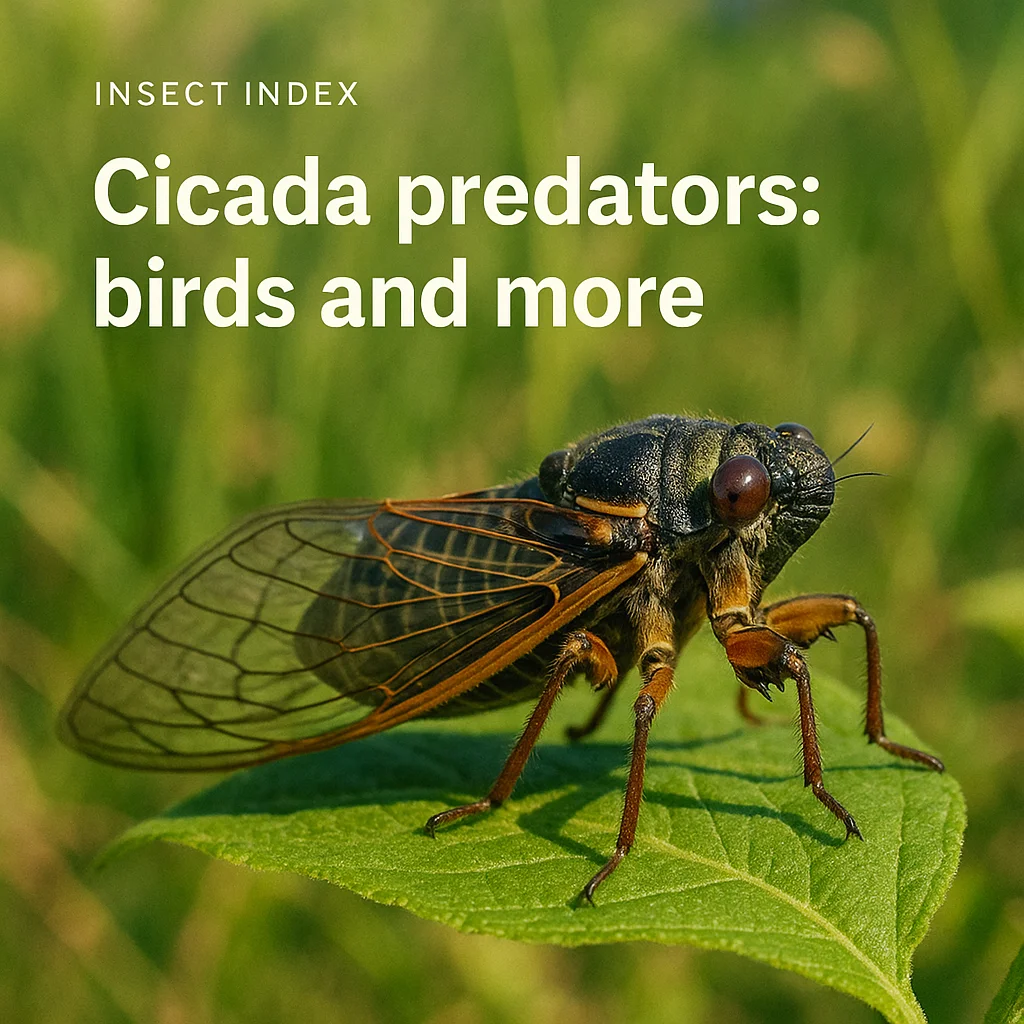
- Common names: Cicada killers, Cicada hawks
- Scientific name: Varies by specific predator
- Insect or not: Predators vary; both insects and other invertebrates, as well as vertebrates, prey on cicadas
- Order / family: Varies
- Typical size range: Predators range from tiny parasitoid wasps to larger birds
- Key colors/patterns: Predator colors depend on species
- Activity: Varies, though many are diurnal
- Typical habitats: Forests, gardens, and grasslands
- Where in the world it occurs: Predators of cicadas are found on all continents except Antarctica
- Seasonality: Mostly coincide with the emergence of adult cicadas
🔍 Identification
Identifying cicada predators involves understanding various characteristics they might possess. Their diverse nature requires focus on general features:
- Predators like birds have a streamlined body shape for flight
- Insects among them may have long antennae, useful for detecting prey
- Winged predators are adept flyers, with adaptations like powerful legs for hunting*
- Some insects mimic cicada appearance, aiding camouflage among prey
- Birds often feature keen eyesight crucial for spotting cicadas atop branches
- Top ID Tips:
- Look for birds of prey in trees during cicada emergence
- Note any wasps or large hornets actively hovering near ground cicadas
- Observe reptiles such as lizards in areas dense with cicadas
- Notice any mammals like raccoons or opossums foraging on cicadas during early morning or night
- Watch for hawks and other avian species adeptly snatching cicadas in flight
🧠 Basic Body Structure
Predators targeting cicadas vary widely in structure. Birds being vertebrates differ from insect predators:
- Insects: Typically have a head, thorax, and abdomen with an exoskeleton protecting softer tissues
- Vertebrates: Birds and mammals have an internal skeleton with strong limbs enabling rapid pursuit of prey
Invertebrates like wasps molt, growing into their development stages, whereas vertebrates grow continuously.
🌍 Habitat & Distribution
Cicada predators are found worldwide in environments providing sufficient resources. Preferred habitats include:
- Forests: High tree density supports birds of prey
- Gardens: Offer shelter and hunting grounds for smaller insects
- Grasslands: Open visibility aiding birds in spotting cicadas
Distribution includes adaptable predators across diverse climates, enduring habitat alteration by either migrating or adjusting hunting habits.
📅 Seasonal Appearance & Activity
The presence of cicada predators is tightly linked to cicada life cycles. Factors influencing appearances include:
- Months/seasons: Most active during late spring to summer when cicadas emerge
- Time of day: Varies; most predators active in daylight hours
- Weather influences: Favorable warmer, dry conditions for hunting
- Best Time to Spot It:
- During summer months
- On warm, sunny days
- Early morning or late afternoon with reduced cicada hiding
🥚 Reproduction & Egg-Laying
Reproductive strategies vary widely among cicada predators. Insects such as wasps use host methods like injecting eggs into cicada nymphs. Birds and mammals court and lay eggs or rear young traditionally.
For instance, cicada-killer wasps display unique behavior by subduing cicadas and laying eggs within them, where the larvae eventually consume the host. Varies by predator species.
🌀 Metamorphosis & Life Cycle
The numerous cicada predators each have distinctive life cycles, often aligning with their prey's availability. General observations:
- Insects: Complete metamorphosis; eggs, larvae/pupae, and adults vary in appearance and habitat, with larvae often consuming predated cicada tissues.
- Birds: Typically lay eggs in nests and rear young on a range of diets, including cicadas, fostering rapid growth.
🍽️ Diet & Feeding Behavior
As diverse as their types, the feeding behaviors of cicada predators reflect diverse adaptations:
- Birds: Primarily hunt visually and capture cicadas directly
- Insects: Some predators possess piercing or chewing mouthparts, enabling efficient feeding on living or freshly consumed cicadas.
- Mammals: Nocturnal foragers feed opportunistically on emerging cicadas
Predators function significantly as controllers of cicada populations, maintaining ecological balance within their habitats.
🦉 Predators & Defense
Although some cicada species don't possess direct defenses, they rely on sheer numbers to overwhelm their predators. Natural enemies include:
- Birds: Various species utilize keen eyesight in pursuit
- Insects: Such as spiders or mantises capture unsuspecting cicadas
- Mammals and Reptiles: Opportunistically feeding
- Defense Highlights:
- Cicadas often employ camouflage within their environment
- Sheer emergence volumes dilute predator impact
- Resonating calls potentially startle some predators
- Defensive elusiveness in wings
👥 Social Behavior & Swarms
Many cicada predators are solitary and execute independent hunting practices. However, social species, like wasps or certain birds, may congregate where prey density is high. Swarms occur typically due to synchronized emergence, providing predators with ample feeding opportunities.
🧭 Senses & Communication
The sensory capabilities of cicada predators are critical for foraging:
- Vision: Sharp eyesight dominates in vertebrate predators like birds
- Olfaction: Insects detect prey through pheromones
- Sans communication: Organisms coordinate through voice or other natural cues
This diversity in sensory perception enables adaptation to various environments.
🌱 Role in the Ecosystem
Cicada predators play crucial roles within their ecosystems by regulating cicada populations. Their interaction promotes diversity and richness within trophic structures:
- Birds and mammals consume cicadas, redistributing nutrients within their habitats
- Insects, including parasitoids, ensure population control among cicadas' cryptic life stages
- A few predators inadvertently assist pollination processes by interacting with flowering plants during hunting or foraging
📉 Population & Conservation Notes
While cicada predator populations are not typically endangered, environmental changes increase conservation attention. Influences like habitat loss or pesticides alter dynamics:
- Local abundance varies: Linked to cicada presence and environmental health
- Data is limited: On the specific impact of emerging threats
- How to Help (Low-Impact):
- Encourage native vegetation to support diverse food webs
- Limit pesticide use, which impacts insect life stages
- Preserve natural habitats for birds and mammals
⚠️ Human Interaction & Safety
Encounters with cicada predators are rarely hazardous. Respectful observation is key to coexist peacefully:
- Birds and large insects may defend themselves if provoked
- Avoid handling creatures like wasps capable of stinging; interact with care
- General preventive actions include maintaining distance and observing safely from designated spots
Seek professional advice if allergic reactions arise from insect interactions.
📌 Summary
- Cicada predators exhibit vast ecological diversity and adaptiveness
- Identification requires recognizing general traits across species
- Habitat preferences vary, but they overlap with cicada emergence areas
- Seasonal activities align with cicada life stages
- Predation serves as a fundamental population control mechanism
- Field observations reveal mutual ecological influences
- Conservation of these species adapts to modern threats, seeking low-impact solutions
- Encounters reinforce respectful wildlife interaction practices