🕷️ Cicada Killer Wasp Vs Cicada Who Is Making The Noise
🧾 Quick Facts
The "Cicada Killer Wasp Vs Cicada" is a common point of confusion among nature enthusiasts. Here are some quick facts to help you differentiate between these two distinct insects:
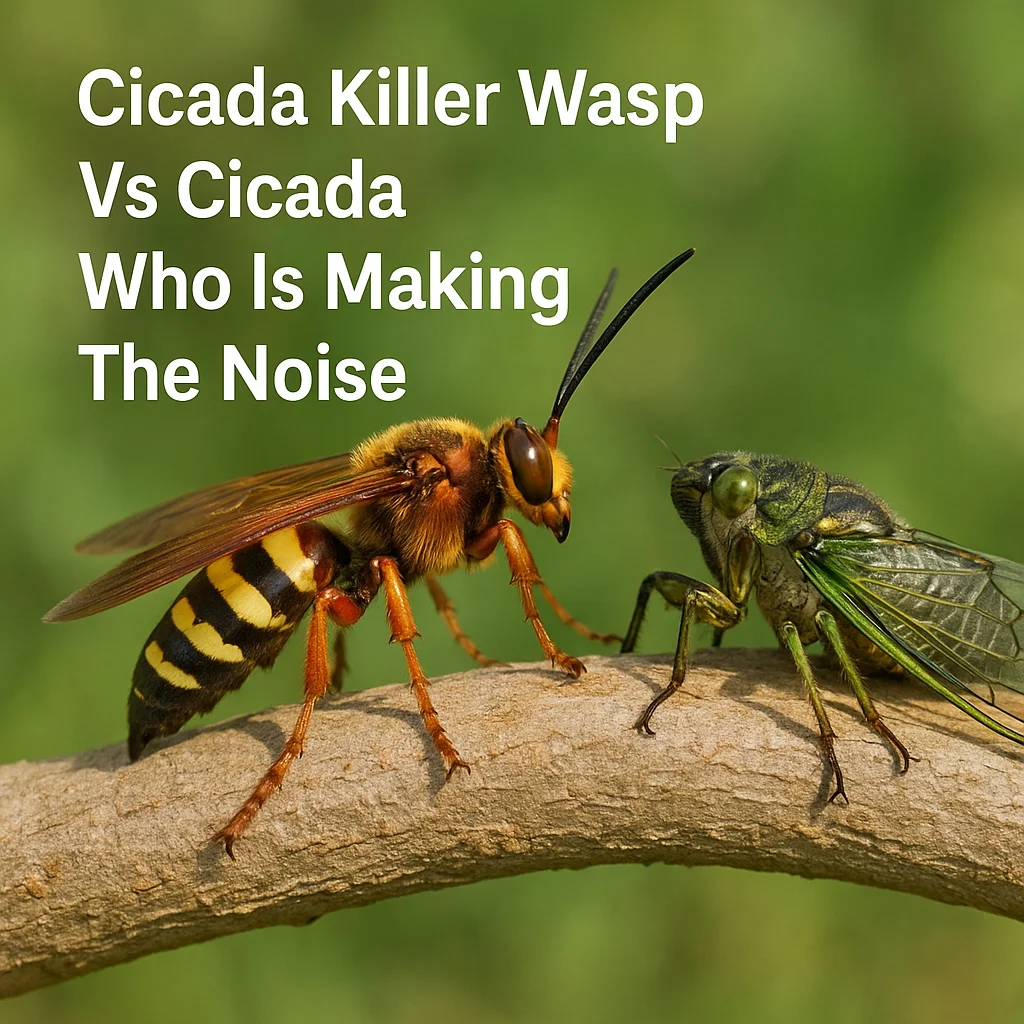
- Common names: Cicada Killer Wasp, Cicada
- Scientific name: Sphecius speciosus (Cicada Killer Wasp), Cicadidae (family: Cicada)
- Insect or not: Yes, both are insects
- Order / family: Hymenoptera: Crabronidae (Cicada Killer Wasp), Hemiptera: Cicadidae (Cicada)
- Typical size range (adult): 20–50 mm (Cicada Killer Wasp), 17–50 mm (Cicada)
- Key colors/patterns: Black with yellow markings (Cicada Killer Wasp), varies (often brown, green, or black with transparent wings for Cicada)
- Activity: Diurnal (both species)
- Typical habitats: Woodlands, gardens, urban areas
- Where in the world it occurs: North America (Cicada Killer Wasp primarily), Worldwide (Cicada)
- Seasonality: Summer months (both species)
🔍 Identification
Identifying the Cicada Killer Wasp and the Cicada can be straightforward with the right cues. Here's how you can tell them apart in the field.
- Body shape and silhouette: Cicada Killer Wasp has a sleek, elongated body with a noticeably narrow waist; Cicada is stouter with a wider body.
- Antennae type: Both have short but distinct antennae; not notable for primary identification.
- Wing features: Cicada Killer Wasp has two pairs of transparent wings often with visible veining; Cicada wings are similarly transparent and veined but broader and more triangular when at rest.
- Leg traits and movement style: Cicada Killer Wasp has strong, spiny legs adapted for digging; Cicada legs are primarily built for gripping onto tree trunks and branches.
- Distinguishing look-alikes: Cicadas can be confused with leafhoppers; Cicada Killer Wasps may be mistaken for hornets or other large wasps.
- Top ID Tips:
- Look for black and yellow coloration for Cicada Killer Wasps.
- Cicadas often have distinct, large eyes and short antennae.
- Cicada sounds are a giveaway; the Wasp is silent.
- Check for digging behavior in wasps.
- Identify cicadas by their broad, veined wings.
- Observe size; Cicada Killer Wasps are larger than most wasps.
🧠 Basic Body Structure
Both the Cicada Killer Wasp and Cicada are typical insects, meaning their bodies are divided into three primary sections: the head, thorax, and abdomen. They have six legs and an exoskeleton, which provides structural support and protection. As insects, they are invertebrates, meaning they lack a backbone.
Cicada Killer Wasps undergo molting to grow, as do Cicadas. Both possess wings, enabling them to fly; however, the Cicada Killer Wasp is more streamlined, aiding in its robust flying and hunting capabilities.
🌍 Habitat & Distribution
The Cicada Killer Wasp prefers woodlands, gardens, and urban environments where soft soil is available for nesting. These wasps can often be found in North America, particularly the eastern United States.
Cicadas are more globally distributed and can adapt to various environments such as forests, parks, and backyards worldwide, providing there are trees or shrubs.
Changes in habitat, including urbanization and deforestation, can impact sightings, with wasps thriving in disturbed soils and cicadas depending on healthy vegetation for their lifecycle.
📅 Seasonal Appearance & Activity
Both the Cicada Killer Wasp and Cicada are most visible and active during the summer months. Their activity is aligned with warm temperatures, which are ideal for flying and mating behaviors.
- Best Time to Spot It:
- Warm, sunny afternoons during the summer provide peak visibility.
- Early morning to late afternoon is ideal.
- Higher activity observed post-rain in humid climates.
- Drought conditions may reduce cicada sightings.
🥚 Reproduction & Egg-Laying
Cicada Killer Wasps are solitary, with females digging burrows where they will lay their eggs alongside paralyzed cicadas, serving as food for emerging larvae. These burrow sites are generally composed of soft, sandy soils.
Cicadas lay their eggs in tree bark or twigs. Mating behaviors include audible calls from males to attract females, usually followed by egg-laying in slits created by the female.
🌀 Metamorphosis & Life Cycle
The Cicada Killer Wasp undergoes complete metamorphosis: egg, larva, pupa, and adult. After hatching, larvae feed on the paralyzed cicada, pupate in underground chambers, and emerge in adulthood, typically over the fall or next summer.
Cicadas undergo incomplete metamorphosis: egg, nymph, adult. Nymphs fall to the ground, burrowing and feeding on root sap. After developing over several years, they surface, molt, and emerge as adults, living for a few weeks primarily for reproduction.
🍽️ Diet & Feeding Behavior
The Cicada Killer Wasp feeds on nectar as an adult, while its larvae feed on paralyzed cicadas. Their mouthparts are adapted for both chewing and siphoning nectar.
Cicadas primarily feed on plant sap using piercing-sucking mouthparts. In their nymph stage, they feed on root sap underground.
As predators and herbivores, respectively, these insects play different roles in their ecosystems, with wasps as a biological control and cicadas affecting plant vigor.
🦉 Predators & Defense
Natural enemies of the Cicada Killer Wasp include birds and larger mammals. Defense strategies involve stinging, but they are not aggressive toward humans unless threatened.
Cicadas face predation from birds, squirrels, and bats. Cicadas use camouflage, blending into their environment, and rely on large numbers (predator swamping) for survival.
- Defense Highlights:
- Cicada Killer Wasps: Striking color patterns serve as a warning.
- Cicadas: Singing may distract or confuse predators.
- Both use speed and protective habitats to evade predators.
- Cicadas blend with foliage and bark to avoid detection.
👥 Social Behavior & Swarms
Cicada Killer Wasps are solitary, with little social interaction apart from mating. They focus on creating burrows for reproductive success.
Cicadas are known for emerging in large numbers, often as part of a synchronized lifecycle strategy to overwhelm predators.
🧭 Senses & Communication
Both insects rely on keen senses for survival and reproduction. Cicada Killer Wasps utilize vision and olfaction to locate nectar and mates.
Cicadas use auditory signals extensively, with males producing loud calls via vibrating membranes (tymbals) to attract females.
Pheromones also play a role in communication, especially during mating for both species.
🌱 Role in the Ecosystem
Cicada Killer Wasps help control cicada populations and pollinate plants while searching for nectar. Cicadas contribute to nutrient cycling by aerating the soil through their underground nymph stage and serve as food for various predators.
Both species have intricate interactions with their environments, influencing plant dynamics and providing sustenance for numerous wildlife species, including mutualistic and parasitic relationships.
📉 Population & Conservation Notes
Cicada Killer Wasps are not generally threatened and are common in appropriate habitats. However, they face challenges from habitat loss and pesticide use. Cicadas can be abundant but are susceptible to habitat degradation and climate change.
- How to Help (Low-Impact):
- Plant native flowers to support nectar-feeding insects.
- Preserve natural soil and avoid excessive raking.
- Minimize pesticide use in gardens and managed landscapes.
- Allow some areas of your yard to stay less manicured for habitat diversity.
⚠️ Human Interaction & Safety
Cicada Killer Wasps can sting if provoked, but they are generally non-aggressive towards humans. If disturbed, it is advisable to give them space and allow them to move away.
In case of a sting or severe reaction, washing the affected area, avoiding scratching, and seeking professional advice if symptoms persist is recommended.
Both species are best enjoyed through respectful observation, and it is crucial to avoid collecting wild specimens to conserve their populations.
📌 Summary
- Both the Cicada Killer Wasp and the Cicada are fascinating insects with distinct roles in the ecosystem.
- Identification hinges on striking color patterns and behavior.
- They are most active during summer and can be observed in a range of habitats.
- Each follows a unique life cycle with different stages and durations.
- Diet varies significantly between species, contributing to their ecological roles.
- Diverse predators challenge their survival, but they each utilize unique defense mechanisms.
- While the wasp is solitary, cicadas are noteworthy for their communal emergences.
- Their senses and communication methods are well-suited to their life strategies.
- Populations are generally stable, though local abundance may vary.
- Human interaction requires respect and caution, especially concerning safety and conservation efforts.