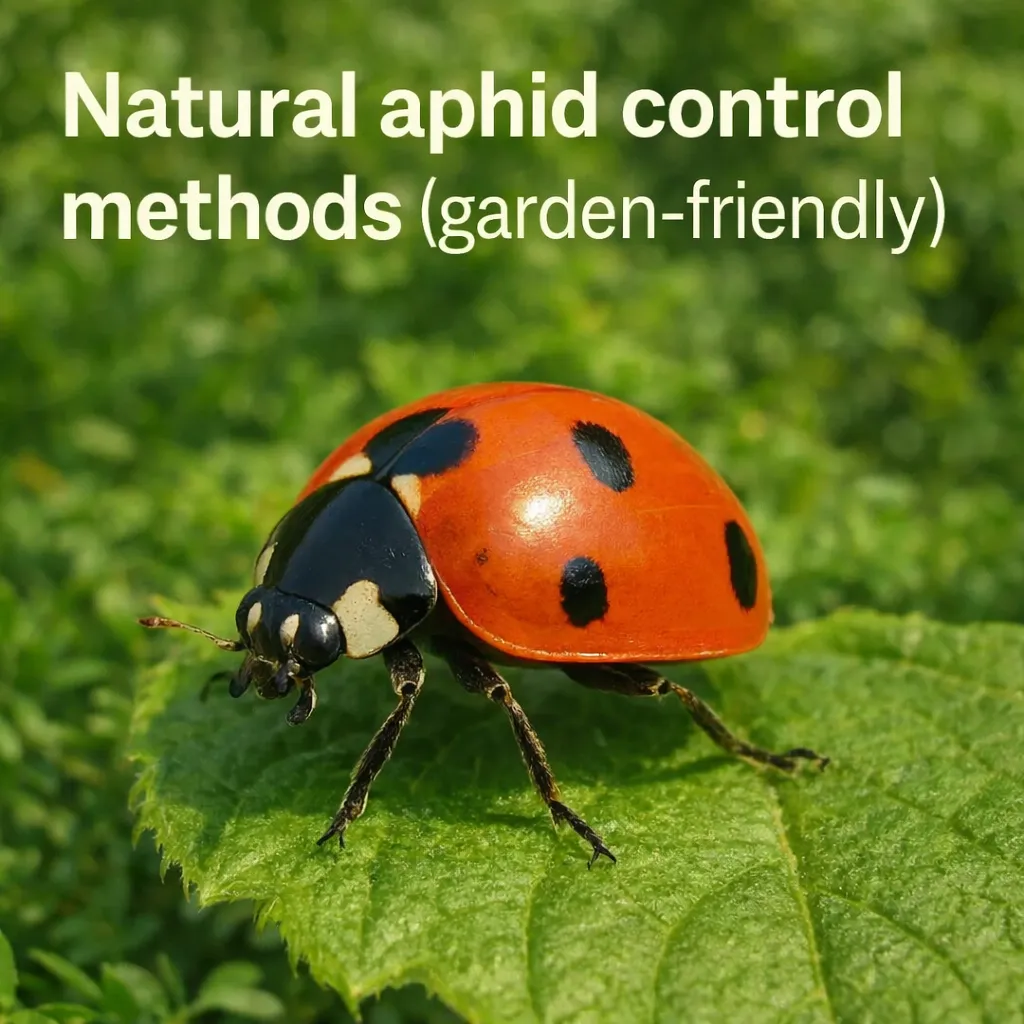
🕷️ Natural aphid control methods (garden-friendly)
🧾 Quick Facts
Aphids are a significant challenge in gardens worldwide due to their rapid reproduction and plant-sap feeding habits. Various natural methods are effective in controlling their populations without resorting to chemical pesticides, ensuring both the health of your garden and the environment.
- Common names: Aphids, Plant lice
- Scientific name: Varies by species
- Insect: Yes, they're small soft-bodied insects
- Order / family: Hemiptera / Aphididae
- Typical size range: 1 to 10 mm
- Key colors/patterns: Green, black, red, yellow, often with waxy coating
- Activity: Primarily active during the day
- Typical habitats: Gardens, agricultural fields, diverse plant communities
- Where in the world it occurs: Worldwide, particularly temperate regions
- Seasonality: Most visible in spring and summer
🔍 Identification
Identifying aphids involves recognizing their small, pear-shaped bodies, often found clustered on plant stems, leaves, or undersides. Their antennae are moderately long, and most species may have wings when populations are high enough for dispersal. Aphids exhibit soft-bodied and rounded forms and vary in color across species.
- Body shape and silhouette: Small, pear-shaped, soft-bodied
- Antennae type: Medium length, flexible
- Wing features: Present in some, membranous appearing when overcrowded
- Leg traits and movement style: Long legs for size, slow movement
- Distinguishing look-alikes: Scale insects, mealybugs
- Common confusion: Often mistaken for young lace bugs due to size
- Top ID Tips:
- Pear-shaped body
- Clusters on plant stems or undersides of leaves
- Variations in color: green, black, pink, or yellow
- Waxy or woolly coating in some species
- Membranous wings in some individuals
- Proboscis inserted into plant tissue
🧠 Basic Body Structure
Aphids are true insects with a head, thorax, and abdomen, characteristic of the order Hemiptera, and have mouthparts adapted for piercing and sucking. They possess six legs, wings in certain circumstances, and an exoskeleton that they must molt as they grow. Aphids are invertebrate, meaning they lack a spinal column, which is typical of all insects.
🌍 Habitat & Distribution
Aphids thrive in environments where host plants are abundant, including gardens, forests, grasslands, and agricultural fields. They can be found on a wide range of plants, feeding on the nutrient-rich sap. Aphids have a global distribution, with higher population density in temperate climates. Changes in plant availability and climate conditions can affect where they are most commonly seen.
📅 Seasonal Appearance & Activity
Aphids are most frequently observed during warm months when plant growth is prevalent, specifically in spring and summer. They are diurnal—active primarily during daytime—yet their activity depends significantly on mild temperatures and the presence of host plants.
- Best Time to Spot It:
- Late spring to early summer
- Mild, sunny days
- In the presence of sap-rich plants
- During calm weather conditions
🥚 Reproduction & Egg-Laying
Aphids have fascinating reproductive strategies; many species can reproduce asexually through a process called parthenogenesis. Females give birth to live young during favorable conditions, leading to rapid population growth. Eggs are laid when conditions harshen, typically on plant stems or under leaves, allowing the next generation to hatch when temperatures rise.
🌀 Metamorphosis & Life Cycle
Aphids undergo incomplete metamorphosis, which means they transition directly from nymph to adult without a pupal stage. The life cycle includes egg, nymph, and adult stages. Nymphs resemble smaller adults and molt several times as they grow. While young, aphids feed on plant sap, a practice they continue into adulthood. The life cycle duration varies dramatically with environmental conditions.
🍽️ Diet & Feeding Behavior
Aphids consume the sap of plants, extracting nutrients with their specialized mouthparts designed for piercing and sucking. They are true herbivores and feed on a variety of host plants, often leading to plant distress due to their sap-eating nature.
🦉 Predators & Defense
Aphids face predation from a wide array of natural enemies, including lady beetles, lacewings, hoverfly larvae, and parasitic wasps. To defend against these threats, aphids may rely on chemical camouflage by secreting substances or mimicry tactics that reduce their attractiveness to predators. Their primary form of defense is in their prolific reproduction, overwhelming predators by sheer numbers.
- Defense Highlights:
- Chemical camouflage
- Reproductive high rate
- Plants’ symbiotic relationship with ants
- Ability to drop from plants in response to predators
👥 Social Behavior & Swarms
Aphids generally exist in dense colonies that exhibit some social behavior through cooperation with ants. Some species excrete a sugary substance known as honeydew, which ants collect. In return, ants provide defense against predators. Aphids do not typically swarm but can be highly populous in clonal communities.
🧭 Senses & Communication
Aphids rely on chemical cues and pheromones for communication, often communicating distress when predators approach. They have a limited range of senses chiefly focused on detecting chemical signals which guide their feeding behavior and interaction with other aphids or symbiotic ants.
🌱 Role in the Ecosystem
Aphids play a dual role as both pests and as integral components of their ecosystems. They are critical in food webs, serving as prey for many animals, and their activities can stimulate plant defenses, leading to diverse ecological interactions. Though considered pests due to their plant damage in gardens and agriculture, they also promote the activity of beneficial insects and contribute to nutrient cycling.
📉 Population & Conservation Notes
Aphid populations can fluctuate widely based on environmental conditions, such as climate and the availability of host plants. Often reported as common, aphids adapt readily to changes in their environment but can be susceptible to broad-spectrum pesticide use which affects their natural predators. Conservation efforts focus on promoting an ecological balance using integrated pest management techniques.
- How to Help (Low-Impact):
- Encourage natural predators by planting diverse habitats
- Avoid broad chemical pesticides
- Use physical barriers on plants
- Promote ant-aphid control symbiosis
⚠️ Human Interaction & Safety
Aphids are not harmful to humans and do not bite or sting. They can impact human activities indirectly by affecting plant health and crop yields. Observation of these creatures is best undertaken through a respectful appreciation of their ecological roles rather than collection, aiding in the biodiversity of garden spaces.
📌 Summary
- Aphids are small, prolific pests with varied appearances.
- They thrive globally in gardens and similar habitats.
- Most active during spring and summer.
- Undergo incomplete metamorphosis.
- Feed on plant sap, causing potential damage.
- Face predation by numerous beneficial insects.
- Contribute to ecological balance in food webs.
- Management through natural predators is encouraged.
- Handle garden-aphid issues without chemical pesticides.