🕷️ Tree Crickets Why They Sound Like Summer Evenings
🧾 Quick Facts
Tree crickets, with their melodic calls, are often associated with the tranquil ambiance of summer evenings. They belong to a group of insects known for their sweet, rhythmic sounds and are commonly found in gardens, forests, and meadows. These cricket species are primarily nocturnal and thrive in warm climates.
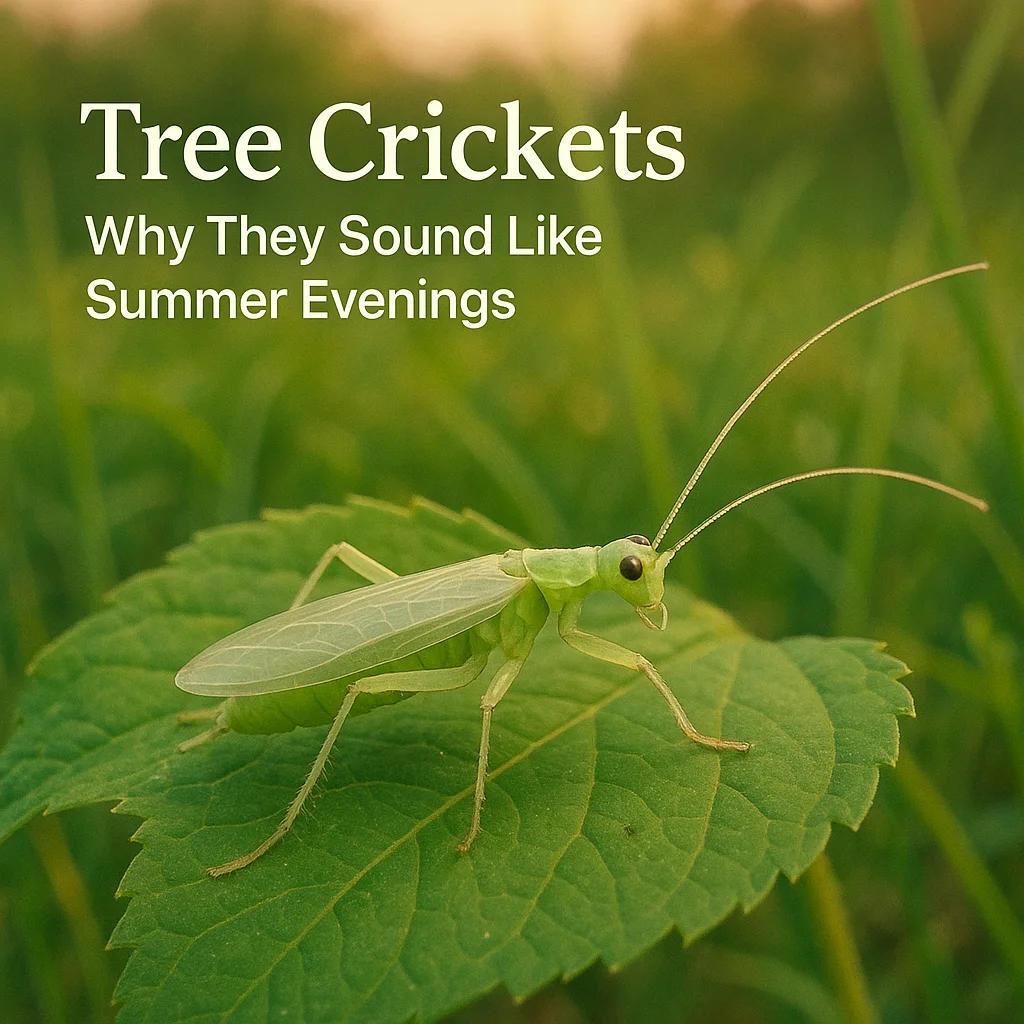
- Common names: Tree Crickets
- Scientific name: Varies; common species include Oecanthus spp.
- Insect: Yes, they are invertebrates with six legs
- Order/Family: Orthoptera/Gryllidae
- Typical size range: 1 to 2 inches (2.5 to 5 cm)
- Key colors/patterns: Often pale green or light brown with translucent wings
- Activity: Nocturnal
- Typical habitats: Gardens, forests, and meadows
- Where in the world: North and Central America, Europe
- Seasonality: Late spring to early fall
🔍 Identification
Tree crickets are slender insects with a delicate body structure. They are characterized by their long, thin antennae and wings that are either clear or slightly opaque. These wings cover their bodies and are notable for being linked to their sound production.
Tree crickets have long hind legs adapted for jumping, a common trait among crickets. They are often mistaken for grasshoppers due to their size and shape but differ in their behavior and sound production.
- Top ID Tips:
- Listen for soft, rhythmic calls at night
- Look for slender, elongated bodies
- Note the long, thin antennae
- Identify wings that seem almost transparent
- Observe the relaxed posture in resting positions
- Notice jumping ability with long hind legs
🧠 Basic Body Structure
Tree crickets exhibit the fundamental body structure of insects, consisting of a head, thorax, and abdomen. They have six legs, part of their distinctive exoskeleton, which offers protection and support. This outer shell is shed periodically in a process called molting to accommodate growth.
As invertebrates, tree crickets lack a backbone. Instead, their exoskeleton provides the necessary support. They also have wings that allow them to make the characteristic sounds they are known for, although not all wings are used for flight.
🌍 Habitat & Distribution
Tree crickets prefer habitats rich in vegetation, such as gardens, forests, and meadows. They are often found in areas with dense foliage where they can easily camouflage. These environments provide ample opportunities for tree crickets to find food and mates.
The geographic range of tree crickets includes North and Central America and parts of Europe. They thrive in temperate regions where warm summers coincide with their active periods. Habitat changes like urbanization can affect their sightings, requiring suitable refuge areas.
📅 Seasonal Appearance & Activity
Tree crickets are most visible from late spring through early fall, aligning with warmer temperatures that encourage their nocturnal activities. They are usually active during the evening and nighttime hours, taking advantage of cooler temperatures for optimal sound production.
Weather also influences their activity, with increased calling on humid or damp evenings.
- Best Time to Spot It:
- Late spring evenings
- Summer nights
- Warm, humid weather
- Regions with dense vegetation
🥚 Reproduction & Egg-Laying
Tree crickets engage in mating rituals that involve producing rhythmic calls to attract mates. Males produce these calls by rubbing their wings together, a behavior known as stridulation. Once a mate is attracted, the male transfers a sperm packet to the female.
Females lay their eggs in plant stems or woody material. The number of eggs laid varies, but generally, females lay several eggs in a single nesting site, using their ovipositors to ensure the eggs are securely placed.
🌀 Metamorphosis & Life Cycle
Tree crickets experience incomplete metamorphosis, transitioning from egg to nymph to adult. This type involves gradual changes rather than drastic transformations.
After hatching, the nymphs resemble miniature adults but lack fully developed wings. They feed on plant material and grow through several instar stages, molting between each one. Upon reaching adulthood, tree crickets develop full wings and engage in reproductive activities. The entire cycle can vary but typically spans several months.
🍽️ Diet & Feeding Behavior
Throughout their life stages, tree crickets primarily consume plant matter. Nymphs and adults feed on leaves, flowers, and occasionally small insects or decaying organic material.
Their mouthparts allow them to chew their food, making them effective herbivores and occasional scavengers within their ecosystems.
🦉 Predators & Defense
Tree crickets face predation from a variety of natural enemies, including birds, reptiles, amphibians, spiders, and certain mammals. Their primary defense strategy is their ability to blend into their surroundings, thanks to their coloration and body shape.
- Defense Highlights:
- Camouflage with foliage
- Quick jumping to escape threats
- Silent periods to avoid detection
- High-pitched calls to confuse predators
👥 Social Behavior & Swarms
Tree crickets are generally solitary insects, coming together primarily for mating purposes. They do not form colonies or swarms like some other insects. Their interactions are mostly limited to reproductive activities and brief encounters with other individuals in their habitats.
🧭 Senses & Communication
Tree crickets rely heavily on their acute sense of hearing and vibration detection to communicate and navigate their environment. Their large, antennae-filled heads provide ample sensory input.
Stridulation is their primary method of sound production, using it for both mating calls and territory establishment. Their ability to detect these sounds is key to successful communication.
🌱 Role in the Ecosystem
Tree crickets play an important role in their ecosystems as both prey and herbivores. They contribute significantly to the food chain, serving as a nutritious food source for many predators.
As herbivores, they help in the control of plant growth, indirectly aiding in maintaining ecosystem balance. Their feeding also supports certain mutualistic relationships with other organisms within their habitats.
📉 Population & Conservation Notes
Tree crickets are commonly found in suitable habitats, though local abundance varies significantly depending on habitat quality and climatic conditions. Habitat loss due to urbanization and pesticide use poses threats to their populations.
Conservation practices such as habitat preservation and environmentally friendly gardening can help support their numbers.
- How to Help (Low-Impact):
- Plant native vegetation in gardens
- Avoid pesticide use around habitats
- Preserve areas with natural foliage
- Encourage biodiversity in green spaces
⚠️ Human Interaction & Safety
Tree crickets do not pose any significant threat to humans. They are non-aggressive and lack the ability to bite or sting. Watching them and listening to their calls can offer an enriching observation experience in natural settings.
It's important to observe them respectfully and avoid collecting wild specimens to maintain ecological balance.
📌 Summary
- Tree crickets are known for their melodic summer evening calls
- Characterized by slender bodies and long antennae
- Found in gardens, forests, and meadows
- Active from late spring through early fall
- Experience incomplete metamorphosis
- Herbivorous diet, sometimes consuming small insects
- Prey for various birds and animals
- Important ecological role as herbivores and prey
- Not a threat to humans; enjoy observing respectfully