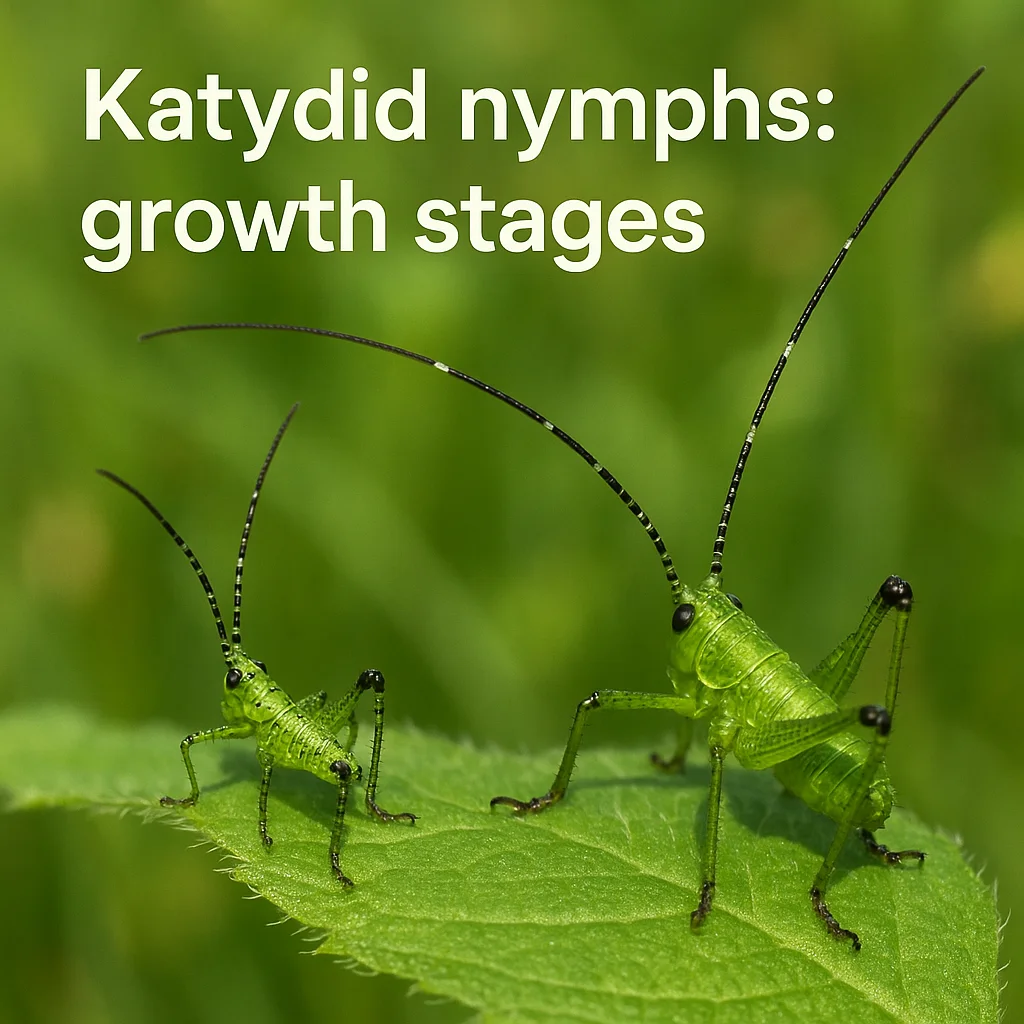
🕷️ Katydid nymphs: growth stages
🧾 Quick Facts
Katydid nymphs are fascinating creatures belonging to the order Orthoptera. These young insects undergo gradual metamorphosis, developing through distinct molts before reaching adulthood. This profile provides key insights into their characteristics and life stages.
- Common names: Katydids, bush crickets
- Scientific name: Varies (Family Tettigoniidae)
- Insect: Yes, katydids are invertebrates
- Order: Orthoptera
- Typical size range (adult): 2–5 cm
- Key colors/patterns: Green, brown with leaf-like appearance
- Activity: Mainly nocturnal
- Typical habitats: Forests, grasslands, gardens
- Where in the world: Found globally, particularly in temperate and tropical regions
- Seasonality: Most visible during warm months, especially late spring to early autumn
🔍 Identification
Katydid nymphs are recognizable by their elongated bodies and leaf-like wings that help them blend into their surroundings. Despite being nymphs, their wings are not fully developed until adulthood.
- Body shape: Slender and elongated, leaf-mimicking form
- Antennae: Long, often surpassing body length
- Wing features: Underdeveloped in nymphs, fully formed only in adults
- Leg traits: Strong hind legs adapted for jumping
- Distinguishing look-alikes: Resemble grasshoppers but usually have longer antennae and a more muted coloration
- Top ID Tips
- Check for long, whip-like antennae
- Look for green coloration with leaf-like wing patterns
- Observe jumping behavior
- Notice underdeveloped wings in the nymph stages
- Identify by fine detail in the leaf mimicry
- Differentiate from crickets by body length and antennae
- Be aware of their ability to camouflage on leaves
🧠 Basic Body Structure
As insects, katydid nymphs possess a segmented body consisting of a head, thorax, and abdomen. They have six legs, with the hind legs adapted for jumping. Katydids are invertebrate animals, meaning they lack a backbone and rely on an exoskeleton for structural support. This exoskeleton is periodically shed through a process called molting as the nymph grows.
🌍 Habitat & Distribution
Katydid nymphs thrive in a variety of environments such as forests, grasslands, and even urban gardens, where they remain inconspicuous due to their camouflage. They favor areas with abundant vegetation, utilizing microhabitats like leaves and stems. Katydids are widely distributed across the globe, particularly prominent in temperate and tropical climates. Changes in habitat, such as urbanization and deforestation, can affect local katydid populations and visibility.
📅 Seasonal Appearance & Activity
Katydid nymphs are most likely observed during the warmer months, from late spring through early autumn. They are primarily nocturnal insects, making them more active during night-time when searching for food and mates. Weather conditions, such as temperature and humidity, can influence their activity levels.
- Best Time to Spot It
- Warm months from spring to autumn
- Nocturnal hours
- After rain when humidity is higher
- Less visible during colder seasons
- During warm, calm evenings
🥚 Reproduction & Egg-Laying
The mating behavior of katydids involves intricate courtship, often including song-like sounds produced by stridulation. After mating, females typically lay eggs on or within various plant structures, where they remain until hatching. The number of eggs can vary by species and environmental conditions, with some laying hundreds while others deposit fewer.
🌀 Metamorphosis & Life Cycle
Katydid nymphs undergo incomplete metamorphosis, which consists of three stages: egg, nymph, and adult. Nymphs closely resemble adults but lack fully developed wings and reproductive capabilities.
Nymphs primarily feed on plant materials and live amidst foliage. The duration of each stage can vary depending on species and environmental conditions but generally lasts weeks to months, with multiple molts allowing growth to adulthood.
🍽️ Diet & Feeding Behavior
Katydid nymphs are primarily herbivorous, feeding on leaves, stems, and sometimes fruit. Their chewing mouthparts allow them to consume tough plant materials efficiently. As they grow, their diet and feeding strategies remain relatively consistent throughout their life cycle, solidifying their role as herbivores within their ecosystems.
🦉 Predators & Defense
Katydid nymphs face numerous predators, including birds, small mammals, reptiles, and other insects like spiders. They employ various defense mechanisms, such as effective camouflage mimicking leaves and startle displays that momentarily confuse predators. Some species are known to produce sounds or emit chemicals as a form of deterrence.
- Defense Highlights
- Leaf-like camouflage to avoid detection
- Jumping ability to escape threats rapidly
- Occasional sound production for deterrence
- Potential chemical emissions to ward off predators
👥 Social Behavior & Swarms
Katydids are generally solitary creatures, although their mating behavior often brings individuals together temporarily. They do not form swarms or colonies. Interactions are limited to mating and brief encounters when resources overlap.
🧭 Senses & Communication
Katydids possess acute senses that aid their survival. Their vision helps detect movements and predators, while their sensitive antennae are pivotal for exploring their environment. Communication among katydids typically occurs through stridulation, where the rubbing of wings produces distinctive sounds primarily used for mating calls. Vibration detection is also significant in their intraspecific communication.
🌱 Role in the Ecosystem
Katydid nymphs play an integral role in their ecosystems by acting as both consumers and prey. As herbivores, they help control plant growth and contribute to the cycling of nutrients. They also serve as a food source for various predators, linking different levels of the food web. Their ecological interactions ensure balance within their habitats.
📉 Population & Conservation Notes
Katydids are often reported as common in suitable habitats with ample vegetation. However, population status can vary locally due to factors like habitat destruction, pesticide use, and climate change. Despite these pressures, many katydid species thrive under optimal conditions.
- How to Help (Low-Impact)
- Plant native vegetation in gardens
- Avoid using chemical pesticides
- Encourage ecological gardening practices
- Leave leaf litter to provide habitats
⚠️ Human Interaction & Safety
Katydids are harmless to humans and do not bite or sting. Their presence is more often enjoyed as part of the natural nocturnal chorus. Observing them respectfully and avoiding capturing helps maintain their populations and ecosystem roles.
📌 Summary
- Nymphs resemble adults but lack developed wings
- Habitat includes forests, grasslands, and gardens
- Active during warm months and primarily at night
- Incomplete metamorphosis with multiple molts
- Herbivorous diet centered on plant material
- Various natural predators and effective defenses
- Role as both key consumers and prey in ecosystems
- Generally not endangered; local abundance varies
- No threat to humans but should be observed respectfully