🕷️ Cricket life cycle: eggs to adults
🧾 Quick Facts
Crickets are fascinating invertebrates known for their distinctive chirping sounds. While found worldwide, their specific traits may vary by species.
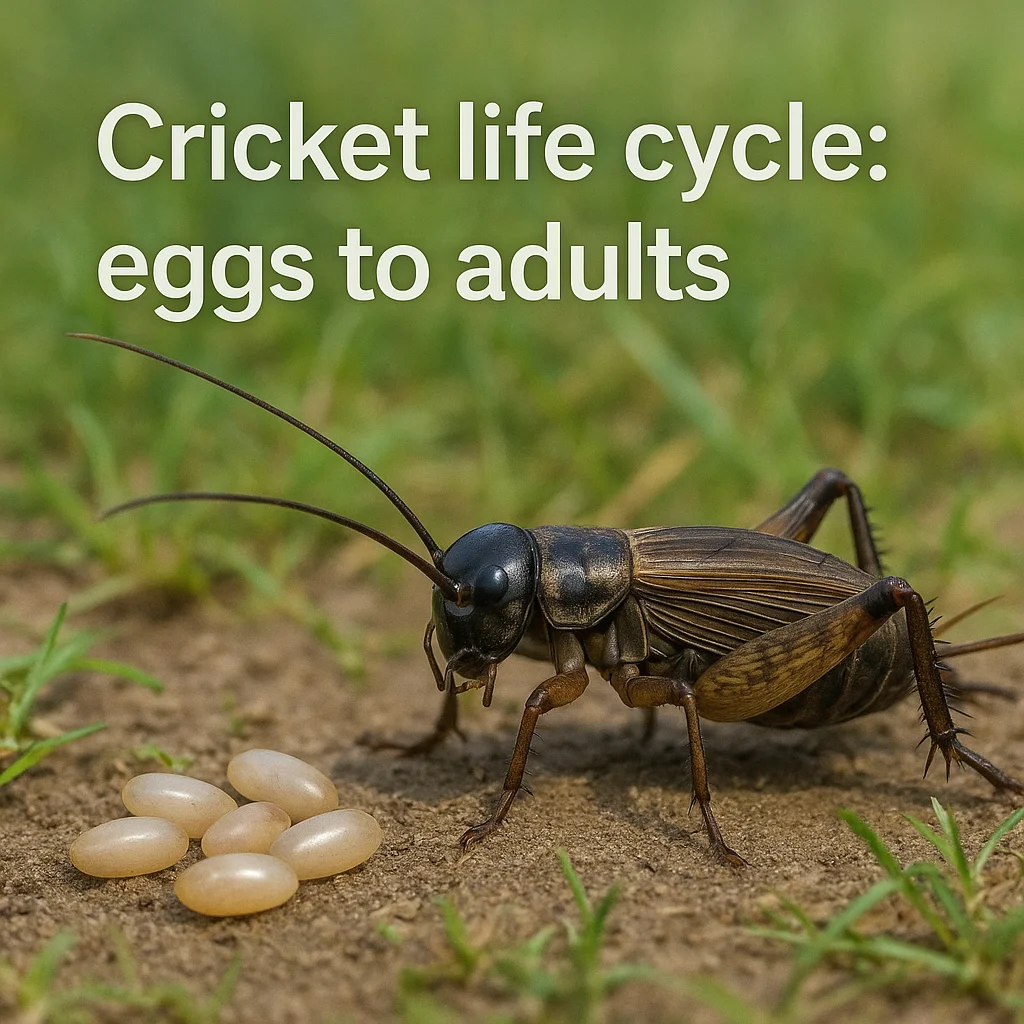
- Common names: Cricket
- Scientific name: varies
- Insect or not: Yes, they are insects
- Order: Orthoptera
- Family: Gryllidae
- Typical size range: 0.6 to 2 inches (15 to 50 mm)
- Key colors/patterns: Brown, green, black; often with subtle patterns
- Activity: Mostly nocturnal
- Typical habitats: Grasslands, woodlands, gardens, and urban areas
- Where in the world it occurs: Widespread across temperate and tropical regions
- Seasonality: Most active in late spring to early fall
🔍 Identification
Crickets can be recognized by their elongated bodies and powerful hind legs. They typically have long antennae and wings that lie flat on the back.
- Body shape and silhouette: Cylindrical, with a slightly flattened shape when viewed from above
- Antennae type: Long, often as long as their own bodies, and quite threadlike
- Wing features: Forewings are leathery; hindwings, if present, are membranous
- Leg traits and movement style: Enlarged hind legs for jumping; capable of walking
- Distinguishing look-alikes: Often confused with grasshoppers but differentiated by their longer antennae and nocturnal habits
- Look for long antennae
- Notable chirping sounds, especially at night
- Jump using strong hind legs
- Size varies but often smaller than grasshoppers
- Colors generally include browns and greens
- Primarily nocturnal behavior
🧠 Basic Body Structure
As insects, crickets have a body divided into three main segments: head, thorax, and abdomen. They possess six legs, typical of all insects. Their exoskeleton provides protection and requires periodic shedding, or molting, to allow for growth. Crickets are invertebrates, meaning they do not have a backbone.
🌍 Habitat & Distribution
Crickets thrive in various environments ranging from grasslands and forests to suburban gardens. They prefer habitats where there is ample cover and food sources. Under rocks, in leaf litter, and under bark are common microhabitats. Their geographic range includes most temperate and tropical regions, adapting to climates that offer warm temperatures and sufficient humidity. Changes in habitat, such as urbanization, can affect their presence and distribution.
📅 Seasonal Appearance & Activity
Crickets are typically observed from late spring through early fall. They are mostly nocturnal, becoming active during the nighttime hours. Warm evenings, particularly following rain, create ideal conditions for cricket activity. Their chirping is most noticeable during these times as they call out for mates.
- Late spring to early fall is the best time to see them
- Active mostly during nighttime
- More common after rain, in warm/humid weather
- Peak activity at dusk and into the night
🥚 Reproduction & Egg-Laying
Cricket mating involves a unique courtship where males produce calls to attract females. During mating, the male transfers spermatophore to the female. Afterward, females lay eggs in the soil or within organic matter such as grass stems or leaves. Egg-laying strategies may vary depending on the species and environmental conditions.
🌀 Metamorphosis & Life Cycle
Crickets undergo incomplete metamorphosis, progressing through three stages: egg, nymph, and adult. Nymphs resemble small adults but without wings and undergo several molts as they grow. During these stages, nymphs primarily feed on organic material and plant matter. The time spent in each stage varies depending on environmental conditions, typically taking several weeks to a few months to reach adulthood.
🍽️ Diet & Feeding Behavior
Crickets are generally omnivorous, consuming a wide array of organic material. They possess chewing mouthparts that enable them to eat plant material, decaying organisms, and occasionally small insects. As they grow, their diet may shift to favor more protein sources.
🦉 Predators & Defense
Crickets have a range of predators, including birds, reptiles, amphibians, small mammals, and spiders. Their primary defense strategies include camouflage and quick jumping movements. Some species may also emit odors to deter predators.
- Swift jumping to escape
- Camouflage blending into the environment
- Use of sound as alarm or distraction
- Possibly emitting repelling odors
👥 Social Behavior & Swarms
Crickets are generally solitary but can be found in groups where conditions are favorable. They do not typically form swarms. Interactions are mostly limited to mating behaviors and occasional competition for resources.
🧭 Senses & Communication
Crickets have well-developed senses of hearing and vibration, utilizing their legs to detect sound. They communicate primarily through stridulation, a process where males produce chirping sounds by rubbing their wings together. This sound serves as an attraction for mates and a territorial signal against rivals.
🌱 Role in the Ecosystem
In ecosystems, crickets play a vital role as both prey and decomposers. They contribute to nutrient recycling by breaking down organic matter. Some species assist in pollination, though this is less common. Bit it should be noted that large populations can sometimes impact plant health, making them both beneficial and sometimes detrimental.
📉 Population & Conservation Notes
Cricket populations are generally stable, often abundant in suitable habitats. However, localized declines may occur due to habitat destruction, pesticide use, and climate changes. Conservation efforts focus on promoting sustainable habitats.
- Plant native grasses and plants
- Avoid widespread pesticide usage
- Leave leaf litter in gardens for shelter
- Create wildlife-friendly spaces in urban areas
⚠️ Human Interaction & Safety
Crickets are generally harmless to humans, rarely causing harm. In the event of handling, some species might deliver a mild bite, which usually requires little more than washing the affected area. It is advised to observe crickets respectfully and avoid disturbing their natural behaviors.
📌 Summary
- Crickets are invertebrate insects with nocturnal habits
- Recognized for long antennae and back leg jumps
- Prefers warm, moist habitats with organic matter
- Undergo incomplete metamorphosis: egg, nymph, adult
- Eats organic material, occasionally small insects
- Mainly nocturnal, active in warm months and climates
- Important prey and decomposers in ecosystems
- General population stable, but sensitive to habitat changes
- Observe respectfully, avoid handling unless necessary