🕷️ Springtails Tiny Jumpers That Are Not Insects Quick ID
🧾 Quick Facts
Springtails, also known as collembolans, are tiny soil-dwelling creatures that are often mistaken for insects. Despite their small size, they play a significant role in the ecosystem. Here are some key facts about springtails:
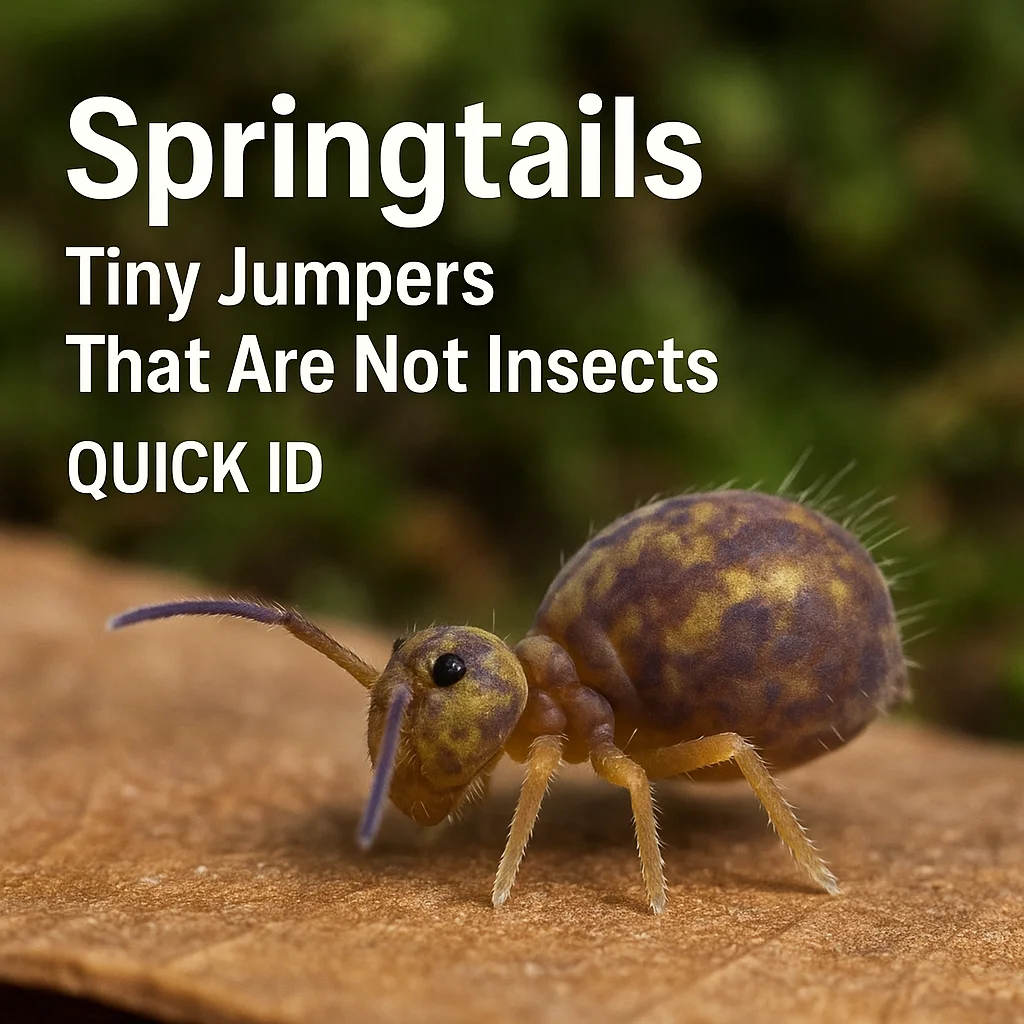
- Common names: Springtails
- Scientific name: Varies
- Insect or not: Not insects, they are hexapods
- Order / family: Collembola
- Typical size range: 0.2 to 6 mm (adults)
- Key colors/patterns: Various, including grey, black, white, blue
- Activity: Primarily night and day, depending on species habits
- Typical habitats: Soil, leaf litter, decaying wood
- Where in the world it occurs: Globally, especially in temperate and tropical regions
- Seasonality: Most visible in moist spring and autumn months
🔍 Identification
Spotting springtails in the field requires a keen eye due to their minute size. Here's how you can identify them:
- Body shape and silhouette: Elongated or globular, depending on species
- Antennae type: Short and segmented, varying among different species
- Wing features: Wingless
- Leg traits and movement style: Six legs, prominent jumping ability due to a specialized furcula
- Distinguishing look-alikes: Often confused with insects like fleas, but lack wings and possess different jumping mechanisms
- Top ID Tips:
- Look for jumping on soil surfaces
- Observe in moist environments
- Check for absence of wings
- Note small size, typically less than 6 mm
- Notice coloration which can range across various shades
- Watch for erratic, springing movement when stimulated
🧠 Basic Body Structure
Springtails have a unique body structure that distinguishes them from true insects:
- Head, thorax, abdomen: Possess a distinct head, three thoracic segments, and a multi-segmented abdomen
- Legs: Six legs, like insects, used for walking and supporting their springing leaps
- Exoskeleton: They have a soft exoskeleton, requiring them to live in moist environments to prevent desiccation
Springtails are invertebrate creatures, meaning they lack a backbone. Instead, they have an external skeleton that supports and protects their bodies.
🌍 Habitat & Distribution
Springtails inhabit diverse environments but are always found in places with high humidity. They are prevalent in the following areas:
- Preferred environments: Forests, grasslands, agricultural lands
- Microhabitats: Underneath leaf litter, in compost piles, between soil particles, under bark
- Geographic range: Found on all continents, from arctic tundras to tropical rainforests
- Climate: Thrive in moist, temperate, or subtropical climates
Habitat changes, such as urbanization and deforestation, can lead to local shifts in springtail populations. However, they can adapt to urban gardens given the right conditions.
📅 Seasonal Appearance & Activity
Springtails are mostly active when conditions meet their moisture needs, which varies worldwide:
- Primarily visible during wet months of spring and autumn
- They can be seen throughout the day during periods of high humidity
- Commonly active after rains
- Reduced sightings during dry spells
- Best Time to Spot It:
- After rainfall in spring
- Around decayed logs in autumn
- Under compost piles during moist weather
- In shady garden corners
🥚 Reproduction & Egg-Laying
Springtail reproduction involves subtle behaviors often hard to observe without a magnification aid:
- Known to engage in indirect mating through spermatophores
- Females lay eggs in clusters in moist soils or leaf litter
- Egg counts are variable, influenced by environmental conditions
The variability in mating strategies and egg-laying practices is dependent on species type and local environmental conditions.
🌀 Metamorphosis & Life Cycle
Springtails experience a process of incomplete metamorphosis, which consists of the following stages:
- Egg: Laid in damp soil; development period varies
- Nymph: Resembles a small adult, grows through successive molts
- Adult: Size increase is relatively minimal after initial molts; continues to molt regularly
Throughout each stage, springtails are primarily decomposers, feeding on fungi, bacteria, and decaying plant matter.
🍽️ Diet & Feeding Behavior
- Springtails are key decomposers, consuming a diet rich in fungi, bacteria, and decomposing organic matter
- They possess chewing mouthparts suitable for breaking down these materials
- Primarily act as scavengers and nutrient recyclers in their ecosystems
🦉 Predators & Defense
Springtails face numerous predators but have developed defense mechanisms to ensure their survival:
- Natural enemies: Include birds, amphibians, spiders, small mammals
- Defense strategies:
- Rapid jumping reflex, utilized for escape
- Mimicry and camouflaging within their environment
- Ability to remain inactive during dry conditions
- Possibility of producing repulsive chemicals
These defensive traits enable springtails to effectively evade various predators in the wild.
👥 Social Behavior & Swarms
Springtails generally exhibit solitary behavior, although under certain conditions they appear in large groups:
- Mostly solitary, occupying small areas with high organic content
- Swarming occasionally occurs in vast numbers when environmental factors trigger it, such as after rains
These group movements are adaptive strategies against predators and for mating opportunities.
🧭 Senses & Communication
Springtails possess unique sensory capabilities tailored to their environments:
- Primarily rely on tactile and chemical stimuli for communication and navigation
- Utilize antennae to detect changes in the chemical composition of the soil
- Pheromones may be used for mating purposes
Through these senses, springtails maintain an active role in their ecosystems.
🌱 Role in the Ecosystem
Springtails are vital to the ecosystem due to their roles in decomposition and nutrient cycling:
- Contribute to soil health by breaking down organic materials, aiding plant growth
- Participate in controlling fungal populations
- Serve as food for various predators, thus supporting larger food webs
Their presence ensures ecological balance within the soil environment.
📉 Population & Conservation Notes
Most springtail populations are stable and common in suitable habitats, although changes in land use and pesticide use may affect local densities:
- Leave leaf litter in gardens to support habitat creation
- Reduce pesticide application around soil-rich areas
- Integrate diverse plant species for wider ecological hosting
- Maintain moisture levels in garden ecosystems
These measures can help foster healthy springtail populations in your area.
⚠️ Human Interaction & Safety
Springtails are generally harmless to humans:
- Do not bite or sting
- No known infestations or disease transmission
- Encourage respectful observation without collecting or disturbing them
Emphasize natural habitats and minimize intervention to appreciate their ecological importance.
📌 Summary
- Springtails, though not insects, play crucial roles in soil ecosystems
- Recognized by their jumping behavior and minuscule size
- Found globally, especially in moist environments
- Active typically post-rainfall or during humid conditions
- Reproduce by laying eggs in moist environments
- Help decompose organic material, acting as nutrient recyclers
- Face predation from various birds and mammals, but use jumping as a defense
- Generally non-threatening to humans and beneficial to the environment