🕷️ Caddisfly Larvae Cases Underwater Architects Often Mistaken
🧾 Quick Facts
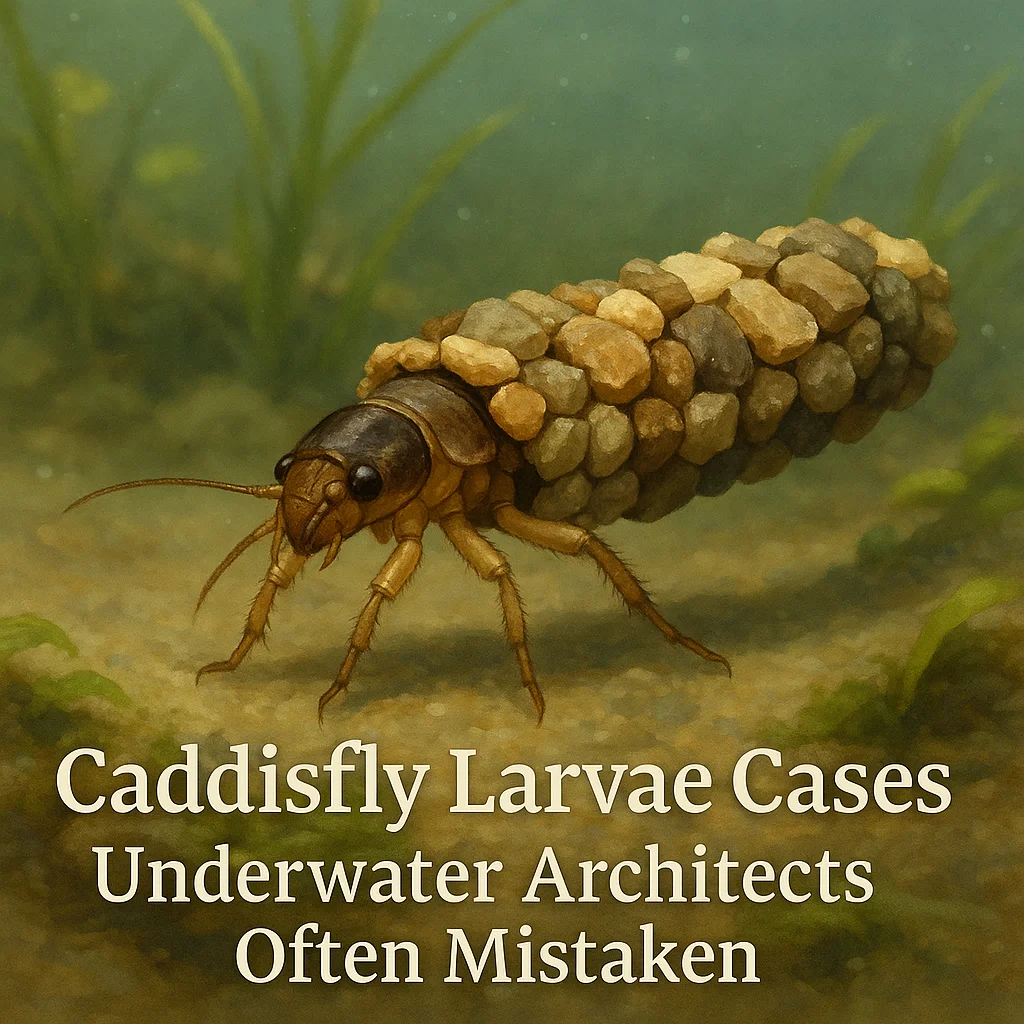
The caddisfly larvae are fascinating aquatic insects often known for their unique behavior of constructing protective cases out of materials found in their environment. These cases serve not only as shelters but also as a disguise against predators, showcasing their impressive architectural skills.
- Common names: Caddisfly larvae, Case worms
- Scientific name: Varies (order Trichoptera)
- Insect: Yes, they are invertebrates
- Order/family: Trichoptera
- Typical size range (adult): 3 to 30 mm
- Key colors/patterns: Typically pale, cases vary with environment
- Activity: Mainly nocturnal
- Typical habitats: Freshwater streams, rivers, lakes, ponds
- Where in the world it occurs: Nearly all continents except Antarctica
- Seasonality: Larval stage active all year; adults more visible in warmer months
🔍 Identification
Caddisfly larvae can be identified in freshwater habitats by their distinctive cases constructed from materials like sand, small stones, or plant material. The body of the larvae is typically elongated, soft, and pale in color, with visible segments. Unlike other aquatic insects, their cases are often mistaken for debris.
- Elongated body with visible segmentation
- No wings while in larval stage; adult caddisflies have two pairs of hairy wings
- Thread-like antennae in adult stage
- Legs are short, adapted for holding onto cases and substrate
- Frequently confused with aquatic caterpillars
- Cases often mistaken for debris or algae clumps
- Adult caddisflies resemble small moths
- Top ID Tips:
- Look for small, portable shelters on the stream or riverbed
- Observe if "debris" moves and you are likely seeing a caddis larva
- Notice elongated, segmented, free-floating larvae outside their cases
- Check for adult moth-like insects near freshwater habitats
- Their cases can be tubular or conical
- Variety in case materials indicates adaptability to the environment
🧠 Basic Body Structure
As insects, caddisfly larvae possess a basic body structure that includes a head, thorax, and abdomen. They have six legs, which are essential in clinging to substrates within water bodies. The head contains mouthparts that are designed for chewing and manipulating materials for their cases. Caddisfly larvae are invertebrates, meaning they lack an internal skeleton and instead rely on a hard exoskeleton for support and protection. During development, they molt several times to grow.
🌍 Habitat & Distribution
Caddisfly larvae inhabit a variety of freshwater environments, including streams, rivers, lakes, and ponds. They tend to prefer clean, well-oxygenated waters where they can find abundant materials to construct their cases. Microhabitats often include areas under rocks, amidst submerged vegetation, or in detritus deposits. They are found worldwide, excluding Antarctica, and can be seen in a range of climates from temperate to tropical regions. Changes in water quality and habitat disruption can impact their presence and visibility.
📅 Seasonal Appearance & Activity
The most active phase for observing caddisfly larvae is throughout the year, as they remain in the aquatic environment. However, adult caddisflies emerge primarily during the warmer months and are commonly seen during dusk and nighttime near water sources. Their activity can be influenced by temperature and other environmental factors.
- Best Time to Spot It:
- Spring and summer for adult sightings
- Year-round for larvae observation in water
- Dusk to nighttime for adult activity
- Following rain events might increase activity
🥚 Reproduction & Egg-Laying
During the reproductive season, male caddisflies often engage in swarming over water bodies to attract females. After mating, females typically lay their eggs in masses attached to submerged surfaces like sand, rocks, or aquatic plants. The egg clusters are usually gelatinous, securing them against water currents. The number of eggs varies by species, with some laying up to several hundred at a time.
🌀 Metamorphosis & Life Cycle
Caddisflies undergo complete metamorphosis, progressing through the stages of egg, larva, pupa, and adult. The egg stage lasts about a few weeks, depending on the temperature. The larval stage is the longest, often spanning several months, during which the larvae continuously build and modify their cases.
After the larva has matured, it becomes a pupa in a cocoon-like chamber, sometimes remaining within its case. This stage lasts for a few weeks before emerging as an adult, which lives for a few weeks to complete the life cycle. The adults feed minimally or not at all, focusing on reproduction.
🍽️ Diet & Feeding Behavior
Caddisfly larvae are primarily herbivorous or detritivorous, feeding on plant materials, algae, and organic debris. Some species, known as predators, may also consume small invertebrates. They possess specialized chewing mouthparts to ingest and digest their various diets. As adults, caddisflies have reduced mouthparts due to their short-lived reproductive focus.
🦉 Predators & Defense
Predators of caddisfly larvae include fish, amphibians, water birds, and larger aquatic insects. Their primary defense mechanism is camouflage; the cases they build blend seamlessly with the environment. Additionally, the cases provide a physical barrier against direct attacks.
- Defense Highlights:
- Camouflage through case construction
- Case shields from predators
- Quick retraction into case when threatened
- Some species adopt case materials that deter predators
👥 Social Behavior & Swarms
While caddisfly larvae are typically solitary as they focus on case construction and feeding, adult caddisflies can form swarms during the mating season. These swarms are triggered by suitable environmental conditions and are crucial for increasing mating opportunities.
🧭 Senses & Communication
Caddisflies rely heavily on their sensory capabilities for detecting food, predators, and mates. Their senses of smell and touch are particularly developed, with chemoreceptors allowing them to detect chemical signals in the water. Adults use visual cues and pheromones to locate mates during the breeding season.
🌱 Role in the Ecosystem
Caddisflies are vital components of aquatic ecosystems. By consuming algae and decomposing materials, they help control plant growth and recycle nutrients. Some species also play a role as prey for larger animals. Additionally, the materials they consume and integrate into their cases provide insight into the historical environment and water quality.
📉 Population & Conservation Notes
Caddisfly populations are generally considered indicators of water quality due to their sensitivity to pollution. While many species are common, habitat destruction and water contamination can lead to local declines. Conservation efforts focus on preserving water bodies and reducing pollution to support their populations.
- How to Help (Low-Impact):
- Maintain natural vegetation around waterways
- Reduce the use of pesticides and fertilizers
- Support clean water initiatives
- Participate in local habitat restoration projects
⚠️ Human Interaction & Safety
Caddisflies are harmless to humans and do not bite or sting. Interactions should be guided by respect for their role in the ecosystem. While observing them in their natural habitat, it is important not to disturb their environment as they play an essential role in aquatic ecosystems.
📌 Summary
- Caddisfly larvae are aquatic insects known for their case-building behavior
- Found in clean freshwater environments worldwide
- Most visible in warmer months as adults
- Undergo complete metamorphosis
- Larvae feed on algae and detritus
- Preyed upon by fish and birds
- Contribute to nutrient recycling in waters
- Indicator species for water quality assessment