🕷️ Why some people get bitten more
🧾 Quick Facts
Some people seem to attract more insect bites than others, a phenomenon that draws curiosity and occasional frustration. This tendency can be attributed to varying factors related to both insects and individual human traits. The "Why some people get bitten more" group broadly comprises various biting insects.
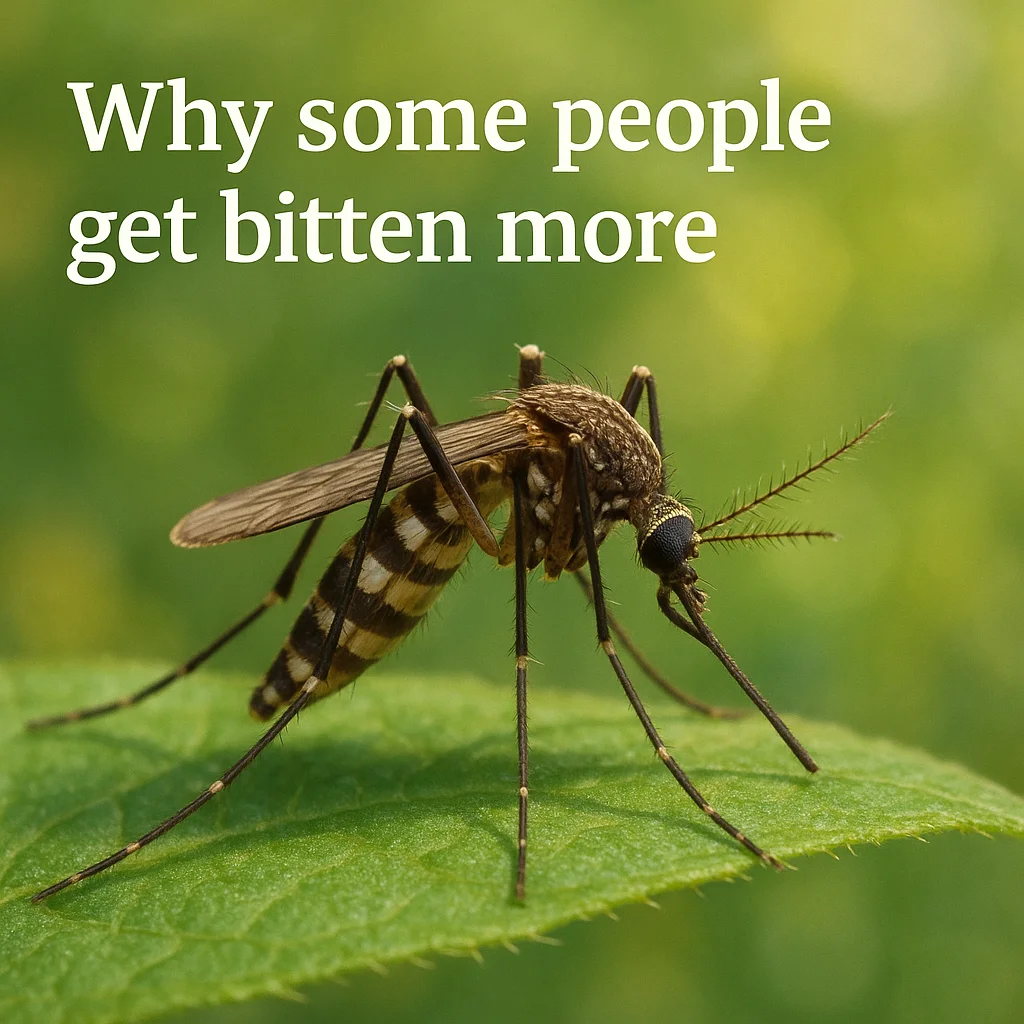
- Common names: varies widely (e.g., mosquitoes, fleas, bedbugs)
- Scientific name: varies
- Insect status: Typically insects, but can include other invertebrates
- Order / family: varies (e.g., Diptera, Siphonaptera)
- Typical size range: 3–15 mm, depending on the species
- Key colors/patterns: Generally muted colors; some display patterned wings or bodies
- Activity: mostly nocturnal for mosquitoes, some day-active fleas and other species
- Typical habitats: Urban, rural, and aquatic environments
- Where it occurs: Global distribution, varies by species
- Seasonality: Visible year-round in warm climates; summer and fall in temperate zones
🔍 Identification
The insects responsible for bites vary widely, yet they share some identifiable features. To recognize these insects, focus on their size and body structure.
- Body shape varies; generally compact or slender
- Antennae type: often short and adapted for sensing movement or chemical cues
- Wing features: Mosquitoes have scaled wings, while fleas lack wings
- Leg traits: Fleas have strong hind legs for jumping
- Distinguishing look-alikes: similar species may include non-biting insects
- Top ID Tips
- Identify mosquitoes by their long, slender legs and wings
- Look for fleas' strong hind legs
- Check for narrow bodies in bedbugs
- Observe active periods; night-time activity suggests mosquitoes/bedbugs
- Notice habitats—standing water for mosquitoes
- Use color patterns as a minor guide; many are drab
- Leg position can hint at flea presence
- Wing morphology helps filter mosquitoes from flightless fleas
🧠 Basic Body Structure
Understanding the basic anatomy of biting insects aids in identification. Insects, including mosquitoes, fleas, and others, exhibit distinct regions: the head, thorax, and abdomen.
Insects have six legs attached to the thorax. Their bodies are covered with an exoskeleton that provides structure and protection. Some species possess wings, aiding in mobility, while others, like fleas, rely on specialized legs for movement.
As invertebrates, these creatures lack a vertebral column. They molt periodically as they grow, shedding old exoskeletons.
🌍 Habitat & Distribution
Biting insects occupy a range of environments. Mosquitoes thrive in areas with standing water such as wetlands, ponds, and urban containers, as water is crucial for their breeding. Fleas prefer warm-blooded hosts, found in sheltered animal beds or crevices in homes.
Their geographic range spans across continents. Warm, humid climates support denser populations, allowing for widespread presence worldwide. Urbanization can expand their habitats as they exploit human-made water collections or pets.
📅 Seasonal Appearance & Activity
These insects are mostly seasonal in regions with temperate climates. Mosquitoes and other species are most active during warmer months, typically late spring through early fall.
Activity peaks during dawn and dusk for mosquitoes, which are drawn to the mild temperatures. Rain and humidity influence abundance since standing water facilitates mosquito breeding.
- Best Time to Spot It
- Summer evenings for mosquitoes
- Spring and fall warmth for varying species
- After rain showers
- Within manageable temperature ranges (15–30°C)
- Near water sources at dusk
🥚 Reproduction & Egg-Laying
Insect reproductive behaviors are intricate, with courtly displays seen in mosquitoes and less noticeable in fleas. Mosquitoes lay eggs on water surfaces or in moist areas, with hundreds in a single clutch.
Fleas often lay eggs on hosts or in sheltered environments, resulting in dispersed young across host resting zones. Egg-laying is a continual process influenced by environmental conditions.
🌀 Metamorphosis & Life Cycle
Most biting insects undergo complete metamorphosis, including egg, larval, pupal, and adult stages.
Mosquito larvae, often called "wrigglers," reside in water, feeding on organic matter. Pupal stages, termed "tumblers," do not feed and develop into adults. The entire cycle spans one to several weeks, influenced by temperature.
Fleas follow a similar path, with eggs hatching into larvae that eat organic detritus before pupating. Fleas can remain in pupal cases during unfavorable conditions, waiting for host cues to emerge.
🍽️ Diet & Feeding Behavior
Biting insects exhibit varied feeding behaviors, depending largely on lifecycle stages. Adult mosquitoes feed using piercing-sucking mouthparts, primarily targeting vertebrate hosts for blood meals necessary for egg production.
Larval mosquitoes filter and consume microorganisms in water, while fleas remain parasitic at all viable stages, feeding on host blood. Their feeding connects them essential functions: predator niche, facilitative disease transmission, and energy cycling through ecosystems.
🦉 Predators & Defense
Numerous predators prey on biting insects, including birds, amphibians, and spiders. Defense mechanisms among these insects can involve cryptic coloration, erratic movement, and exploiting environments like dense foliage.
- Defense Highlights
- Camouflage for passive avoidance
- Fleas jump away quickly when disturbed
- Mosquitoes remain still to avoid detection
- Chemical deterrents occasionally present
👥 Social Behavior & Swarms
Biting insects do not exhibit extensive social behavior. Mosquitoes occasionally form swarms during mating, triggered by environmental factors like humidity or temperature. These gatherings aid in mating but remain transient.
🧭 Senses & Communication
Insects in this group possess acute sensory systems. They detect hosts and environments through sight, smell, and thermal cues. Mosquitoes in particular rely on heat, carbon dioxide, and specific odors for host detection and navigation.
Communication can involve pheromone trails or simple vibrations for localization among closely related species.
🌱 Role in the Ecosystem
Beyond pest aspects, biting insects serve ecological roles including disease vectors, serving as food for higher trophic levels, and aiding in decomposition processes. Though mosquitoes are primarily known for pathogen transmission, they contribute to pollination in some capacities.
Fleas transmit certain pathogens, but otherwise serve minimal direct beneficial roles; they contribute generally to the energy transfer within ecosystems.
📉 Population & Conservation Notes
Many biting insects are common in suitable environments, with population dynamics largely influenced by habitat availability and climate. They remain integrated into human-modified environments, adapting readily to urban landscapes.
- How to Help (Low-Impact)
- Plant native flora to support diversified insect populations
- Maintain clean yards to minimize breeding grounds
- Avoid broad-spectrum pesticides
- Preserve natural wetlands responsibly
⚠️ Human Interaction & Safety
Insect bites can cause discomfort and, in some cases, transmit diseases. Bite reactions range from mild to severe, varying by individual's skin sensitivity and health status. For severe reactions, seeking professional medical advice is recommended.
Respectful observation of these insects' natural behaviors enriches understanding. Avoid handling or collecting wild specimens, focusing instead on learning through non-invasive methods.
📌 Summary
- Identification involves body structure and activity timing
- Habitats include urban, rural, and aquatic settings
- Active mostly in warm, humid conditions
- Egg-laying often requires specific microhabitats
- Complete metamorphosis is prevalent
- Diet varies from larval to adult stages
- Predator-evading tactics include movement and disguise
- Ecological roles span pest control to disease vectoring
- Population status often reflects habitat health
- Interaction with humans should prioritize safety and education