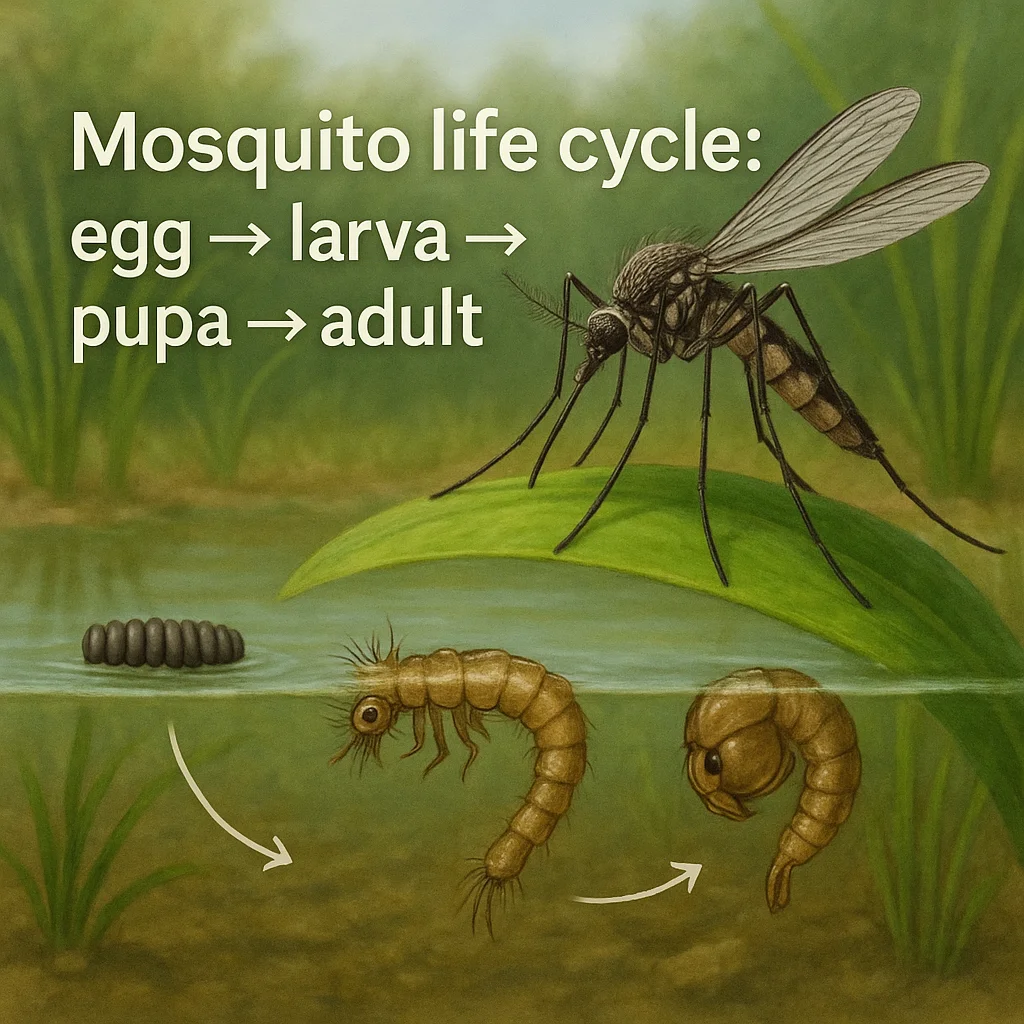
🕷️ Mosquito life cycle: egg → larva → pupa → adult
🧾 Quick Facts
Mosquitoes are small, flying insects known for their biting habits and potential to carry diseases. Despite their notoriety, their life cycle and ecological roles are fascinating. Here are some quick facts about mosquitoes:
- Common names: Mosquito
- Scientific name: Varies by species
- Insect or not: Yes, they are invertebrates and belong to the order Diptera
- Order / family: Diptera / Culicidae
- Typical size range: 3 mm to 6 mm (adult)
- Key colors/patterns: Typically grey, brown, or black, some with white markings
- Activity: Primarily nocturnal
- Typical habitats: Wetlands, forests, gardens, and areas near stagnant water
- Where in the world it occurs: Worldwide, predominantly in warmer climates
- Seasonality: Most visible during warm months; varies by region
🔍 Identification
Mosquitoes can be identified by their slender bodies, long legs, and distinctive wing structures. Here's how to spot them in the wild:
- Body shape and silhouette: Slender body with long, delicate legs
- Antennae type: Long, segmented antennae
- Wing features: Scaled wings that sit flat over the body when at rest
- Leg traits and movement style: Long legs that appear fragile; slow, hovering flight
- Distinguishing look-alikes: Can be confused with midges; mosquitoes have long proboscises
- Top ID Tips:
- Look for graceful, hovering flight
- Note the long, thin proboscis
- Check for scaled wings
- Observe activity levels mainly at dawn or dusk
- Identify by habitat near water sources
- Differentiate from flies by body and leg proportions
🧠 Basic Body Structure
As insects, mosquitoes have three main body parts: the head, thorax, and abdomen. They possess six legs and a pair of wings. A protective exoskeleton is present, and they undergo molting during development stages. Mosquitoes are invertebrates, which means they lack a backbone. This classification distinguishes them from vertebrates, such as mammals and birds.
🌍 Habitat & Distribution
Mosquitoes are adaptable insects often found in habitats with access to standing water, necessary for laying eggs. They thrive in diverse environments ranging from tropical rainforests to urban gardens. Microhabitats include wetlands, marshes, riverbanks, and even temporary pools. Geographically, mosquitoes are abundant across all continents except Antarctica, favoring regions with moderate to warm climates.
Changing habitats due to urbanization and climate shifts can affect mosquito populations significantly, with increased sightings in areas with rising temperatures and precipitation.
📅 Seasonal Appearance & Activity
Mosquito activity is heavily influenced by temperature and humidity. They are most visible during warmer months, generally late spring through early fall in temperate zones, though this may vary in tropical regions. Mosquitoes are generally crepuscular, with peak activity at dawn and dusk.
- Best Time to Spot It:
- Warm, humid evenings
- Late spring to early fall in temperate areas
- After rainstorms when water bodies are fresh
- During early morning and twilight hours
🥚 Reproduction & Egg-Laying
Mosquitoes display courtship behaviors involving wing beats and pheromones. Females lay eggs on the surface of stagnant or slow-moving water, which provides a safe environment for developing larvae. Egg clutches can vary significantly among species, with records ranging from a few dozen to several hundred eggs at a time. The eggs may hatch within a few days, depending on environmental conditions.
🌀 Metamorphosis & Life Cycle
Mosquitoes undergo complete metamorphosis, characterized by four distinct life stages: egg, larva, pupa, and adult.
Egg: Laid on water surfaces in clusters or rafts, hatching occurs in 24-48 hours under suitable conditions.
Larva: Known as "wrigglers," they inhabit water, feeding on organic matter and microorganisms. This stage lasts about a week to several weeks.
Pupa: The "tumbler" stage marks the transition to adulthood without feeding. Typically lasts a few days.
Adult: Emerges after pupation, feeds primarily on nectar. Females, however, require a blood meal to produce eggs.
🍽️ Diet & Feeding Behavior
Mosquito larvae are filter feeders, consuming small aquatic microorganisms. Adults feed on nectar and plant juices for energy. Female mosquitoes are known for hematophagy, using their piercing-sucking mouthparts to draw blood. This behavior supplies necessary proteins for egg development. Mosquitoes play a role as both pollinators and prey in the ecosystem.
🦉 Predators & Defense
Mosquitoes have various predators, including birds, bats, dragonflies, frogs, and fish. They often utilize swift, erratic flight to evade capture, and some species exhibit camouflage with their surroundings to reduce visibility. Mosquitoes lack significant physical defenses but rely on habitat choice and timing to minimize predation risks.
- Defense Highlights:
- Camouflage within habitats
- Erratic and quick flight patterns
- Hiding in vegetation during unfavorable weather
- Activity timing to avoid predators
👥 Social Behavior & Swarms
Mosquitoes are primarily solitary, interacting socially only for mating purposes. However, some species can form swarms during mating events, usually triggered by environmental cues such as light levels and temperature changes. These swarming behaviors increase mating success while simultaneously providing some protection against predators.
🧭 Senses & Communication
Mosquitoes rely heavily on olfactory senses, using antennae to detect carbon dioxide and other chemicals emitted by potential hosts. They also have keen vision adapted to low-light conditions, seeing ultraviolet light, which helps during early morning or late evening activity. Auditory cues are crucial during mating, as males use sound to locate females. Pheromones play an essential role in communication, especially for mating and territory establishment.
🌱 Role in the Ecosystem
Mosquitoes are integral to food webs, serving as prey for various animals and facilitating nutrient cycling by consuming organic matter during larval stages. Although they are often considered pests, mosquitoes contribute to pollination, especially in damp, low-light environments where they visit plant flowers. Some mosquito species have mutualistic relationships with plants, aiding in pollination while receiving nectar nourishment.
📉 Population & Conservation Notes
Mosquito populations are generally abundant, particularly in regions with favorable habitats. However, localized threats such as habitat destruction, pollution, and climate change can disrupt ecosystems, impacting population dynamics. Excessive pesticide use can also diminish mosquito numbers and come with broader ecological impacts.
- How to Help (Low-Impact):
- Support conservation of wetlands
- Reduce pesticide use in yards
- Plant native species for ecological balance
- Protect breeding grounds such as marshes
⚠️ Human Interaction & Safety
Due to their biting behavior, mosquitoes can be a nuisance and, in some cases, vectors for disease. To avoid bites, use protective clothing and mosquito repellent, especially in areas known for high activity or disease transmission. If bitten, clean the site and avoid scratching. Seek professional advice if a severe reaction occurs. Observing mosquitoes respectfully and minimizing disturbance of their habitats is recommended.
📌 Summary
- Mosquitoes are easily identified by their slender bodies and unique wing posture.
- Their habitats include wetlands and areas with stagnant water.
- Most active during warm months and crepuscular hours.
- Life cycle includes complete metamorphosis: egg, larva, pupa, adult.
- Feed on nectar; females require blood meals for egg production.
- Act as prey for various species and contribute to pollination.
- Mosquitoes face ecological threats but remain widespread.
- Responsible observation and habitat conservation aid coexistence.