🕷️ Mosquito Larvae ID Wrigglers Vs Other Pond Larvae
🧾 Quick Facts
Mosquito larvae, commonly referred to as "wrigglers," are an essential part of the aquatic ecosystem. They are distinguished from other pond larvae by their unique movement patterns and distinct morphological features.
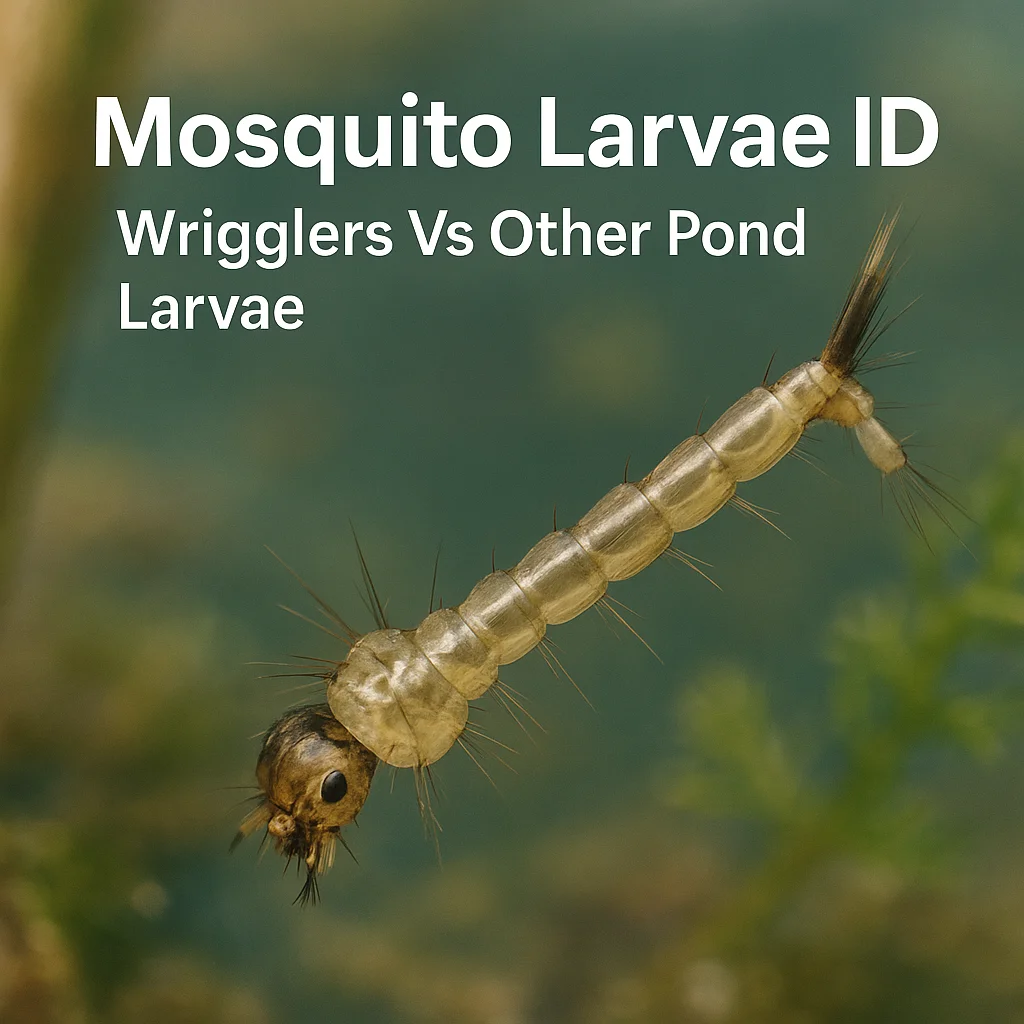
- Common names: Wrigglers, Mosquito larvae
- Scientific name: Varies (family Culicidae)
- Insect or not: Insect (aquatic invertebrate)
- Order / family: Diptera / Culicidae
- Typical size range: 5 to 10 mm (larval stage)
- Key colors/patterns: Translucent to dark brown, segmented bodies
- Activity: Primarily diurnal
- Typical habitats: Still or slow-moving water like ponds, puddles, and containers
- Where in the world it occurs: Globally, except in extreme arctic regions
- Seasonality: Spring through fall in temperate climates
🔍 Identification
To identify mosquito larvae in the field, one must look for their distinctive wriggling motion when disturbed. Their slim, elongated bodies contrast with other pond larvae, which might exhibit different movement patterns and body structures.
- Body shape and silhouette: Long, slender, and cylindrical with a distinct head.
- Antennae type: Short, simple antennae are present but not easily visible to the naked eye.
- Wing features: No wings in the larval stage.
- Leg traits and movement style: Lack legs in the larval stage; move using a wriggling motion.
- Distinguishing look-alikes and common confusion: Often confused with other aquatic larvae such as dragonfly larvae, which are bulkier and possess visible legs. Non-mosquito larvae often have different breathing structures and movement styles.
- Top ID Tip: Look for a breathing siphon at the rear end which they use to breathe at the water's surface.
- Top ID Tip: Observe their up-and-down wriggling, unlike the sidewise swimming of other larvae.
- Top ID Tip: Their segmented bodies are visible through water refraction.
- Top ID Tip: Typically found in stagnant water, making these locations ideal for observation.
- Top ID Tip: Identify small groups floating at the water's surface before moving when disturbed.
- Top ID Tip: They often have a clear, gelatinous appearance.
🧠 Basic Body Structure
As insects, mosquito larvae have a basic body plan comprising the head, thorax, and abdomen. They lack wings and legs in the larval stage but show a unique adaptation through their breathing siphon located on their abdomen. Being invertebrates, they possess an exoskeleton that provides structural support and protection, and they undergo molting as they grow.
🌍 Habitat & Distribution
Mosquito larvae thrive in aquatic environments, particularly in still or stagnant water. They are found across a wide range of habitats such as ponds, marshes, wetlands, and even artificial containers like birdbaths and flower pots. Their geographic range is extensive, covering nearly every continent except the coldest regions of Antarctica. Habitat changes, such as urban development and climate variations, can influence their presence in certain areas.
📅 Seasonal Appearance & Activity
Mosquito larvae are most visible during the warmer months when their aquatic habitats are most abundant. Typically, they appear from spring through fall in temperate regions and can be active year-round in tropical climates. Their activity peaks during daytime as they float near the water’s surface to breathe.
- Best Time to Spot It: Early spring following the first warm rains
- Best Time to Spot It: Late summer when water levels are low and still
- Best Time to Spot It: After heavy rain when new breeding sites form
- Best Time to Spot It: Warmer climates during afternoon hours
🥚 Reproduction & Egg-Laying
Mosquitoes exhibit fascinating mating behaviors where males often form swarms to attract females. Females lay their eggs on the surface of still water. Depending on the species, egg counts can vary significantly; some lay rafts of hundreds of eggs, while others lay single eggs. These breeding strategies ensure that even small, temporary pools can sustain populations.
🌀 Metamorphosis & Life Cycle
Mosquitoes undergo complete metamorphosis, meaning their life cycle includes the egg, larva, pupa, and adult stages. During the larval stage, they feed on microorganisms and organic matter, living close to the water's surface for respiration. The larval stage typically lasts several days to a few weeks, depending on environmental factors such as temperature and food availability.
Following the larval stage, mosquitoes enter the pupal stage, where they do not feed but remain active. This stage lasts a few days, after which adults emerge to begin the cycle anew.
🍽️ Diet & Feeding Behavior
The diet of mosquito larvae consists mainly of organic detritus, algae, and microorganisms. They employ filter-feeding mechanisms using mouthparts adapted to comb through water surfaces to capture food. Their feeding activities play a role in controlling microbial populations in their aquatic ecosystems.
🦉 Predators & Defense
Mosquito larvae face numerous predators, including fish, amphibians, birds, and other insect larvae. Their primary defense strategies involve evasive maneuvers, such as wriggling into deeper water, and using their translucent bodies to avoid detection.
- Defense Highlight: Evasive wriggling when predators approach
- Defense Highlight: Utilizing surface tension for rapid movement away from threats
- Defense Highlight: Remaining inactive during disturbances
- Defense Highlight: Breathing siphons allow them to rest at the surface while face-down
👥 Social Behavior & Swarms
Mosquito larvae are solitary, although they may be found in large groups within the same water body due to the gregarious egg-laying habits of their parents. They do not form coordinated swarms at the larval stage, unlike the adult mosquitoes which may swarm during mating periods.
🧭 Senses & Communication
Mosquito larvae rely heavily on chemosensory cues to detect food and potential danger. While they lack sophisticated visual systems, they are sensitive to changes in water tension and vibrations, aiding in their detection of predators. In terms of communication, larvae exhibit basic responses to environmental stimuli rather than active interaction.
🌱 Role in the Ecosystem
Mosquito larvae play an integral role within aquatic ecosystems, acting as both consumers of organic material and prey for a variety of predators. Their presence contributes to nutrient cycling in water bodies. While adult mosquitoes can be vectors for diseases, larvae themselves are crucial in maintaining ecological balance.
📉 Population & Conservation Notes
The population of mosquito larvae is typically abundant in suitable habitats, though subject to fluctuations due to environmental conditions and human activities like habitat destruction and pesticide use. Their adaptability enables them to exploit transient water bodies effectively, making them one of the most resilient groups of aquatic insects.
- How to Help (Low-Impact): Maintain natural wetlands and minimize drainage
- How to Help (Low-Impact): Reduce pesticide use near water habitats
- How to Help (Low-Impact): Preserve buffer vegetation around water bodies
- How to Help (Low-Impact): Utilize native plantings that support diverse ecosystems
⚠️ Human Interaction & Safety
Mosquito larvae are harmless to humans; however, adult mosquitoes are known for their bites. To prevent mosquito breeding, eliminate standing water near residences. Always handle with respect and observe from a distance. If bitten by mosquitoes, wash the affected area and seek professional advice if you experience severe reactions.
📌 Summary
- Mosquito larvae, or wrigglers, are found in stagnant water worldwide.
- Identification is easiest through observing their unique wriggling and breathing siphons.
- They are active primarily in spring and summer months.
- Mosquitoes go through a complete metamorphosis with distinct life stages.
- Larvae feed on organic detritus within water habitats.
- They face natural predation from fish, amphibians, and birds.
- Larvae contribute to nutrient cycling and are a part of the larger ecological web.
- Populations are resilient but depend on natural habitats for survival.
- While larvae are harmless, adult mosquitoes can affect human health.