🕷️ Mosquito ecology: role in food webs
🧾 Quick Facts
Mosquitoes are small insects known for their role within ecological food webs. While often regarded as pests due to their feeding habits, they are integral to various ecosystems across the globe.
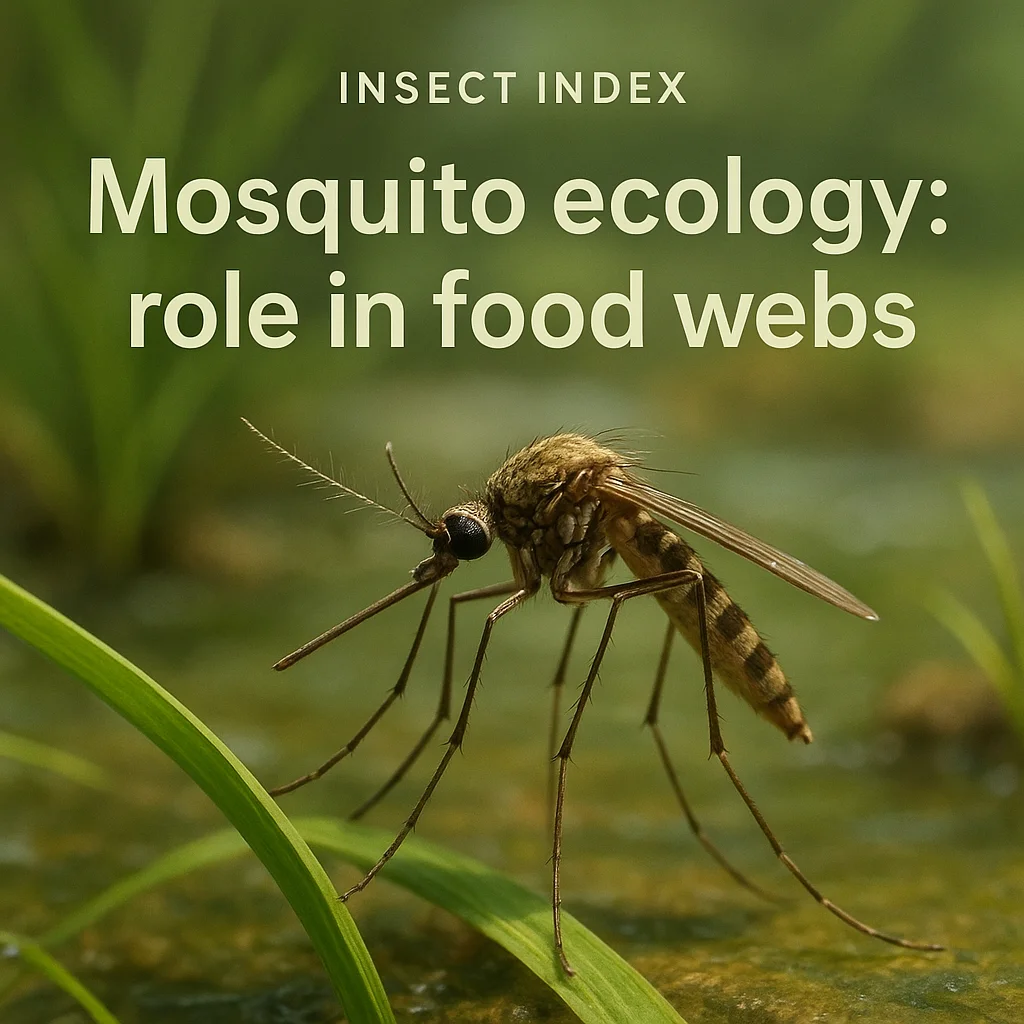
- Common names: Mosquito
- Scientific name: Varies (numerous species)
- Insect: Yes, it is an invertebrate
- Order/Family: Diptera/Culicidae
- Typical size range: 3 to 10 mm (adult)
- Key colors/patterns: Usually gray or brown with narrow, elongated bodies
- Activity: Mostly nocturnal
- Typical habitats: Wetlands, forests, grasslands, urban areas
- Where in the world it occurs: Worldwide, except Antarctica
- Seasonality: Most active in warm, humid conditions (varies by region)
🔍 Identification
Identifying a mosquito in the field requires attention to its slender body shape, delicate wings, and needle-like proboscis used for feeding. Their antennae are often feathered in males, aiding mate detection.
- Body shape and silhouette: Slender, elongated with a small head
- Antennae type: Feathered in males, thread-like in females
- Wing features: Clear, narrow wings with scales
- Leg traits and movement style: Long, thin legs that often hang down while flying
- Distinguishing look-alikes: May be confused with crane flies, but mosquitoes are much smaller with different wing structures
- Small, narrow body with long legs
- Visible needle-like proboscis
- Wings held horizontally when at rest
- Males have bushy antennae
- Females tend to produce a whiny buzzing sound
- Often seen near water sources
🧠 Basic Body Structure
Mosquitoes, like other insects, are composed of a head, thorax, and abdomen. They possess six legs and an exoskeleton that provides structure and protection. These invertebrates undergo molting as they develop and have clear, scale-covered wings for flight.
Invertebrates, lacking backbones, play crucial roles in ecosystems, with mosquitoes contributing as both prey and pollinators.
🌍 Habitat & Distribution
Mosquitoes thrive in diverse environments ranging from tropical rainforests to arid desert edge areas. They typically inhabit wet areas that can support breeding, such as marshes, swamps, ponds, and even man-made water containers. These insects are found on all continents except Antarctica, with specific species favoring particular climatic conditions.
Habitat alterations, such as wetland drainage and urbanization, affect mosquito populations, sometimes leading to increased interactions with humans.
📅 Seasonal Appearance & Activity
Mosquitoes are most active during warm and humid conditions, which are typically found in the spring and summer months. They are predominantly nocturnal, although some species may show activity during dawn and dusk.
- Most visible in spring and summer
- Prefer warm, humid weather
- Nocturnal activity peak
- Increased after rainfall
- Temperate regions may see them from spring through early fall
🥚 Reproduction & Egg-Laying
Mosquitoes engage in mating aerial dances guided by wing beats. Females often need a blood meal for eggs to develop fully. Eggs are laid in water or damp soil, depending on species. While some species lay single eggs, others lay eggs in rafts or groups.
The number of eggs a female can lay varies, often numbering in the hundreds, with specific reproductive strategies depending on environmental conditions.
🌀 Metamorphosis & Life Cycle
Mosquitoes undergo complete metamorphosis, transitioning through four distinct life stages: egg, larva, pupa, and adult.
Eggs hatch into larvae, commonly known as wrigglers, which live in water and feed on organic matter and microorganisms. The larva stage lasts about a week, varying with temperature.
The pupae stage, or tumblers, follows. It is a non-feeding, mobile underwater phase lasting several days. Pupae transform into adults by emerging from the water surface.
Adult mosquitoes feed on nectar, with females also requiring blood meals to aid egg development. The adult life span varies widely, influenced by environmental factors.
🍽️ Diet & Feeding Behavior
The feeding behaviors of mosquitoes are complex and vary by life stage. As larvae, they feed on algae and organic material in water. Adults primarily consume nectar and sugars, but females require blood for reproductive purposes, utilizing specialized piercing-sucking mouthparts to extract it.
Mosquitoes fulfill important ecological roles, acting as pollinators for certain plant species and providing nutrients for other organisms.
🦉 Predators & Defense
Mosquitoes face predation from a variety of animals, including birds, bats, amphibians, reptiles, fish, and other insects. Although they lack strong defenses, mosquitoes rely on their small size, flying ability, and evasion tactics to escape threats.
- Blend into surroundings when at rest
- Avoidance through swift, erratic flight
- Some emit sounds or scents that deter predators
- May escape detection by feeding when predators are less active
👥 Social Behavior & Swarms
Mosquitoes are generally solitary but may form swarms during mating sessions. These swarms, often consisting of male mosquitoes, are triggered by environmental conditions such as temperature and humidity. Males use these gatherings to locate potential mates.
🧭 Senses & Communication
Mosquitoes have developed acute sensory abilities, such as detecting carbon dioxide and heat, to locate hosts. Their antennae play a crucial role in detecting chemical signals and vibrations to navigate their environment.
Sound communication is significant in mating, where males are attracted to the characteristic wing beats of females.
🌱 Role in the Ecosystem
Mosquitoes hold important ecological roles despite their reputation as nuisances. They contribute to pollination and serve as essential food web components, providing nutrition for predators such as birds, amphibians, and spiders. Furthermore, their larvae contribute to nutrient cycling in aquatic ecosystems by breaking down organic matter.
While mosquitoes can affect human health and agriculture by transmitting diseases, their ecological contributions remain significant.
📉 Population & Conservation Notes
Most mosquito species are common in suitable habitats, though local abundance is subject to environmental changes. Habitat destruction, pesticide use, and climate change can influence mosquito populations.
- Encourage native plant growth in gardens
- Avoiding pesticide use can benefit ecosystem health
- Leave water bodies undisturbed
- Ensure habitats are healthy to support predator biodiversity
⚠️ Human Interaction & Safety
Mosquitoes are known to bite humans, leading to irritation or allergic reactions. In rare cases, they may transmit diseases. If bitten, it is advisable to wash the area, refrain from scratching, and seek professional advice if symptoms are severe.
Observing mosquitoes respectfully in their natural habitat can offer educational insights without disrupting their ecological roles or collecting them.
📌 Summary
- Mosquitoes are globally distributed insects
- Recognizable by their slender bodies and buzzing sounds
- Present in diverse habitats, often near water
- Active mainly during warm, humid nights
- Undergo complete metamorphosis with aquatic larval stages
- Feed on nectar, with females requiring blood for reproduction
- Preyed upon by various animals, contributing to food webs
- Despite negative impacts on humans, they play vital ecosystem roles
- Conservation efforts focus on habitat preservation and balanced ecosystems
- Respectful observation is recommended for learning without intervention