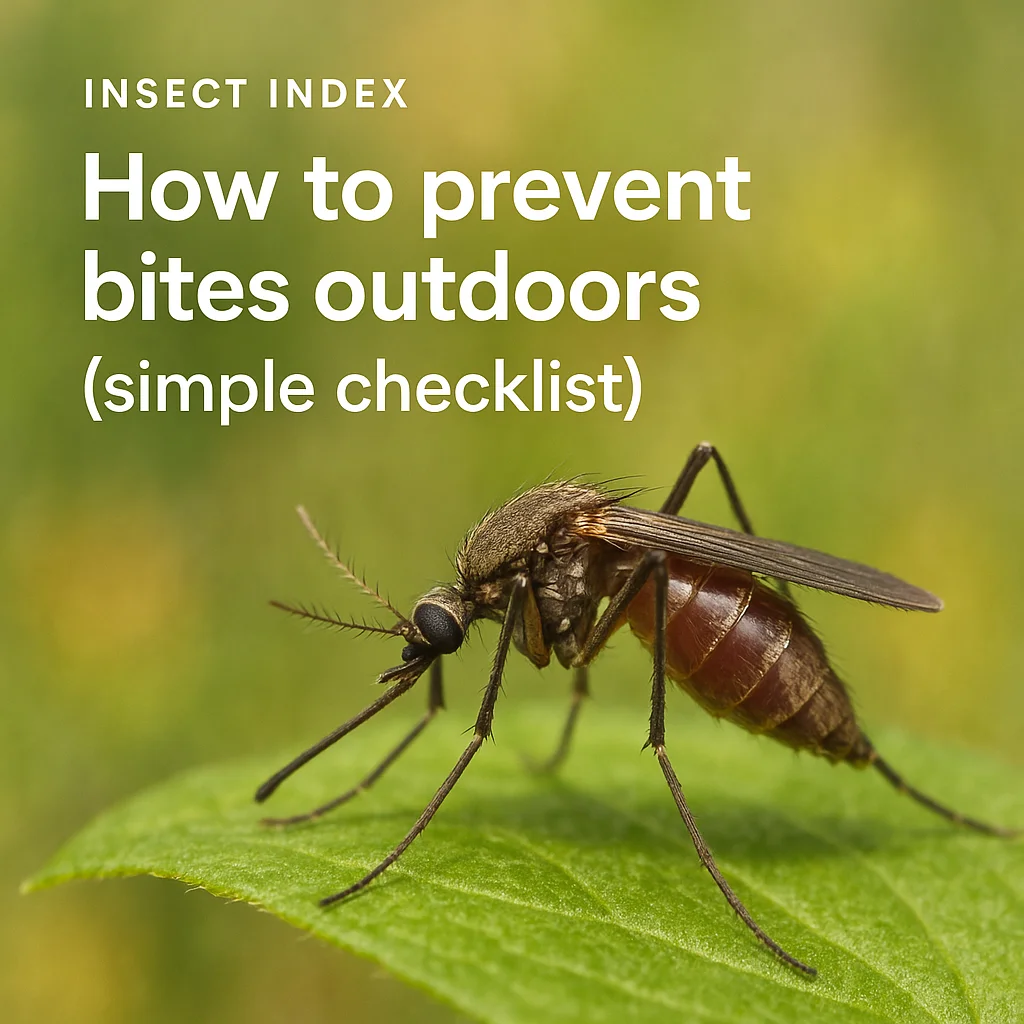
🕷️ How to prevent bites outdoors (simple checklist)
🧾 Quick Facts
Spending time outdoors can sometimes result in bug bites, especially from insects and arachnids. Here's a simple checklist to help you minimize the chances:
- Wearing protective clothing: Long sleeves and pants can reduce skin exposure.
- Using insect repellents: DEET, picaridin, and natural products like lemon eucalyptus oil can be effective.
- Avoiding high-risk areas: Stay clear of dense foliage and standing water where bugs thrive.
- Timing outdoor activities: Certain insects are more active at dawn or dusk; plan accordingly.
- Checking for ticks: After being outdoors, inspect your skin thoroughly.
- Maintaining yards: Keeping lawns cut short and removing standing water minimizes breeding sites.
- Using bed nets: When sleeping outdoors or in insect-heavy areas.
- Knowing regional species: Be aware of the types that are common in your area.
🔍 Identification
Bites can be caused by a variety of insects and arachnids. Recognizing potential culprits can help in prevention:
- Mosquitoes: Slender bodies, long legs, and wings that may appear pale or spotted.
- Ticks: Small, round bodies with a reddish-brown hue; they grasp tightly with their legs.
- Fleas: Tiny, dark, wingless insects capable of jumping long distances.
- Chiggers: Mites that are nearly microscopic, typically found in grassy or wooded areas.
- Gnats: Small, flying insects often confused with mosquitoes; have a hump-backed appearance.
- Common confusion: Various flies can be mistaken for mosquitoes but lack the hallmark long mouthparts.
- Use appropriate insect repellent
- Avoid dense areas of vegetation
- Be mindful of times of high activity (dawn/dusk)
- Inspect yourself post-outdoor activity
- Maintain clean, dry yards and wear protective clothing
🧠 Basic Body Structure
Insects and arachnids have distinct body structures:
- Head: The center for sensory organs; location of eyes, antennae (insects), or palps (arachnids).
- Thorax: Bears the legs and wings (insects); connects sensory structures to the abdomen.
- Abdomen: Houses digestive and reproductive organs.
- Exoskeleton: A hard, protective outer layer that must be shed for growth.
- Wings: Present in many insects, though not all need them for movement.
- Invertebrate: Lacking an internal skeleton, relying on an external one instead.
🌍 Habitat & Distribution
Bite-causing pests are distributed globally, found in diverse environments from urban parks to remote forests:
- Forests: Provide ample cover and breeding sites.
- Grasslands: Abundant in some regions, harboring various insect populations.
- Urban gardens: Affected by pest management and seasonal blooms.
- Wetlands: Hotspots for breeding due to standing water.
📅 Seasonal Appearance & Activity
Bite risks fluctuate with seasons and daily conditions:
- Spring to Summer: Warmer months see increased insect and arachnid activity.
- Day and Night: Mosquitoes and certain flies might favor dusk and dawn.
- Humidity and Rainfall: Promote insect breeding; dry conditions may reduce activity.
- Best Times: Early morning and late afternoon during spring/summer
- Days following rain showers
- When humidity is relatively high
- Avoiding times of high wind
🥚 Reproduction & Egg-Laying
Understanding breeding habitats can guide bite prevention strategies:
- Eggs: Laid in moist ground, on host animals, or in stagnant water.
- Common Habitats: Water edges, plants, or soil; varies across species.
- Egg Counts: Can range from a handful to hundreds, depending on the species.
🌀 Metamorphosis & Life Cycle
Many biting insects undergo complete metamorphosis:
- Egg: Deposited in conducive environments such as water or moist soil.
- Larva: A feeding stage; lives in water or soil with appropriate food sources.
- Pupa: Transformation stage; often in a cocoon or sheltered spot.
- Adult: Emerges ready for reproduction and seeking hosts.
🍽️ Diet & Feeding Behavior
Biting insects and arachnids have specialized feeding tools:
- Mouthparts: Vary widely; may include piercing-sucking (mosquitoes), biting, or using digestive enzymes (ticks).
- Diet: Typically blood or plant juices; mosquitoes are also pollinators.
🦉 Predators & Defense
These creatures employ multiple strategies to avoid becoming prey:
- Natural Enemies: Birds, reptiles, and other insects.
- Defensive Measures: Swift movements, camouflage, chemical defenses.
- Speedy flight or bursts
- Protective colors
- Hiding in small crevices
- Emitting noxious chemicals
👥 Social Behavior & Swarms
With varied lifestyles, bites can arise from solitary or swarm behavior:
- Social Insects: Such as ants, work cooperatively in nests or colonies.
- Solitary Creatures: Ticks operate individually, taking opportunistic bites.
🧭 Senses & Communication
Effective communication and sensory abilities aid in seeking hosts:
- Photoreception: Detects movement and vibrations.
- Pheromones: Can signal to others of the same species.
- Sound: Such as crickets chirping or mosquito buzzing.
🌱 Role in the Ecosystem
Even biting insects hold ecological significance:
- Pollination: Many species assist in plant reproduction.
- Food Web: Serve as vital links, feeding many animal species.
- Pest Control: Predatory species reduce harmful insect populations.
📉 Population & Conservation Notes
Conservation concerns and human cohabitation strategies:
- Commonality: Many species remain abundant, though local declines can occur.
- Threats: Habitat loss, climate change, pesticide use.
- Preserve wetlands and water bodies
- Use environmentally safe repellents
- Maintain native plants for ecological balance
- Avoid overuse of chemicals
⚠️ Human Interaction & Safety
When engaging with nature, safety is crucial:
- Biting Behavior: Mainly accidental but can carry diseases.
- First-Aid: Clean bites, apply antiseptic, and seek medical advice if severe.
- Respectful Observation: Do not handle wildlife unnecessarily.
📌 Summary
- Biting insects/arachnids have diverse habitats and identification clues.
- Recognize the seasons and times with high activity.
- Understand life cycles: egg, larva/nymph, pupa, adult.
- Feeding varies; many have specialized mouthparts for blood or plant juices.
- Natural predators help control populations in ecosystems.
- Some species have solitary habits, while others can form swarms.
- Use knowledge of distribution and habitat for effective prevention.
- Safety includes being mindful of bites and reacting appropriately.