🕷️ How repellents work: DEET vs alternatives
🧾 Quick Facts
Insect repellents are crucial tools in reducing discomfort and the transmission of vector-borne diseases by insects. DEET, and its alternatives, function by interfering with the host-seeking behaviors of insects. This guide details how these repellents work and explores various alternatives.
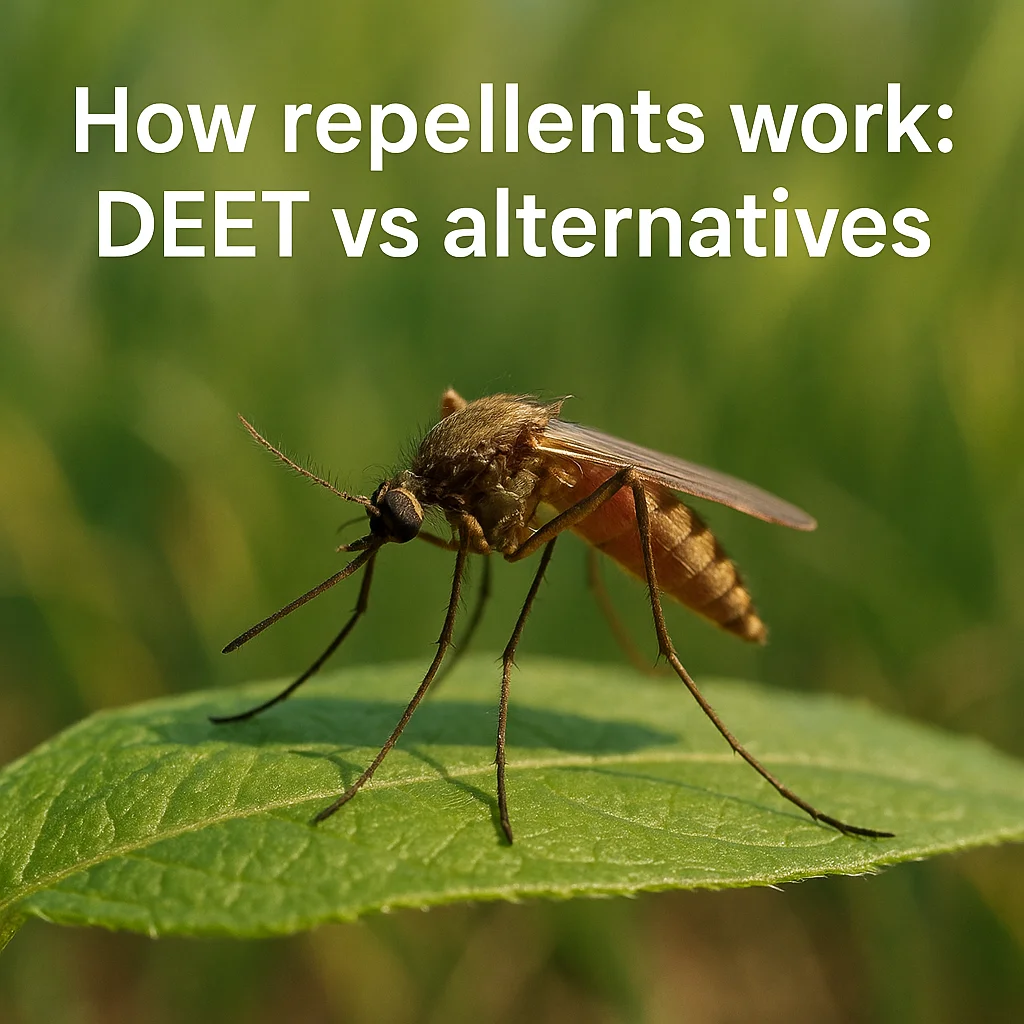
- Common names: DEET, Picardin, IR3535, Oil of Lemon Eucalyptus
- Scientific name: Varies depending on compound
- Insect or not: Not applicable (chemical compounds)
- Order / family: Not applicable
- Typical size range: Liquids typically in bottles from 50 ml to 500 ml
- Key colors/patterns: Various, depending on packaging
- Activity: Applied on skin surfaces or clothing
- Typical habitats: Used in areas with insect activity
- Where in the world it occurs: Globally distributed wherever insect-borne diseases are a concern
- Seasonality: Used year-round but more in warmer months
🔍 Identification
Repellents like DEET and its alternatives aren't something one can observe or identify like a living organism. Instead, identification pertains to understanding the product characteristics and applications.
- DEET is often found in a clear, liquid form when released from a bottle or sprayed.
- Products are labeled with their active ingredients and concentration percentages.
- Available in sprays, lotions, and wipes for ease of use.
- Alternatives like picaridin are similar in form and use.
- DEET is known for its distinctive chemical smell, though formulations may differ.
- Natural repellents like Oil of Lemon Eucalyptus might have a citrus scent.
- Compact and portable packaging for convenience.
- Stay within expiration dates for effective use.
🧠 Basic Body Structure
Unlike living organisms, repellents do not possess a body structure. They are chemical formulations applied externally on living forms for protection against biting insects. These compounds belong to the broad category of invertebrate deterrents as they do not possess vertebrate characteristics.
🌍 Habitat & Distribution
Repellents such as DEET and its alternatives are applied in various environments where humans are at risk of insect bites. This includes forests, grasslands, urban parks, gardens, and even indoors in some cases. Their geographical use spans all continents, with higher utilization in tropical and subtropical climates where insect activity is at peak levels. Changes in habitat conditions like urbanization and climate change affect the distribution and necessity of repellents as insect populations shift.
📅 Seasonal Appearance & Activity
Repellents see increased use during warmer months when insects are most active. They are vital during seasons with increased rainfall that foster mosquito breeding, or warm, humid days when flies are prevalent. In regions with perennial insect activity, repellents find year-round use.
- Spring and summer in temperate regions
- During the rainy season in tropical areas
- Daytime or dusk, depending on insect activity
- Warm weather with adequate moisture
🥚 Reproduction & Egg-Laying
Repellents do not reproduce or lay eggs as they are not living entities. However, their effectiveness against insects can impact the reproductive cycles of the species they repel by reducing the frequency of human-insect interactions, thus disrupting the feeding process necessary for some insect's reproduction.
🌀 Metamorphosis & Life Cycle
As chemicals, repellents follow no biological metamorphosis. Their "life cycle" might be interpreted as production, purchase, application, and eventual degradation or replacement. The effectiveness of repellents can influence insect life's cycles as they deter insects from feeding, which is sometimes critical during their breeding cycles.
🍽️ Diet & Feeding Behavior
Repellents such as DEET do not consume food. Instead, they function to disrupt the feeding behavior of insects such as mosquitoes, which are attracted by humans' body heat, carbon dioxide, and scent. By masking these cues, repellents reduce the likelihood of insects landing and feeding on the human host.
🦉 Predators & Defense
Repellents do not have predators but serve as a defensive tool against insect bites. They act passively by creating an invisible shield over skin and clothes, preventing insects from successfully landing or biting.
- Interferes with insect sensory receptors
- Masks scent cues of the host
- Reduces mosquito landings and feeding
- Lessens disease transmission risk
👥 Social Behavior & Swarms
Repellents themselves do not exhibit social behavior. However, their application can decrease the level of insect aggregations around humans by reducing attractiveness, effectively disrupting potential insect swarms that are searching for blood meals.
🧭 Senses & Communication
Repellents impact the sensory processes of insects that rely heavily on smell and thermal cues to locate hosts. DEET and other compounds often interfere with the insect's olfactory senses, confusing the signals essential for navigating toward prey.
🌱 Role in the Ecosystem
While repellents do not directly partake in the ecosystem, their influence is felt in minimizing human-vector interactions. By reducing bites, repellents help decrease the transmission of diseases like malaria, dengue, and Zika virus, thus playing a crucial role in public health. Conversely, by protecting against insect populations, they can indirectly affect pollinator insects which rely on human proximity.
📉 Population & Conservation Notes
DEET and other modern repellents are commercially widely available, though their impacts on non-target species and environmental safety, such as water contamination, are scrutinized. Favoring awareness about eco-friendly and biodegradable repellents can contribute positively.
- Encourage native plant growth in gardens
- Practice minimal pesticide use
- Support research into alternative repellents
- Promote awareness about light pollution and its effects on insects
⚠️ Human Interaction & Safety
Repellents are often safe when used as directed, although overuse or misuse can lead to skin irritation. It is advised to wash treated areas with soap and water if irritation occurs. Different repellents have varied effectiveness, so choose based on activity and environment. For severe allergic reactions, professional advice is recommended. Always read labels and apply responsibly.
📌 Summary
- Repellents work by disrupting insects' sensory abilities.
- Used globally in areas with high insect activity.
- Essential during warm, humid months and regions.
- No biological structure, but manufactured chemically.
- Impact insect feeding behaviors and disease transmission.
- Part of public health ecosystem, protecting human interactions.
- Widely available but must be applied per guidelines.
- Contributes to a decrease in vector-borne disease incidence.
- Environmental impact being studied; eco-friendly alternatives supported.
- Safe with responsible use, irritation possible if misused.