🕷️ Tachinid flies: parasitoids of pests
🧾 Quick Facts
Tachinid flies are fascinating insects known for their role as parasitoids of various pest species. They play a significant role in controlling pest populations, making them important allies in natural and agricultural ecosystems.
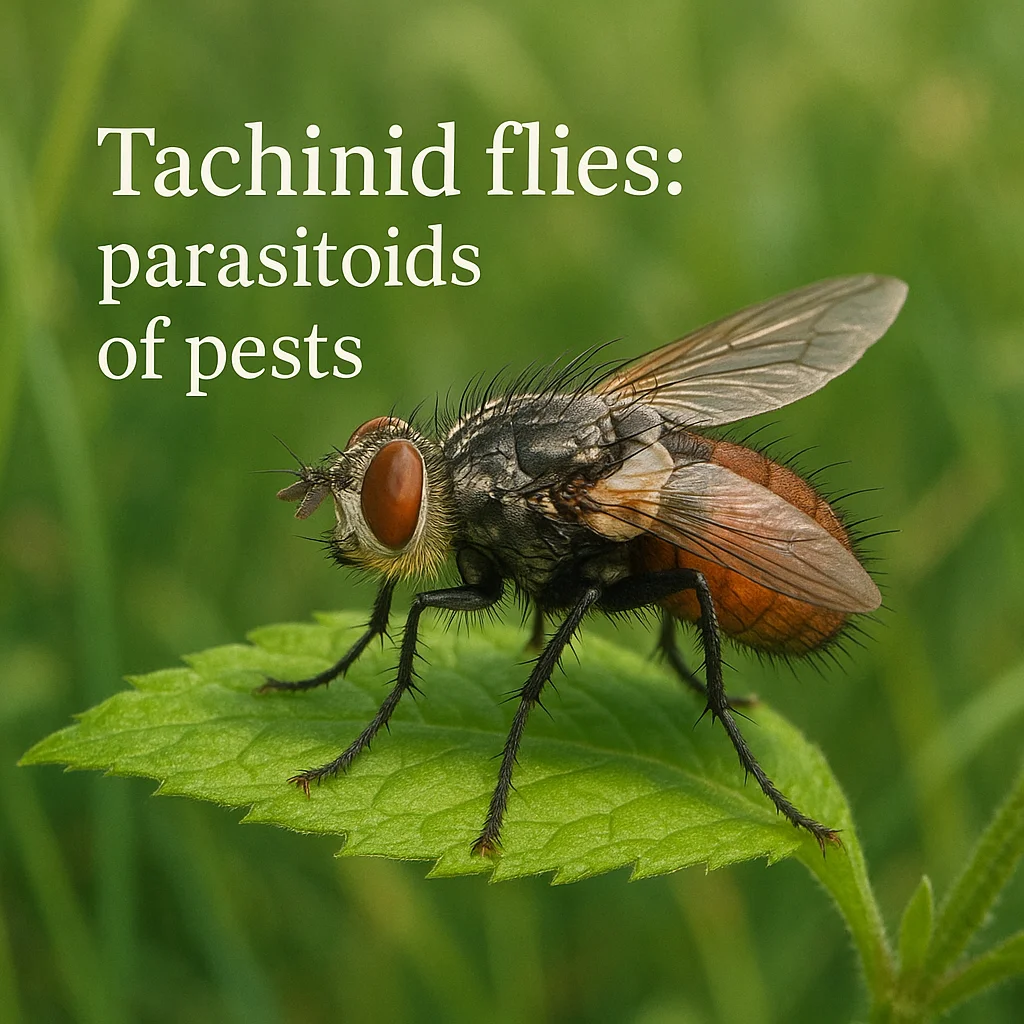
- Common names: Tachinid flies, parasitoid flies
- Scientific name: Varies by species
- Insect or not: Yes, they are insects
- Order / family: Diptera / Tachinidae
- Typical size range: 3 to 20 mm in length
- Key colors/patterns: Typically black, gray, or brown with bristly bodies
- Activity: Mostly diurnal
- Typical habitats: Forests, grasslands, gardens, and agricultural fields
- Where in the world it occurs: Found worldwide
- Seasonality: Varies, but adults are most visible in spring and summer
🔍 Identification
Recognizing tachinid flies in the field can be challenging due to their resemblance to houseflies and their varied appearances. However, there are key features to look for. Tachinid flies usually have stout, bristly bodies and some possess vivid abdominal patterns.
- Body shape and silhouette: Robust and bristly
- Antennae type: Typically short with prominent arista
- Wing features: Clear with evident wing venation
- Leg traits and movement style: Strongly built legs; rapid flight
- Distinguishing look-alikes and common confusion: Often confused with houseflies; distinguishable by bristle-covered abdomen
- Top ID Tips:
- Note the bristly abdomen
- Check for short antennae with an arista
- Observe the sturdy wings with distinct venation
- Look for varied abdominal patterns
- Spot them in gardens and fields actively hunting
🧠 Basic Body Structure
The body of a tachinid fly, like most insects, is divided into three main sections: the head, thorax, and abdomen. They possess six legs, two wings, and a hard exoskeleton that offers protection. As invertebrates, tachinid flies lack a spinal column, relying on their exoskeleton for support and structure. During development, they undergo a process called molting, where they shed their outer layer to grow.
🌍 Habitat & Distribution
Tachinid flies thrive in a variety of environments, including forests, grasslands, urban gardens, and agricultural fields. They favor habitats where their host insects, such as caterpillars, beetles, and other pest species, are plentiful. Geographically, they are found worldwide from temperate to tropical regions. Changes in habitat, such as urban development and intensive agriculture, impact their distribution and availability.
📅 Seasonal Appearance & Activity
Tachinid flies are most active during the warmer months, typically from spring through late summer. They are mainly diurnal, engaging in activities during daylight hours. Their presence is influenced by temperature and humidity, thriving in milder, less extreme weather.
- Best Time to Spot It:
- Spring and summer
- Daytime
- Warm and mild weather
- After rain periods
🥚 Reproduction & Egg-Laying
Tachinid flies exhibit diverse reproductive behaviors, depending on their species. Females lay eggs on or near their host insects, sometimes directly on caterpillars or other larvae. The number of eggs laid varies, tailored to ensure successful parasitism. Their methods are adapted to optimize the likelihood of larval survival.
🌀 Metamorphosis & Life Cycle
Tachinid flies undergo complete metamorphosis, passing through four stages: egg, larva, pupa, and adult. The larvae, upon hatching, are parasitic and feed on the host insect's internal organs, eventually leading to its death. The larval stage varies in duration based on environmental conditions and host availability. The pupal stage occurs within rough protective shells, lasting from a few weeks to months, culminating in the emergence of the adult fly.
🍽️ Diet & Feeding Behavior
The feeding behavior of tachinid flies is primarily dictated by their life stage. The larval stage is parasitic, as larvae consume their host from within. In contrast, adults feed on nectar, pollen, and possibly honeydew. They possess sponging mouthparts adapted for liquid consumption. While larval feeding controls pest populations, adults contribute marginally to pollination.
🦉 Predators & Defense
Tachinid flies face predation from birds, spiders, and predatory insects. Their primary defense mechanisms include camouflage and mimicry, allowing them to blend with their surroundings or resemble less palatable species. When threatened, they may exhibit rapid flight to escape potential threats.
- Defense Highlights:
- Camouflage in natural habitats
- Mimicry of less tasty insects
- Rapid flight
- Blend in with bristly body textures
👥 Social Behavior & Swarms
Tachinid flies are typically solitary insects. Unlike social insects such as bees or ants, they do not form colonies or demonstrate cooperative behavior. Their interactions are primarily limited to mating encounters. In cases of abundant host pests, tachinid fly populations may increase, but they do not form swarms.
🧭 Senses & Communication
Tachinid flies rely on their senses for navigation and host location. They possess compound eyes that offer a broad field of vision. Sensory hairs located on their body help detect air currents and chemical signals. While they do not produce sounds typically heard by humans, they utilize pheromones during mating season for communication.
🌱 Role in the Ecosystem
As parasitoids, tachinid flies play a crucial role in natural pest control. By regulating populations of caterpillars and other insect pests, they contribute to healthy ecosystem dynamics. Their interactions with host species are primarily parasitic, yet they promote biological control methods in agriculture, reducing the need for chemical interventions. Tachinid flies form a key part of the food web, serving as prey for numerous birds, spiders, and other insectivores.
📉 Population & Conservation Notes
The abundance of tachinid flies varies widely based on environmental conditions and the presence of host species. They are often reported as common in suitable habitats. Factors such as habitat loss, pesticide usage, and climate changes pose threats to their populations. Conservation efforts should focus on preserving natural habitats and promoting sustainable agricultural practices.
- How to Help (Low-Impact):
- Plant native flowers to provide nectar sources
- Limit pesticide use to protect non-target species
- Create bug-friendly gardens with diverse habitats
- Maintain areas of leaf litter for natural protection
⚠️ Human Interaction & Safety
Tachinid flies do not bite or sting humans. They are harmless to people and pets, and do not pose medical threats. Observing these flies respectfully in their natural habitats without collecting is encouraged, as they are valuable allies in pest control.
📌 Summary
- Identification: Bristly body, robust silhouette
- Habitat: Forests, grasslands, gardens
- Seasonality: Active in spring and summer
- Life Cycle: Complete metamorphosis
- Diet: Parasitoid as larvae, nectar feeder as adult
- Predators: Birds, spiders, insects
- Ecological Role: Natural pest control
- Human Notes: Harmless to humans, beneficial in gardens