🕷️ Fruit Flies In Kitchens Breeding Cycle And Simple Prevention
🧾 Quick Facts
Fruit flies, often a nuisance in kitchens, are small insects attracted to ripening or fermenting fruits and vegetables. Understanding their basic biology and prevention tactics can help manage infestations efficiently.
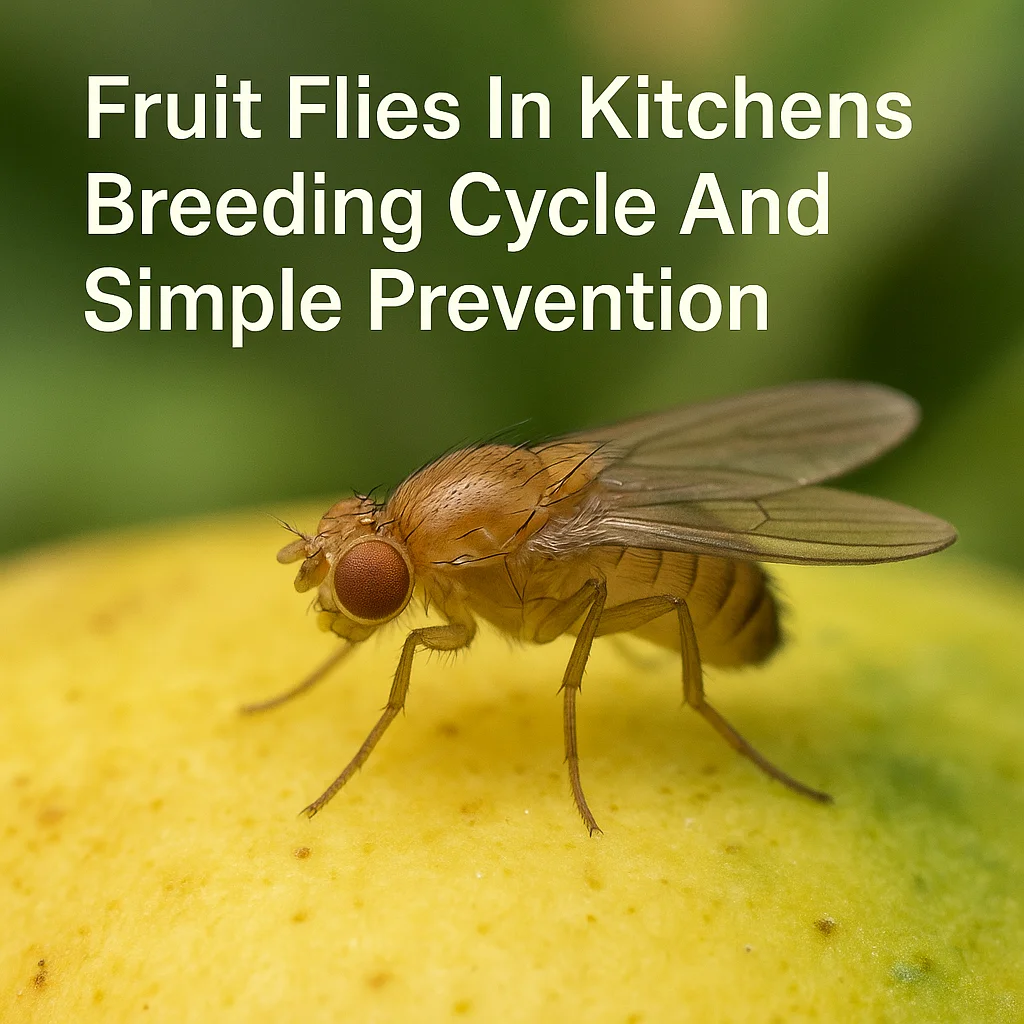
- Common names: Fruit fly, vinegar fly
- Scientific name: Drosophila melanogaster (varies by region)
- Insect or not: Insect; they are an invertebrate with notable vertebra absence
- Order / family: Diptera / Drosophilidae
- Typical size range: 2 to 4 mm
- Key colors/patterns: Yellow-brown body with red eyes
- Activity: Primarily diurnal
- Typical habitats: Kitchens, garbage disposals, ripening fruit
- Where in the world it occurs: Worldwide distribution, especially in temperate regions
- Seasonality: Most active in warmer months
🔍 Identification
Recognizing fruit flies involves noting their small size and distinctive coloration. Fruit flies have a stubby body shape with a characteristic silhouette when resting.
- Body shape and silhouette: Round with a small, compact frame
- Antennae type: Short and feathery
- Wing features: Transparent wings with visible veins
- Leg traits and movement style: Six legs, rapid and erratic flight pattern
- Distinguishing look-alikes and common confusion: Often confused with fungus gnats but are generally lighter in color
- Look for a compact body and red eyes
- Observe quick, bustling movements
- Examine wings for clear venation
- Note the preference for decaying fruits
- Avoid confusion with darker-colored gnats
- Check for activity near fruit and sugary liquids
🧠 Basic Body Structure
Fruit flies, like all insects, have a body divided into three main sections: the head, thorax, and abdomen. They possess six legs, an indicator of their classification as insects. The exoskeleton provides structural support and protection, while their wings allow for flight. Being invertebrates, fruit flies lack a backbone, relying on their exoskeleton for movement and defense.
🌍 Habitat & Distribution
Fruit flies thrive in environments where ripe or decaying organic matter is present. Common habitats include kitchens, garbage disposals, drains, and outdoor compost heaps. These flies have a global geographic range, predominantly in areas with mild to warm climates. Changes in climate and urban development can impact their habitats, sometimes increasing infestations in residential areas.
📅 Seasonal Appearance & Activity
Fruit flies are most visible during warmer months when food sources are plentiful. They are primarily diurnal, thus usually active during the day. Hot, humid weather tends to increase their populations, as they are highly sensitive to environmental changes.
- Most active in spring and summer
- Peak visibility on warm days
- Diurnal activity pattern
- More frequent after rainfall due to increased food sources
🥚 Reproduction & Egg-Laying
Fruit flies reproduce rapidly, with females often laying eggs on fermenting fruits or garbage. They deposit eggs in areas rich in nutrients, ensuring larvae access to ample food. Egg counts and laying strategies can vary, though they generally lay around 500 eggs in prolific bursts.
🌀 Metamorphosis & Life Cycle
Fruit flies undergo complete metamorphosis, which encompasses four main stages: egg, larva, pupa, and adult.
The eggs hatch into larvae that feed voraciously on their substrate, such as fruits or organic matter. The larval stage can last about 4-6 days.
After sufficient growth, larvae enter the pupal stage, where they undergo transformation into adults. This stage lasts approximately 5 days. Adults emerge to breed, starting the cycle anew.
🍽️ Diet & Feeding Behavior
Fruit flies primarily consume yeast and microorganisms found on decomposing plant matter. In the larval stage, they are significant recyclers of organic waste. They use specialized mouthparts to feed on liquids like nectar and fermented substances and play a small role as pollinators in the process.
🦉 Predators & Defense
Natural predators of fruit flies include birds, spiders, and various predatory insects like wasps. They employ several defensive strategies, primarily revolving around rapid reproduction and dispersal to outpace predation.
- Develops quickly to evade predators
- Uses camouflage for larval stages
- Replication in large numbers
- Quick, darting flight for evasion
👥 Social Behavior & Swarms
Fruit flies do not display true social behavior but can often be seen in large groups due to their rapid breeding capabilities. There's no structured swarming, but environmental triggers like increased food supply can lead to local population booms.
🧭 Senses & Communication
Fruit flies utilize a sophisticated set of senses to navigate and communicate within their environment. They have compound eyes for broad-spectrum vision critical for locating food and mates. Olfactory senses are highly developed, enabling them to detect fermentation. They also use pheromonal communication to signal reproductive readiness and locate food sources.
🌱 Role in the Ecosystem
Fruit flies play an essential role in decomposition, breaking down organic materials and recycling nutrients back into the ecosystem. This process makes them key participants in the decomposition food web. While a nuisance, they also contribute to natural pollination processes and are a vital food source for various predators.
📉 Population & Conservation Notes
Fruit flies are widespread and common in suitable habitats. Their populations are resilient, though they can be affected by dramatic changes in habitat or climate. Despite their abundance, maintaining environmental balance by managing food waste can help mitigate their presence in human spaces.
- Use compost bins with lids
- Employ organic waste disposals properly
- Keep kitchen areas clean and dry
- Avoid excess pesticide use in gardens
⚠️ Human Interaction & Safety
Fruit flies do not pose a threat through bites or stings, as they are not equipped for defense against humans. The primary concern lies in their association with perceived uncleanliness. To prevent infestations, maintain cleanliness and dispose of organic waste promptly. Observation without interference helps maintain ecological balance.
📌 Summary
- Easy to identify by small size and red eyes
- Common in kitchens and warm regions
- Active during warmer months, particularly daytime
- Undergo complete metamorphosis with four life stages
- Feeds on fermenting fruits; important decomposer
- Predators include birds and wasps; rapid breeders
- Role in nutrient cycling and pollination
- Manageable with proper sanitation practices