🕷️ Dragonfly myths and facts
🧾 Quick Facts
Dragonflies are fascinating invertebrates known for their agile flight and diverse colors. Despite their intimidating appearance, they are harmless to humans and play important roles in various ecosystems.
- Common names: Dragonfly
- Scientific name: Varies by species
- Insect or not: Yes, they are insects (invertebrates)
- Order / family: Odonata / varies by species
- Typical size range: 1 to 7 inches (2.5 to 18 cm) wingspan
- Key colors/patterns: Metallic and iridescent shades of blue, green, red, yellow
- Activity: Diurnal (active during the day)
- Typical habitats: Near freshwater bodies like ponds, lakes, rivers, marshes
- Where in the world: Found worldwide except in Antarctica
- Seasonality: Most visible during warm months; varies by region
🔍 Identification
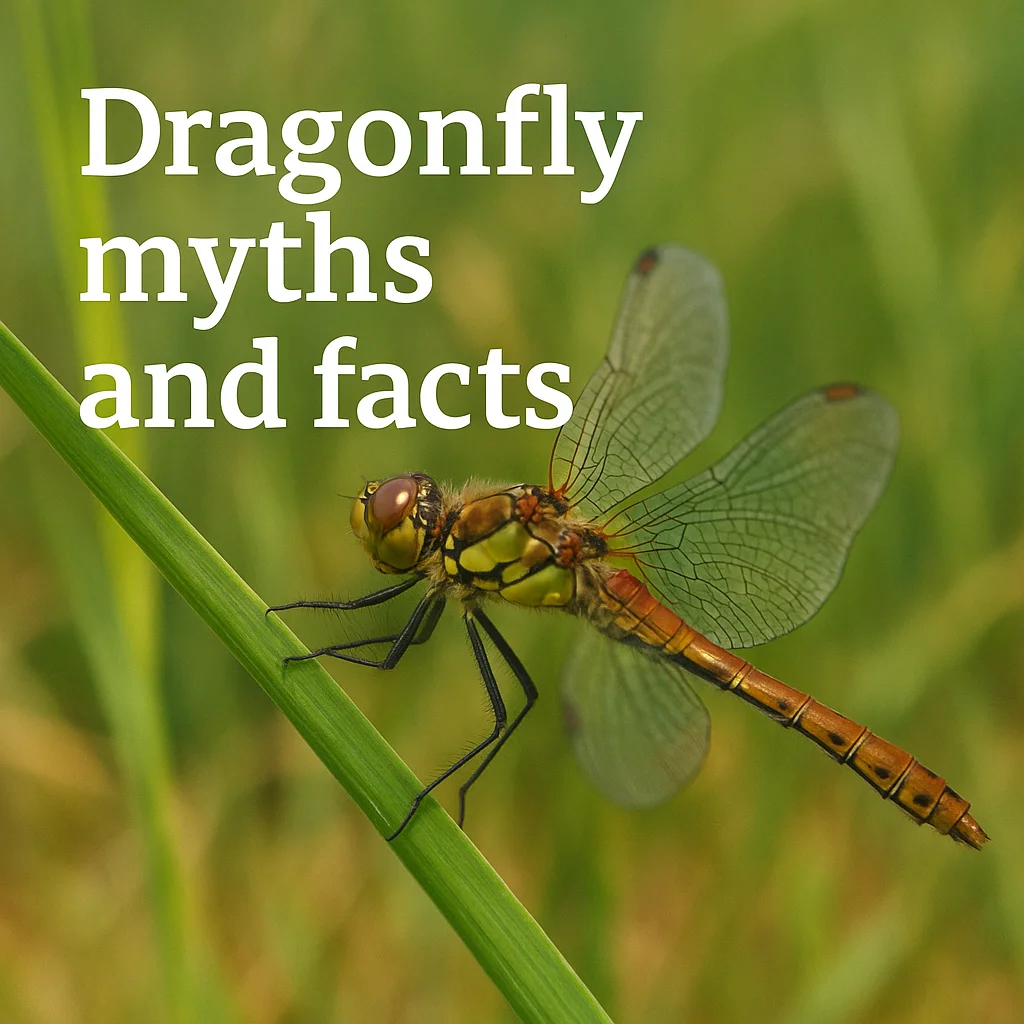
Dragonflies are easily recognizable by their slender, elongated bodies and two pairs of wings. Their large, multifaceted eyes provide almost 360-degree vision. Dragonflies' antennae are short and less noticeable.
- Slender body shape with long abdomen
- Large, compound eyes covering most of the head
- Two pairs of long, transparent wings; often held horizontally
- Legs adapted for grasping prey rather than walking
- Can be confused with damselflies, but damselflies hold wings along the body
- Top ID Tips:
- Check for horizontally held wings
- Look for large, bulbous eyes
- Note the presence of two pairs of wings
- Observe the fast and agile flight pattern
- Focus on body coloration and iridescence
- Watch for hunting behavior near water
🧠 Basic Body Structure
Dragonflies possess the typical insect body structure composed of a head, thorax, and abdomen. They have six legs connected to the thorax and an exoskeleton that provides protection and support. Dragonflies are invertebrate, meaning they lack a backbone and rely on their exoskeleton.
🌍 Habitat & Distribution
Dragonflies thrive in habitats near freshwater, including ponds, lakes, rivers, marshes, and wetlands. They prefer environments that support abundant prey and where their nymphs, or larvae, can develop. Present across all continents except Antarctica, dragonfly habitats must include clean water bodies, as polluted habitats can reduce their presence.
📅 Seasonal Appearance & Activity
Dragonflies are most commonly observed during warmer months, typically from late spring to early fall. They are diurnal, showing increased activity on sunny days as warmth boosts their metabolism.
- Best Time to Spot It:
- Late spring to late summer
- Midday on sunny days
- Calm and warm weather conditions
- Near water bodies with minimal disturbance
🥚 Reproduction & Egg-Laying
Dragonfly mating involves unique aerial displays and tandem flights, where the male and female connect mid-air. Females typically lay eggs on or near water, using aquatic plants or directly into the water. The number of eggs laid varies by species, influenced by environmental conditions.
🌀 Metamorphosis & Life Cycle
Dragonflies undergo incomplete metamorphosis, with life stages of egg, nymph, and adult. Nymphs, or larvae, are aquatic and use their extendable jaws to capture prey. The nymph stage can last several months to years, depending on the species and environmental factors, after which they emerge and molt into adults.
Adult dragonflies are aerial predators, feeding mainly on insects caught during flight. They are often seen near water bodies pursuing prey and defending territories.
🍽️ Diet & Feeding Behavior
Dragonfly nymphs are voracious predators of aquatic insects, small fish, and tadpoles. Adults predominantly consume flying insects, including mosquitoes, flies, and moths, using their powerful mandibles to chew their prey. Their role as predators helps control insect populations in their habitats.
🦉 Predators & Defense
Dragonflies face predation from birds, frogs, spiders, and larger insects. To evade predators, dragonflies rely on their speed and agility. They can also use camouflage, often blending into their natural environment, and their transparent wings may make them less conspicuous against the sky.
- Defense Highlights:
- Camouflage among vegetation
- Swift flight with abrupt directional changes
- Starting large, intimidating displays when threatened
- Utilizing elusive flight paths to escape predators
👥 Social Behavior & Swarms
Dragonflies are generally solitary, especially as adults, though they may be seen in groups around water where food is abundant. Swarming behavior usually occurs during feeding or migration and is primarily driven by environmental factors like food availability and weather conditions.
🧭 Senses & Communication
Dragonflies have exceptional vision, aided by their large compound eyes. These enable them to detect movement and color changes in their environment. While they do not rely extensively on smell, pheromones may play a role in reproductive behaviors. Communication during courtship involves visual signals and complex flight maneuvers.
🌱 Role in the Ecosystem
As predators, dragonflies help maintain ecological balance by controlling insect populations, like mosquitoes. They serve as both predator and prey within the food web, offering benefits such as natural pest control. Dragonflies can also indicate the health of aquatic ecosystems, as they thrive in unpolluted environments.
📉 Population & Conservation Notes
Dragonfly populations are generally healthy in suitable habitats, although they can be affected by habitat loss, pollution, and climate change. Conservation efforts include preserving wetlands and minimizing pesticide use, supporting dragonfly communities and broader biodiversity.
- How to Help (Low-Impact):
- Preserve wetland habitats
- Plant native vegetation near water
- Avoid using chemical pesticides in gardens
- Encourage clean water initiatives
⚠️ Human Interaction & Safety
Dragonflies are harmless to humans and do not bite or sting. When observing them, it is important to respect their natural habitat, avoiding collection or harassment. Dragonflies should be enjoyed through observation in their natural setting rather than being captured.
📌 Summary
- Dragonflies are easily identifiable by their long bodies and four wings.
- Prefer environments near clean freshwater habitats.
- Most visible in warmer months, during the day.
- Experience incomplete metamorphosis, from egg to adult.
- Predatory diet, controlling insect populations.
- Main predators include birds and larger insects.
- Play a role in indicating ecosystem health and providing pest control.
- Harmless to humans and should be observed respectfully.