🕷️ Dragonfly Migration The Long-distance Travelers
🧾 Quick Facts
Dragonflies are renowned for their incredible migratory journeys, often covering thousands of miles. Known for their agility and vibrant colors, they are a fascinating subject of study for both entomologists and nature enthusiasts.
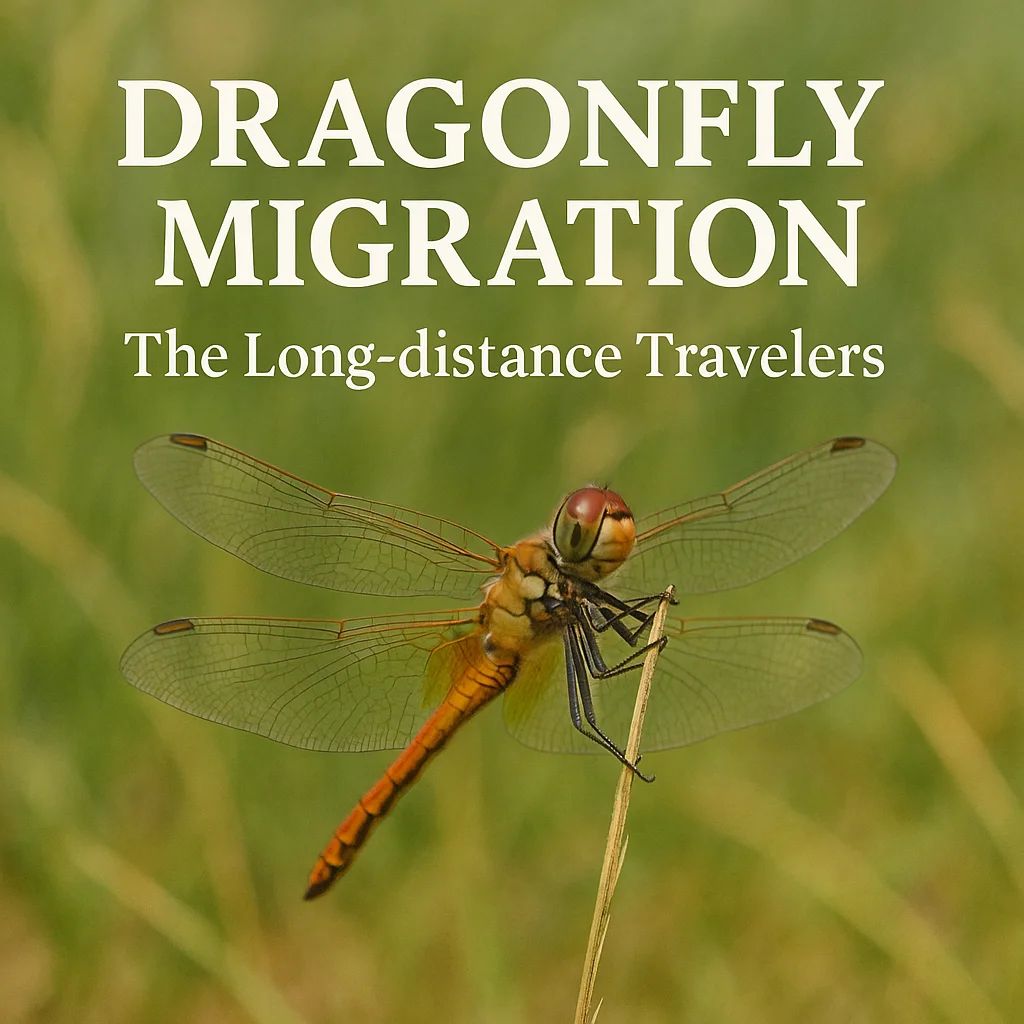
- Common names: Dragonfly, Migratory Dragonflies
- Scientific name: Varies (multiple species within the suborder Anisoptera)
- Insect or not: Insect; a type of invertebrate
- Order / Family: Odonata / Libellulidae, Aeshnidae (varies)
- Typical size range (adult): 2–5 inches wingspan
- Key colors/patterns: Bright blue, red, green, brown with iridescent wings
- Activity: Diurnal (active during the day)
- Typical habitats: Wetlands, ponds, lakes, rivers, forests
- Where in the world it occurs: Worldwide, except Antarctica
- Seasonality: Late spring to early autumn (varies with region)
🔍 Identification
Recognizing dragonflies during migration requires attention to their unique body structure. They exhibit a streamlined elongated body with two pairs of strong, transparent wings extending horizontally. Their heads are characterized by large compound eyes that often cover most of their head. Although dragonflies lack prominent antennae like some insects, their leg structure is adapted for perching and capturing prey during flight.
Dragonflies are often mistaken for damselflies. A key distinction is that dragonflies rest with their wings spread open, while damselflies fold theirs over their backs.
- Long slender body
- Large multifaceted eyes
- Two pairs of broad and veined wings
- Short, bristled antennae
- Legs arranged for capturing prey mid-flight
- Vibrant coloration with metallic or iridescent hues
- Flight: strong fliers, often seen hovering
- Contrast with similar species: damselflies and butterflies
🧠 Basic Body Structure
Dragonflies are quintessential insects, characterized by a head, thorax, and abdomen. They possess six legs attached to the thorax and powered by an internal musculature that enables impressive flight. The waxy exoskeleton provides protection, while molting allows them to grow. Their two pairs of wings are crucial for their powerful aerial maneuvers.
Being invertebrates means they do not have a backbone, which is common to all insects.
🌍 Habitat & Distribution
Dragonflies occupy diverse habitats but are especially abundant near bodies of water like lakes, rivers, swamps, and ponds where they breed. Wetlands and riparian zones are essential for their larvae, as they spend much of their life underwater. They are globally distributed, except for polar regions, favoring temperate and tropical climates.
Habitat modifications due to climate change or urbanization can affect their distribution and sightings, but generally, they adapt well to various environments.
📅 Seasonal Appearance & Activity
Dragonflies are primarily active during the warmer months, with significant visibility from late spring through early fall. They thrive in sunny, warm, and calm conditions. Activity peaks during mid-morning to late afternoon when temperatures are optimal for hunting.
- Late spring to early autumn
- Diurnal activity: daylight hours
- Prefers warm, sunny weather
- Increased activity post-rainfall
- Weather-dependent: thrives in calm, stable conditions
🥚 Reproduction & Egg-Laying
Dragonfly mating involves visually striking courtship displays. Males establish territories near breeding sites, and after mating, females deposit eggs in or near water surfaces. Eggs are laid in batches, often on aquatic plants or directly in the water.
The number of eggs varies with species and environmental conditions, from just a few dozen to several hundred.
🌀 Metamorphosis & Life Cycle
Dragonflies undergo incomplete metamorphosis, progressing through egg, nymph, and adult stages. The nymph stage is aquatic and can last several months to years, depending on the species and climate.
During the nymph stage, they are voracious hunters, preying on other aquatic invertebrates. After maturing, they emerge from the water and molt one last time into adults. Adults are aerial predators, feeding on small insects.
🍽️ Diet & Feeding Behavior
Dragonflies are carnivorous throughout their life stages. Nymphs consume small aquatic organisms using extendable mouthparts equipped for grasping prey. Adult dragonflies exhibit powerful mandibles for chewing, capturing midges, mosquitoes, and other airborne insects, playing an important role as predators in controlling insect populations.
🦉 Predators & Defense
Dragonflies are preyed upon by birds, amphibians, reptiles, larger insects, and spiders. Their primary defenses include agile flight, effective camouflage, and startle displays where they flash bright colors to ward off predators. They also rely on speed and evasive flight patterns to avoid capture.
- Camouflage with vegetation
- Speed and agility
- Evasive flight patterns
- Startle displays with bright colors
👥 Social Behavior & Swarms
Dragonflies are largely solitary, but certain species display social behavior during migration or when large food supplies are available. Swarming behavior is triggered by climatic conditions, prey abundance, and instinctive migratory triggers. Mating swarms are also common near water bodies.
🧭 Senses & Communication
Dragonflies are equipped with acute vision, facilitated by their compound eyes that provide a wide field of view and detect even the faintest movements. While they lack strong olfactory senses, they rely heavily on visual cues for finding prey and mates.
Communication is primarily visual, with males displaying distinct colorations and flight patterns as territorial and courtship signals.
🌱 Role in the Ecosystem
Dragonflies have a crucial ecological role as predators, aiding in the control of mosquito and other insect populations. They contribute to the food web, serving as prey for higher-order predators. While they are not primary pollinators, their presence in agroecosystems highlights their importance in biodiversity maintenance and pest control.
📉 Population & Conservation Notes
Dragonfly populations are locally abundant, yet global conservation concerns arise from habitat loss, pollution, and climate change. Efforts are made to conserve wetland habitats critical for their life cycle.
- Preserving wetland and aquatic habitats
- Plant native vegetation
- Avoid pesticide use in gardens
- Support local conservation efforts
⚠️ Human Interaction & Safety
Dragonflies are harmless to humans and do not sting or bite unless handled aggressively. Observing them respectfully without capturing encourages natural behaviors. In the rare case of skin irritation, general guidance includes washing the area and avoiding scratching. Seek professional advice if irritation persists.
📌 Summary
- ID: Long-bodied with iridescent wings and large eyes
- Habitat: Wetlands, globally distributed except Antarctica
- Seasonality: Late spring to early autumn
- Life Cycle: Incomplete metamorphosis; aquatic nymphs
- Diet: Predatory; aerial hunters of insects
- Predators: Birds, amphibians, spiders
- Ecology: Control insect populations, part of aquatic food webs
- Human Notes: Harmless; observe respectfully