🕷️ Dragonfly Larvae Masks The Extendable Jaw Explained
🧾 Quick Facts
Dragonfly larvae, often referred to as "Dragonfly Larvae Masks" due to their unique extendable jaw, are fascinating creatures found in aquatic environments. These larvae are part of the invertebrate group, specifically within the order Odonata. Here's a quick overview:
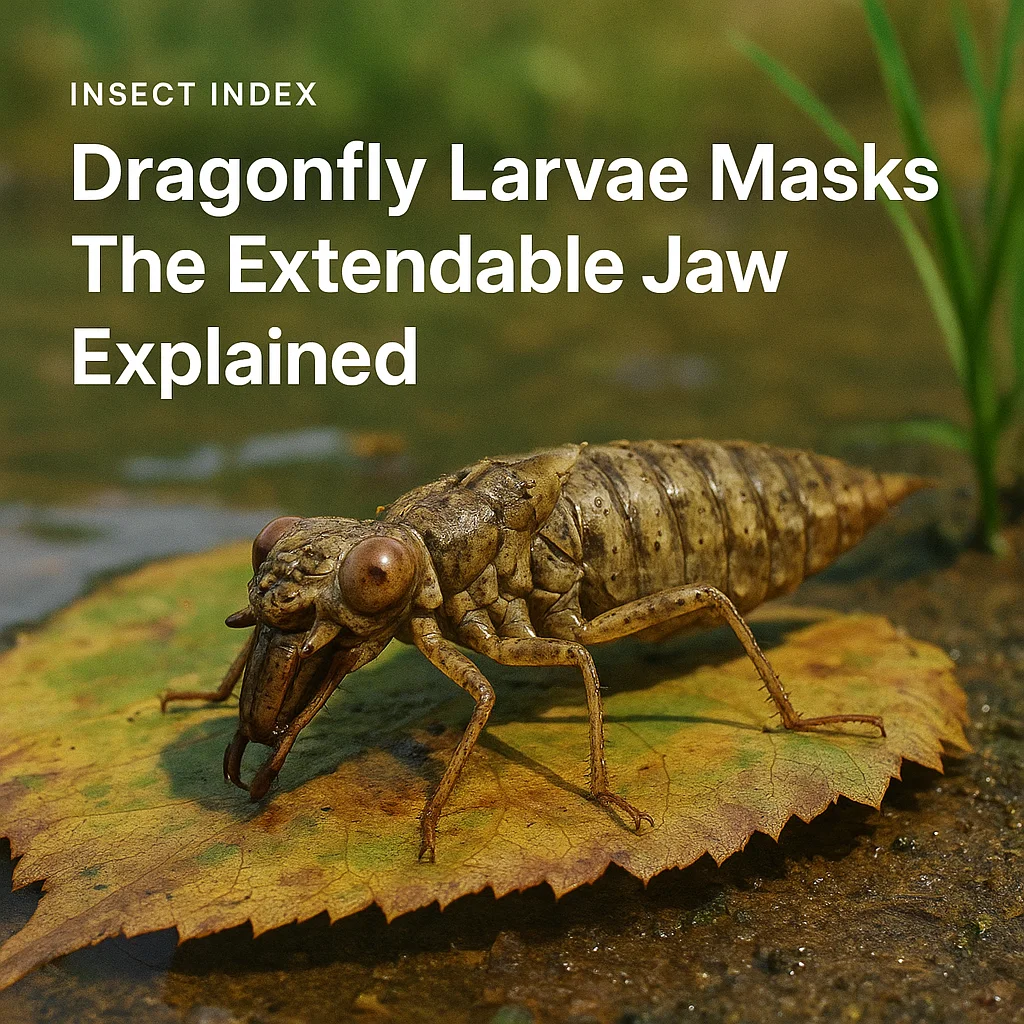
- Common names: Dragonfly Larvae, Naiads
- Scientific name: Varies by region
- Insect or not: Yes, invertebrate
- Order/family: Order Odonata, Family varies
- Typical size range: 1-2 inches (2.5-5 cm)
- Key colors/patterns: Brown, green, mottled
- Activity: Diurnal (active in daylight)
- Typical habitats: Aquatic environments like ponds, lakes, and streams
- Where in the world it occurs: Globally, predominantly in temperate and tropical zones
- Seasonality: Spring to late summer in many regions
🔍 Identification
Dragonfly larvae can be identified by their robust body shape and distinct features. They have stocky, elongated bodies that are streamlined for aquatic living. Their antennae are short and bristle-like, making them less prominent compared to other insects.
Their legs are adapted for grasping prey and they exhibit a unique extendable lower jaw, known as a labium, used to snatch prey. Larvae are often confused with damselfly larvae but can be distinguished by their more substantial build and different gill structures.
- Top ID Tips:
- Stocky, elongated body
- Short, bristle-like antennae
- Three paddle-like gills (sometimes inside the abdomen)
- Powerful, extendable jaw (labium)
- Brown or green mottled coloration
- Active in water
- Larger than damselfly larvae
- Whole specimen visible in water bodies
🧠 Basic Body Structure
Like all insects, dragonfly larvae consist of three main body parts: the head, thorax, and abdomen. They have six legs used primarily for hunting and stability in the water. Dragonfly larvae possess an exoskeleton which provides protection and support, and they undergo molting as they grow.
Dragonfly larvae are invertebrates, meaning they lack a backbone. Instead, they are supported by a hardened outer shell that needs to be periodically shed to allow for growth.
🌍 Habitat & Distribution
Dragonfly larvae inhabit a variety of freshwater environments, including ponds, lakes, and slow-moving streams. They thrive in areas with ample vegetation, which provides cover from predators and hunting grounds for prey. Their distribution is global, with a preference for temperate and tropical climates.
Microhabitats such as underwater plants, mud, and debris provide additional protection. Habitat destruction and pollution have a direct impact on their populations, reducing sightings in affected areas.
📅 Seasonal Appearance & Activity
Dragonfly larvae are most commonly observed during the warmer months when water temperatures are conducive to their development. They are diurnal, meaning they are more active during the day.
Weather conditions such as temperature and humidity affect their activity levels, with the best sightings during mild, sunny days.
- Best Time to Spot It:
- Late spring to summer
- Mild sunny days
- Early morning to late afternoon
- In calm, freshwater bodies
🥚 Reproduction & Egg-Laying
Dragonfly mating involves complex aerial displays and courtship rituals. Females lay their eggs in or near water, often on aquatic plants or directly into the water. The number of eggs laid varies, often ranging from hundreds to thousands.
Eggs are laid in clusters, and environmental conditions can affect the survival rates of these eggs. Variability in egg-laying sites is influenced by species and local habitat conditions.
🌀 Metamorphosis & Life Cycle
Dragonflies undergo incomplete metamorphosis, progressing through egg, nymph (larvae), and adult stages. After hatching, the larvae are aquatic and predatory, feeding on small aquatic organisms. This stage can last several months to years, depending on the species and environmental conditions.
Larvae eventually climb onto land or plant stems to molt into adults. This transformation occurs over a day, revealing the adult dragonfly's iconic wings and elongated body. The adult stage is drastically different, focused on reproduction and dispersal.
🍽️ Diet & Feeding Behavior
Dragonfly larvae are voracious predators, feeding on aquatic invertebrates, tadpoles, and even small fish. They employ a unique method using their extendable jaw (labium) to capture prey. This mouthpart acts as a harpoon, thrusting forward to seize unsuspecting targets.
As predators, they play a crucial role in controlling the population of smaller aquatic organisms, maintaining a balanced ecosystem.
🦉 Predators & Defense
Natural predators of dragonfly larvae include fish, amphibians, and other aquatic predators. On land, birds may prey on newly molted adults.
Defense strategies of dragonfly larvae include utilizing their environment for camouflage and their ability to swiftly dart and hide among vegetation. Their coloration helps them blend into muddy and plant-rich backgrounds.
- Defense Highlights:
- Camouflage in muddy waters
- Rapid darting movements to escape
- Utilize vegetation for cover
- Sturdy exoskeleton for protection
👥 Social Behavior & Swarms
Dragonfly larvae are largely solitary creatures, focusing on individual hunting and survival. Social interactions are more evident in adult dragonflies, which can form temporary swarms during migration or while foraging.
These swarms are often triggered by environmental conditions and the availability of food resources, aiding in the dispersal and genetic mixture of populations.
🧭 Senses & Communication
Vision is a key sense for dragonfly larvae, aiding in prey detection and navigation. Their compound eyes provide them with a wide field of view under water.
Communication largely occurs in adults through visual cues during mating, although larvae may detect vibrations and water currents to sense the presence of prey or predators.
🌱 Role in the Ecosystem
Dragonfly larvae play a significant role as predators within aquatic ecosystems, helping control populations of mosquitoes, midges, and other insects. This activity contributes to pest management and the overall health of their habitats.
Their presence indicates healthy water conditions, and they serve as a food source for a variety of larger predators. Dragonflies also contribute to nutrient cycling in water bodies.
📉 Population & Conservation Notes
Dragonfly populations are indicators of environmental health. They are often common where suitable habitats exist but can be threatened by habitat destruction, pollution, and climate change. Population status varies widely depending on local conditions and species adaptability.
- How to Help (Low-Impact):
- Preserve wetland and aquatic habitats
- Avoid pesticide usage near water bodies
- Plant native aquatic vegetation
- Support conservation initiatives
⚠️ Human Interaction & Safety
Dragonfly larvae do not pose a significant threat to humans. While their extendable jaws can capture prey underwater, they rarely threaten people. It is best to observe these creatures from a distance without disturbing their habitats.
If handling is necessary, gently return them to their environment to minimize stress. Observers should focus on respectful observation and avoid collecting wild specimens.
📌 Summary
- Identifiable by their stocky body and extendable jaw
- Inhabit freshwater environments around the world
- Active primarily during late spring to summer
- Undergo incomplete metamorphosis from nymph to adult
- Predators of small aquatic organisms
- Natural enemies include fish, birds, and amphibians
- Indicate healthy aquatic ecosystems
- Support is needed for habitat preservation and pollution reduction
- Safe to observe; avoid disturbing their natural environment