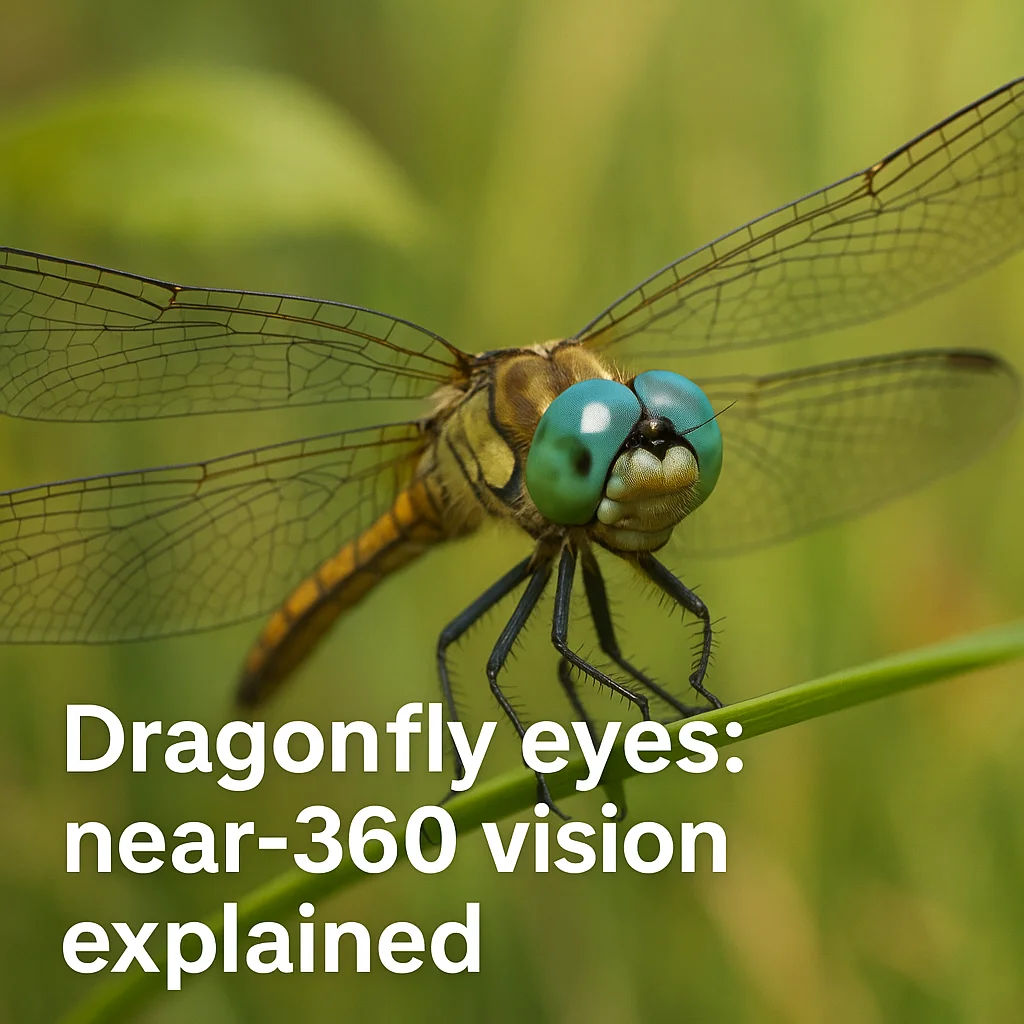
🕷️ Dragonfly eyes: near-360 vision explained
🧾 Quick Facts
Dragonflies are fascinating insects known for their remarkable vision and agile flight. Their eyes, which offer nearly 360-degree vision, contribute significantly to their survival and hunting prowess.
- Common names: Dragonfly
- Scientific name: Varies by species
- Insect or not: Insect, invertebrate
- Order / family: Odonata / varies
- Typical size range: 1 to 4 inches in wingspan
- Key colors/patterns: Metallic blues, greens, reds; intricate wing patterns
- Activity: Diurnal
- Typical habitats: Near water bodies like ponds, lakes, rivers
- Where in the world it occurs: Worldwide, except Antarctica
- Seasonality: Spring to late summer (varies by region)
🔍 Identification
Dragonflies are easily recognizable due to their elongated bodies and strikingly large eyes. Their bodies are slender, and they have two sets of transparent wings held at rest in a horizontal position.
- Long, slender body and distinct silhouette
- Very short antennae
- Two pairs of veined, membranous wings
- Legs adapted for grasping prey
- Large compound eyes providing expansive vision
- Distinct from damselflies by resting wing position
🧠 Basic Body Structure
Dragonflies, as insects, have three main body parts: the head, thorax, and abdomen. They possess six legs and an exoskeleton. Their lifecycle includes molting as they develop. They are invertebrates, meaning they lack a backbone.
🌍 Habitat & Distribution
Dragonflies thrive in environments with abundant water, such as wetlands, lakes, and ponds. They occupy microhabitats like vegetation near water. Their geographic range spans all continents except Antarctica, thriving in temperate and tropical climates. Changes in habitat, such as water availability, significantly impact their visibility.
📅 Seasonal Appearance & Activity
Dragonflies are most visible during warm months as they are cold-blooded and reliant on external temperatures. Their activity peaks during sunny, calm weather, and they are active during the day.
- Best to spot from spring to late summer
- Mostly active during daylight hours
- Prefers clear, warm days
- Presence linked to water availability
🥚 Reproduction & Egg-Laying
Dragonflies engage in aerial courtship displays. Females lay eggs in or near water, often attaching them to aquatic plants. Egg counts can vary drastically by species, with some laying hundreds.
🌀 Metamorphosis & Life Cycle
Dragonflies undergo incomplete metamorphosis: egg, nymph, and adult stages. Nymphs are aquatic, feeding on small water organisms, and their development can last from months to years. Adults primarily feed on flying insects and their lifespan is typically a few weeks to several months.
🍽️ Diet & Feeding Behavior
Dragonfly nymphs are aquatic predators, while adults are aerial hunters. They have chewing mouthparts suited for capturing prey like mosquitoes and flies. Dragonflies play a crucial role in controlling insect populations.
🦉 Predators & Defense
Dragonflies face predation from birds, spiders, and reptiles. They employ speed and agility as primary defense mechanisms, often evading capture through rapid flight. Their large eyes aid in detecting threats.
- Speed and agility
- Large eyes for threat detection
- Camouflage against water surfaces
- Cryptic coloration
👥 Social Behavior & Swarms
Dragonflies are predominantly solitary. They establish territories, particularly males, to attract mates and fend off rivals. While they do not form colonies, they may congregate in swarms when food sources are abundant.
🧭 Senses & Communication
Dragonflies have keen vision due to their compound eyes, allowing them to detect movement and colors. They communicate through visual displays and body movements, particularly during courtship displays.
🌱 Role in the Ecosystem
Dragonflies are important in ecosystems as predators controlling mosquito populations. They occupy a vital niche in food webs, serving as prey for larger animals. Their presence indicates healthy aquatic ecosystems.
📉 Population & Conservation Notes
Dragonflies are often common where suitable habitats exist. However, habitat destruction and pollution pose threats. Local abundance varies, and data is limited for many species.
- Support wetland conservation
- Reduce pesticide use near water bodies
- Plant native aquatic vegetation
- Promote waterside habitats
⚠️ Human Interaction & Safety
Dragonflies do not bite or sting humans. Respectful observation is encouraged, and their presence is generally beneficial for controlling pest insects. Avoid disturbing their habitats, particularly during breeding seasons.
📌 Summary
- Distinctive body shape and large eyes
- Found near water, active in warm months
- Incomplete metamorphosis lifecycle
- Predators of flying insects
- Key role in pest control
- Threatened by habitat changes
- Harmless and beneficial to humans
- Indicators of environmental health