🕷️ Dragonflies and water quality indicators
🧾 Quick Facts
Dragonflies are fascinating creatures often associated with water bodies, thriving in environments that indicate good water quality. They are a significant part of freshwater ecosystems and are used as indicators of environmental health, particularly water quality.
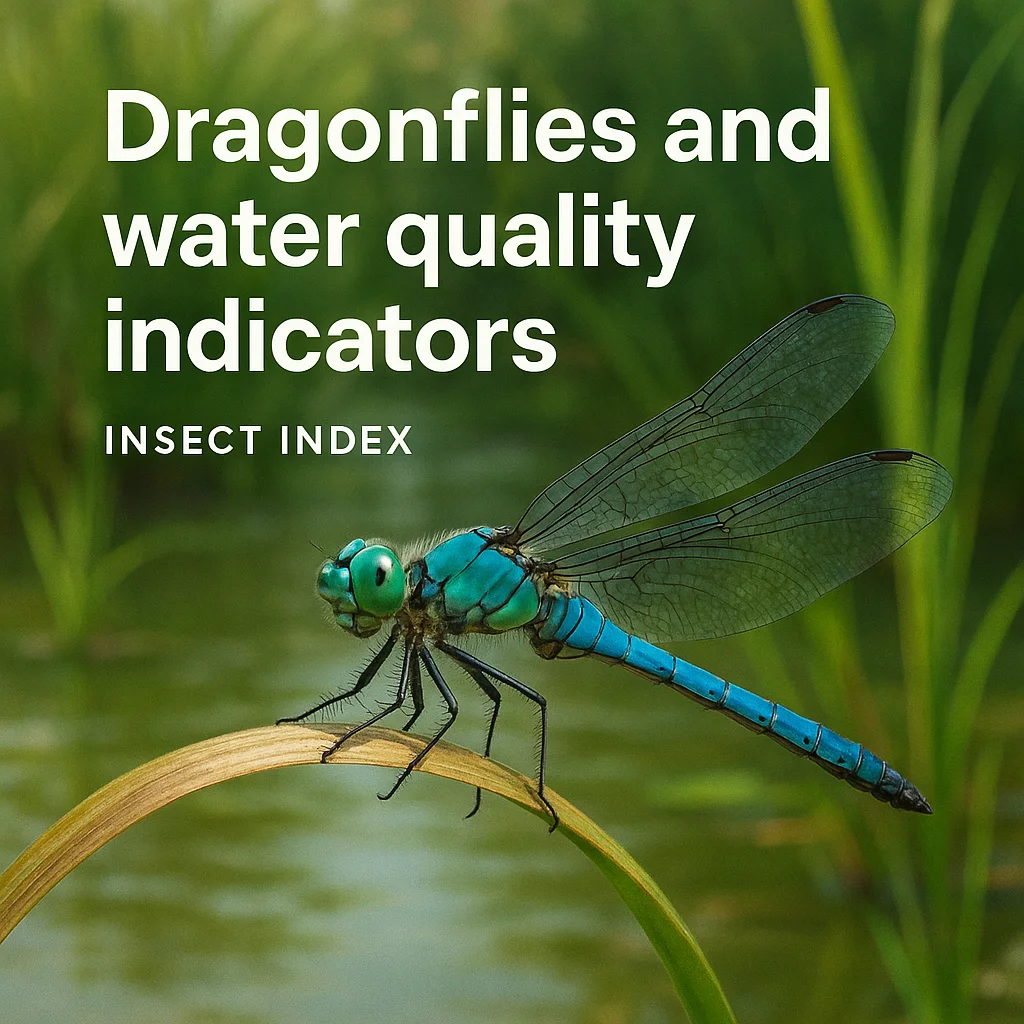
- Common names: Dragonfly
- Scientific name: Varies by species
- Insect or not: Yes, an insect (invertebrate)
- Order / Family: Odonata / varies by family
- Typical size range (adult): 2.5 to 10 cm in body length
- Key colors/patterns: Vibrant blues, greens, reds, often metallic or iridescent
- Activity: Mostly active during the day (diurnal)
- Typical habitats: Freshwater bodies like ponds, lakes, rivers, and marshes
- Where in the world it occurs: Found globally, except in Antarctica
- Seasonality: Most visible in warmer months (spring and summer)
🔍 Identification
Dragonflies are easily recognized by their slender, elongated bodies, large multifaceted eyes, and two pairs of strong, transparent wings. They have short, bristle-like antennae that are not very prominent.
- Body shape: Long and slender abdomen, robust thorax
- Antennae: Short, bristle-like
- Wing features: Two pairs of transparent wings with a characteristic net-like vein structure
- Leg traits: Legs positioned for grasping prey during flight
- Distinguishing look-alikes: May be confused with damselflies, but rest with wings open unlike damselflies
- Top ID Tips:
- Look for the outward wings at rest
- Note the large compound eyes taking up most of the head
- Check for a needle-like abdomen
- Observe the swift, darting flight patterns
- Metallic colors are common in many species
🧠 Basic Body Structure
Dragonflies have a classic insect body structure, comprising a head, thorax, and abdomen. They have six legs attached to the thorax, which is also the anchor for their wings. Their bodies are protected by an exoskeleton, and they undergo molting as they grow from nymphs to adults. As invertebrates, dragonflies do not have a backbone but rely on their hard outer covering for support.
🌍 Habitat & Distribution
Dragonflies are found in a variety of freshwater habitats including ponds, lakes, marshes, and rivers. They require clean, unpolluted water for breeding and development, making them good indicators of water quality. In terms of geographic distribution, dragonflies are present on all continents except Antarctica, flourishing in temperate to tropical climates. Changes in habitat due to factors like pollution or urbanization can significantly impact their distribution and abundance.
📅 Seasonal Appearance & Activity
Dragonflies are most active during warmer months, usually from spring to late summer, when they are seen darting over water bodies. They are diurnal, feeding and preying mostly during daylight hours. Their activity is influenced by weather conditions such as temperature and humidity, being more visible on sunny days.
- Best Time to Spot It:
- Late spring to early autumn
- Warm, sunny days
- Sheltered spots with abundant foliage and water
🥚 Reproduction & Egg-Laying
Dragonflies engage in complex courtship and mating rituals, often involving aerial displays. After mating, females lay eggs in or near water on aquatic plants, moist soil, or directly in water. Egg-laying can vary greatly between species in terms of number and specific site selection.
🌀 Metamorphosis & Life Cycle
Dragonflies undergo incomplete metamorphosis, developing through three life stages: egg, nymph, and adult. Nymphs, which are aquatic, spend several months or years in water, preying on small aquatic organisms. They molt multiple times before emerging on a nearby surface to transform into adults. Adult dragonflies live a fleeting few weeks to a couple of months.
🍽️ Diet & Feeding Behavior
Dragonflies are carnivorous at all life stages. Nymphs feed on aquatic invertebrates and even small fish, using their extendable mouthparts to capture prey. Adults are agile aerial hunters, catching midges, mosquitoes, and other small insects in flight with their legs, which they use as a basket to scoop up prey.
🦉 Predators & Defense
Dragonflies face predation from birds, amphibians, reptiles, spiders, and larger insects. They employ various defense strategies such as speed, agility, and flight maneuvers. Some species may blend into their surroundings, using camouflage to avoid detection.
- Defense Highlights:
- Rapid, agile flight to escape predators
- Camouflage and blending with the environment
- Sharp vision to detect threats
- Strong, grasping legs for quick takeoff
👥 Social Behavior & Swarms
Dragonflies are generally solitary and territorial, especially males during the breeding season. They are known to form swarms when migrating or due to ample food supply, but these swarms are not common and observed under specific ecological triggers or environmental conditions.
🧭 Senses & Communication
Dragonflies have excellent vision thanks to their large compound eyes, which give them almost 360-degree vision. They rely heavily on sight for hunting and avoiding predators, though their sense of smell is not well-documented. Communication is primarily visual during courtship and territorial displays.
🌱 Role in the Ecosystem
Dragonflies play a crucial role in controlling mosquito populations and other pests as they are efficient predators. They are also valuable as indicators of ecological health due to their sensitivity to changes in water quality. Additionally, they serve as prey for a variety of animals, making them integral to the food web.
📉 Population & Conservation Notes
Dragonfly populations can be locally abundant, but they face threats from habitat destruction, pollution, pesticides, and climate change. Conservation efforts focus on preserving wetland habitats and maintaining water quality.
- How to Help (Low-Impact):
- Promote healthy, pesticide-free gardens
- Create water features with native plants
- Support wetland conservation initiatives
- Reduce light pollution near natural water bodies
⚠️ Human Interaction & Safety
Dragonflies do not sting or bite humans and are beneficial to have around due to their pest control abilities. Observing them respectfully in their natural habitat without disturbing or trying to collect them helps in promoting their conservation.
📌 Summary
- Dragonflies are important indicators of water quality and ecosystem health.
- They are found globally, thriving in clean freshwater habitats.
- With diverse, vibrant appearances, they are active in warmer months.
- Dragonflies undergo incomplete metamorphosis.
- Their diet consists mainly of insects, aiding in pest control.
- They have numerous predators but rely on quick flight for defense.
- As solitary animals, they can sometimes form swarms.
- Support efforts in conservation through habitat protection and pest control reduction policies.