🕷️ Damselfly Color Changes Pruinescence And Maturity
🧾 Quick Facts
Damselflies are fascinating insects known for their slender bodies and vibrant colorations, which change as they mature and experience pruinescence. This field guide explores the intriguing aspects of their physical transformation and biological details.
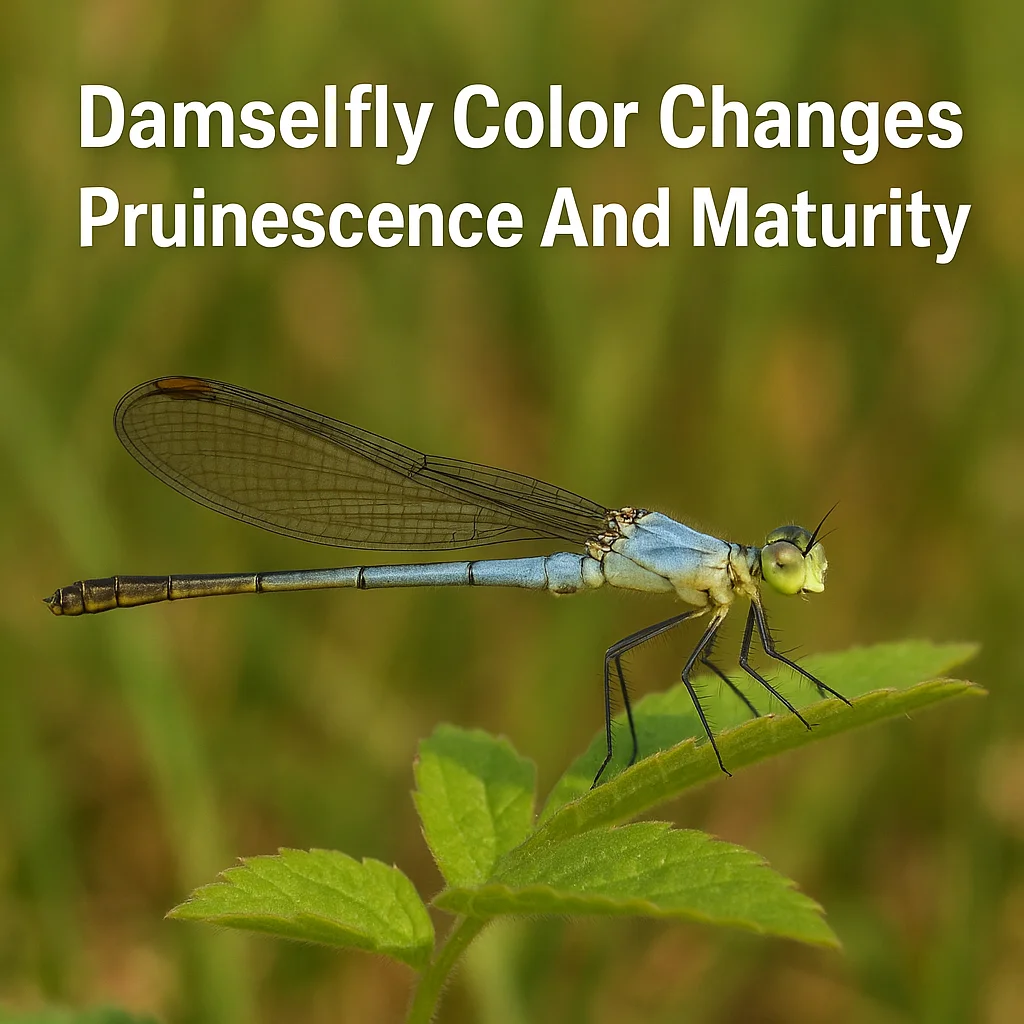
- Common names: Damselfly
- Scientific name: Varies by species
- Insect or not: Yes, an invertebrate
- Order/family: Odonata / Zygoptera
- Typical size range: 25–45 mm (adult)
- Key colors/patterns: Varies; blues, greens, reds; pruinescence leads to a powdery appearance
- Activity: Diurnal (active during the day)
- Typical habitats: Wetlands, lakes, ponds, marshes, slow streams
- Where in the world it occurs: Globally, in temperate and tropical regions
- Seasonality: Most visible in spring to late summer
🔍 Identification
Damselflies can be identified by their slender bodies and the way they hold their wings along or over their bodies when at rest. Their delicate build and vibrant colors make them stand out, though variations exist across different species.
- Body shape and silhouette: Slender, elongated body with narrow abdomen
- Antennae type: Short and bristle-like; not prominent
- Wing features: Two pairs of narrow wings held together at rest
- Leg traits and movement style: Long legs for perching rather than walking
- Distinguishing look-alikes: Dragonflies (wings held open at rest); damselflies are smaller and more delicate
- Top ID Tips:
- Look for slender bodies with narrow abdomens
- Notice wing position, parallel and over the body at rest
- Observe colors, which may shift with maturity
- Check for pruinescence—a powdery, waxy coating on older specimens
- Watch for subtle movements near water bodies
- Compare with dragonflies—damselflies are more fragile in appearance
🧠 Basic Body Structure
The damselfly consists of three main parts: the head, thorax, and abdomen. As insects, they have six legs and an exoskeleton that requires molting to grow. Their wings are membranous and transparent, adapted for flight.
Damselflies are invertebrates, meaning they lack a backbone but have a complex exoskeletal structure that provides them support and protection. This feature is critical for their ability to move, grow, and survive.
🌍 Habitat & Distribution
Damselflies prefer habitats near bodies of freshwater, such as wetlands, ponds, lakes, and marshes. They are primarily found in temperate and tropical climates, thriving in environments with ample aquatic vegetation. Microhabitats include reeds and grasses near the water's edge, where they rest and hunt.
The alterations in climate and habitat through deforestation or urbanization can impact damselfly populations by reducing the available habitats for breeding and foraging.
📅 Seasonal Appearance & Activity
The prime time to observe damselflies spans from spring to late summer. Being diurnal, they are most active during the day, frequently seen in sunny weather. Their activity and visibility are influenced by temperature and light, thriving in warm conditions.
- Best Time to Spot It:
- Spring to late summer months
- During daylight, in sunny and warm weather
- Near water bodies with emergent vegetation
- Calm days with minimal wind
🥚 Reproduction & Egg-Laying
Damselflies engage in complex mating behaviors, including aerial displays and tandem flying. Males often establish territories to attract females through these displays. The females lay eggs in or near water, often placing them on aquatic plants.
The number of eggs laid varies by species and environmental conditions, ranging from a few dozen to several hundred per breeding cycle. The strategies can differ, with some species opting for substrate-bound egg-laying while others may deposit directly in water.
🌀 Metamorphosis & Life Cycle
Damselflies undergo incomplete metamorphosis, transitioning through egg, nymph, and adult stages. The nymphs are aquatic and carnivorous, feeding on tiny aquatic organisms. They usually live underwater for several months to years, depending on the species.
The final molt occurs when the nymph emerges from the water to become an adult. The adult stage, characterized by the presence of wings and reproductive capability, lasts a few weeks to months. During this time, color and pruinescence development are common, serving protective and reproductive roles.
🍽️ Diet & Feeding Behavior
At different life stages, damselflies play varied roles in the food web. Nymphs are predatory, using extendable mouthparts to capture prey underwater. Adults are aerial hunters, catching small insects like mosquitoes and flies in flight.
Their role as predators helps control pest populations in aquatic and nearby terrestrial environments, thus contributing to ecological balance. The adult feeding strategy involves using their legs to form a basket in flight, ensuring efficient capture of prey.
🦉 Predators & Defense
Damselflies face numerous predators, including birds, frogs, larger insects, and fish. To evade these threats, they rely on agility and camouflage. The coloration and pruinescence provide them with a form of natural disguise among foliage and reflective water surfaces.
Other defense strategies include quick startle flights to distract predators and blend into sunlight reflections. Despite their delicate appearance, these agile fliers masterfully evade many would-be attackers.
- Defense Highlights:
- Fast and erratic flight patterns
- Camouflage against aquatic vegetation
- Pruinescence that disguises their silhouette
- Startle responses when threatened
👥 Social Behavior & Swarms
Damselflies are primarily solitary, interacting mainly during mating or territorial displays. Males may become territorial, engaging in brief conflicts to establish domains that attract females. Social structures like swarms are less common but may occur when environmental conditions are favorable for many to gather.
Such congregations usually occur when food sources are abundant, providing an opportunity for non-aggressive coexistence among individuals.
🧭 Senses & Communication
Damselflies are highly visual, relying on keen eyesight for hunting and mate selection. They communicate via visual signals and movements during courtship and territory assertions. Although less is known about their chemical communication, like pheromones, it is hypothesized to be less prominent than visual cues.
🌱 Role in the Ecosystem
Damselflies play crucial roles as both predators and prey in their ecosystems. They help control insect populations, contributing to pest regulation in aquatic habitats. They also serve as indicators of healthy aquatic environments, signifying clean and balanced ecosystems.
Damselflies influence plant-pollinator interactions less directly but still partake in the broader spectrum of biodiversity within riparian zones. Their presence reflects the interconnectedness of aquatic and terrestrial ecosystems.
📉 Population & Conservation Notes
Many damselfly species are common where habitats are suitable, yet others face risks from habitat degradation and climate change. Loss of wetlands and pollution can diminish their populations significantly. Conservation efforts focus on maintaining healthy aquatic environments and mitigating pesticide impacts.
- How to Help (Low-Impact):
- Preserve natural wetlands and freshwater habitats
- Promote native aquatic vegetation planting
- Limit pesticide and herbicide usage near water bodies
- Support local conservation initiatives for wetland protection
⚠️ Human Interaction & Safety
Damselflies are harmless to humans; they neither bite nor sting. Instead, they serve vital ecological functions and are best appreciated through respectful observation. Remember to avoid habitat disturbance when studying them and aid in conservation by not collecting wild specimens.
For those seeking first aid, it is recommended to wash any irritation with mild soap and water, and seek professional advice if a severe reaction occurs, though such interactions with damselflies are highly unlikely.
📌 Summary
- Recognize by slender bodies and parallel wing positioning
- Favored habitats include wetlands and freshwater bodies
- Most active in warm, sunny daytime conditions
- Undergoes incomplete metamorphosis: egg-nymph-adult
- Feeds on small insects, playing a predator role
- Vulnerable to birds and larger aquatic predators
- Indicates ecosystem health and promotes biodiversity
- Population status varies; conservation efforts are key
- Harmless to humans, with an emphasis on conservation