🕷️ Blue damselflies: common ID tips
🧾 Quick Facts
Blue damselflies are a captivating group of insects known for their slender bodies and striking blue coloration. They belong to the order Odonata and are prevalent in many parts of the world. Here are some quick facts about these intriguing creatures:
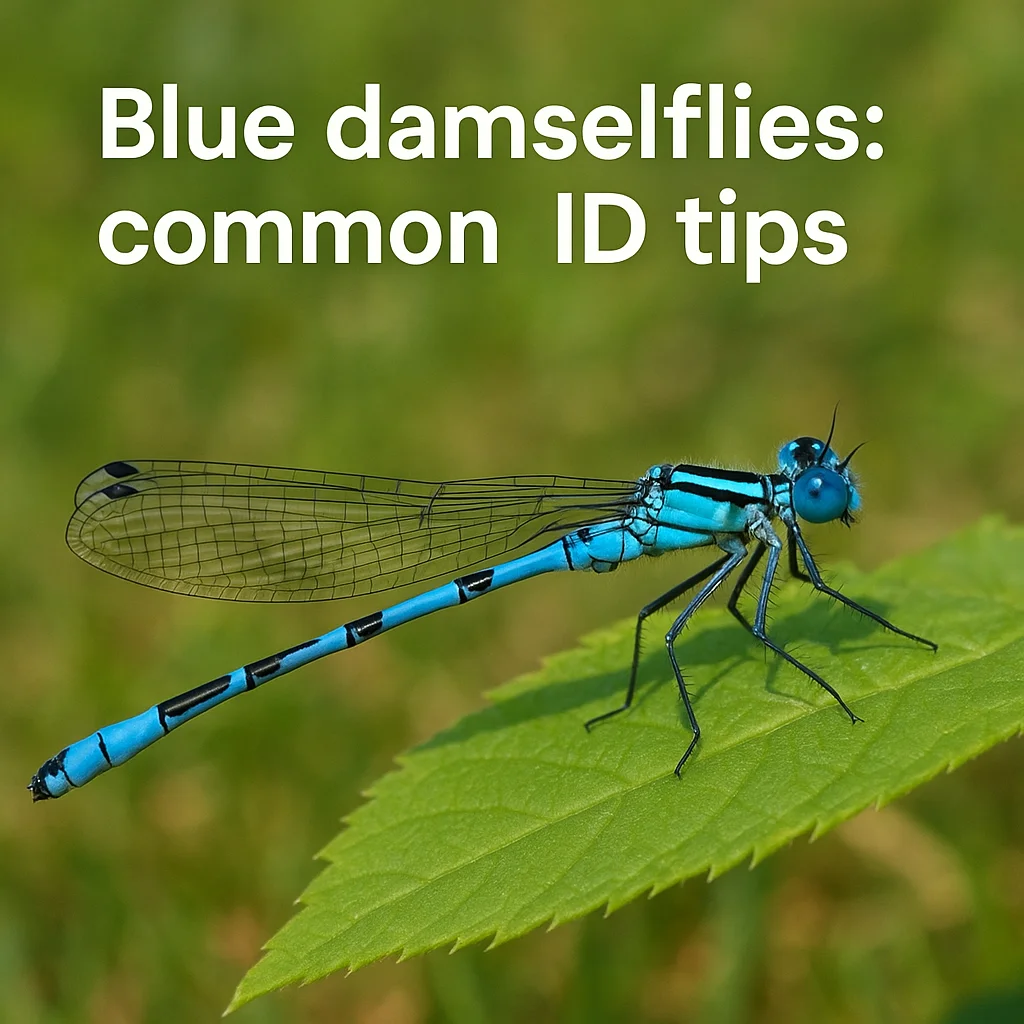
- Common names: Blue damselfly, Azure damselfly
- Scientific name: Varies by species
- Insect or not: Insect, invertebrate
- Order / Family: Odonata, varies by species
- Typical size range: 2.5–4.5 cm (adult)
- Key colors/patterns: Bright blue body, black markings
- Activity: Diurnal (active during the day)
- Typical habitats: Freshwater habitats such as ponds, lakes, and rivers
- Where in the world it occurs: Found on all continents except Antarctica
- Seasonality: Most visible in spring and summer
🔍 Identification
Identifying blue damselflies can be an enjoyable activity, as they exhibit distinct features. Key points for recognizing these insects include their slender body shape and bright blue coloration. The body consists of a head, thorax, and a long abdomen, with the thorax typically darker.
- Body shape and silhouette: Elongated and delicate, resembling a small needle
- Antennae type: Short and bristle-like, often not very noticeable
- Wing features: Two pairs of wings, clear with a slight iridescent sheen, held together above the body when at rest
- Leg traits and movement style: Spindly legs used for perching and capturing prey mid-flight
- Distinguishing look-alikes and common confusion: Often confused with dragonflies; however, damselflies have narrower bodies and their wings are held together when resting
🧠 Basic Body Structure
As insects, blue damselflies have a basic body structure comprising a head, thorax, and abdomen. They possess six legs attached to the thorax and two pairs of wings. The entire body is covered by an exoskeleton, providing protection and support. Damselflies are invertebrates, meaning they do not have a backbone.
Like other insects, they undergo molting as they grow, shedding their exoskeleton multiple times before reaching adulthood.
🌍 Habitat & Distribution
Blue damselflies thrive in freshwater environments, including ponds, lakes, rivers, and streams. They are often found near the water's edge, where they hunt for food and mate. Microhabitats such as lush vegetation or bushes provide crucial resting and hunting grounds.
Geographically, they are found worldwide except Antarctica, inhabiting a wide range of climates from tropical to temperate regions. Habitat degradation and pollution can affect their presence in specific areas, making them indicators of environmental health.
📅 Seasonal Appearance & Activity
Blue damselflies are predominantly active during warmer months. In temperate regions, they are most visible from late spring to early autumn. Their activity peaks during sunny days, as they are dependent on warm temperatures. Damselflies are diurnal, hunting and mating primarily during daylight.
- Best time to spot it:
- Late spring through early autumn
- Warm, sunny days
- Mid-morning to afternoon
- Near water bodies
🥚 Reproduction & Egg-Laying
Mating in blue damselflies typically involves a courtship display, where males show off their vibrant coloration to attract females. The males often guard territories and compete for the attention of passing females. Once paired, the male uses claspers to hold the female, and mating can occur either while perched or in flight.
Eggs are usually laid in aquatic vegetation, submerged stems, or floating debris. The number of eggs varies by species and environmental conditions, with some species laying hundreds of eggs during their reproductive period.
🌀 Metamorphosis & Life Cycle
Blue damselflies undergo incomplete metamorphosis, which includes three stages: egg, nymph, and adult. After the eggs hatch, the aquatic nymphs emerge and are fully aquatic, breathing through gills. They feed on small aquatic organisms and continue to grow through successive molts.
Nymphs may spend several months up to a couple of years developing, depending on the climate and species. Upon reaching maturity, they metamorphose into winged adults, leaving the water to begin their reproductive duties. Adults generally live for a few weeks to several months, focusing on reproduction and feeding.
🍽️ Diet & Feeding Behavior
Blue damselfly nymphs are voracious predators, feeding on small aquatic creatures, including insect larvae and tiny crustaceans. They use their extendable lower jaws to capture prey.
Adult damselflies also have a predator role, feeding on small flying insects. They catch their prey mid-air using their sharp, elongated legs often forming a basket-like structure. Their mouthparts are adapted to chew and consume soft-bodied prey efficiently.
🦉 Predators & Defense
Natural predators of blue damselflies include birds, amphibians, reptiles, and large insects. Damselflies have developed several defense mechanisms to avoid predation. Their azure coloration and quick flight help them evade attackers, while some may rely on camouflage to blend in with their surroundings.
- Defense Highlights:
- Bright coloration as a warning
- Quick, agile flight patterns
- Camouflage in foliage
- Utilizing perches for better visibility
👥 Social Behavior & Swarms
Blue damselflies are primarily solitary creatures, except during mating and when competing for female attention. Males often defend small territories along water bodies to increase their mating success. While they do not form swarms like some other insects, congregations can occur around suitable breeding habitats and food sources.
🧭 Senses & Communication
Damselflies have excellent vision, aided by their large compound eyes. This keen eyesight allows them to precisely track and capture moving prey in the air. They also use visual cues during courtship and territorial displays.
Communication largely involves visual displays; however, they can perceive chemical signals for locating food and recognizing mates.
🌱 Role in the Ecosystem
Blue damselflies play an essential role in ecosystems as both predators and prey. By controlling populations of flies and other small insects, they help maintain ecological balance. Their nymphal stage contributes to regulating aquatic ecosystems by preying on various organisms.
They also serve as an essential food source for a range of animals, further integrating them into the food web. Although not major pollinators, their presence in ecosystems showcases their ecological versatility and importance.
📉 Population & Conservation Notes
Blue damselflies are often abundant and widespread in areas where suitable habitats are present. However, local populations can be impacted by habitat degradation, pollution, and pesticide use. To help conserve these insects, it is vital to protect natural water bodies and promote organic gardening practices.
- How to Help (Low-Impact):
- Preserve natural water habitats
- Plant native vegetation
- Avoid using pesticides near water bodies
- Encourage public awareness and conservation efforts
⚠️ Human Interaction & Safety
Blue damselflies are harmless to humans and do not bite or sting. Observers can enjoy watching them without concern for personal safety. When observing these creatures, it is important to respect their natural habitats and avoid disturbing or collecting them.
📌 Summary
- Slender, bright blue insects found near freshwater
- Most active in spring and summer during sunny days
- Incomplete metamorphosis: egg, nymph, adult
- Predatory role feeding on insects, helping control populations
- Natural predators include birds and larger insects
- Important in aquatic and terrestrial ecosystems
- Generally common, habitat degradation affects numbers
- Harmless and enjoyable to observe in their natural habitat