🕷️ Zebra Swallowtail Protographium Marcellus Tail Shape And Pawpaw Host
🧾 Quick Facts
The Zebra Swallowtail, Protographium marcellus, is a captivating butterfly species notable for its distinctive appearance and unique ecological relationships. Here’s a quick overview of this fascinating insect:
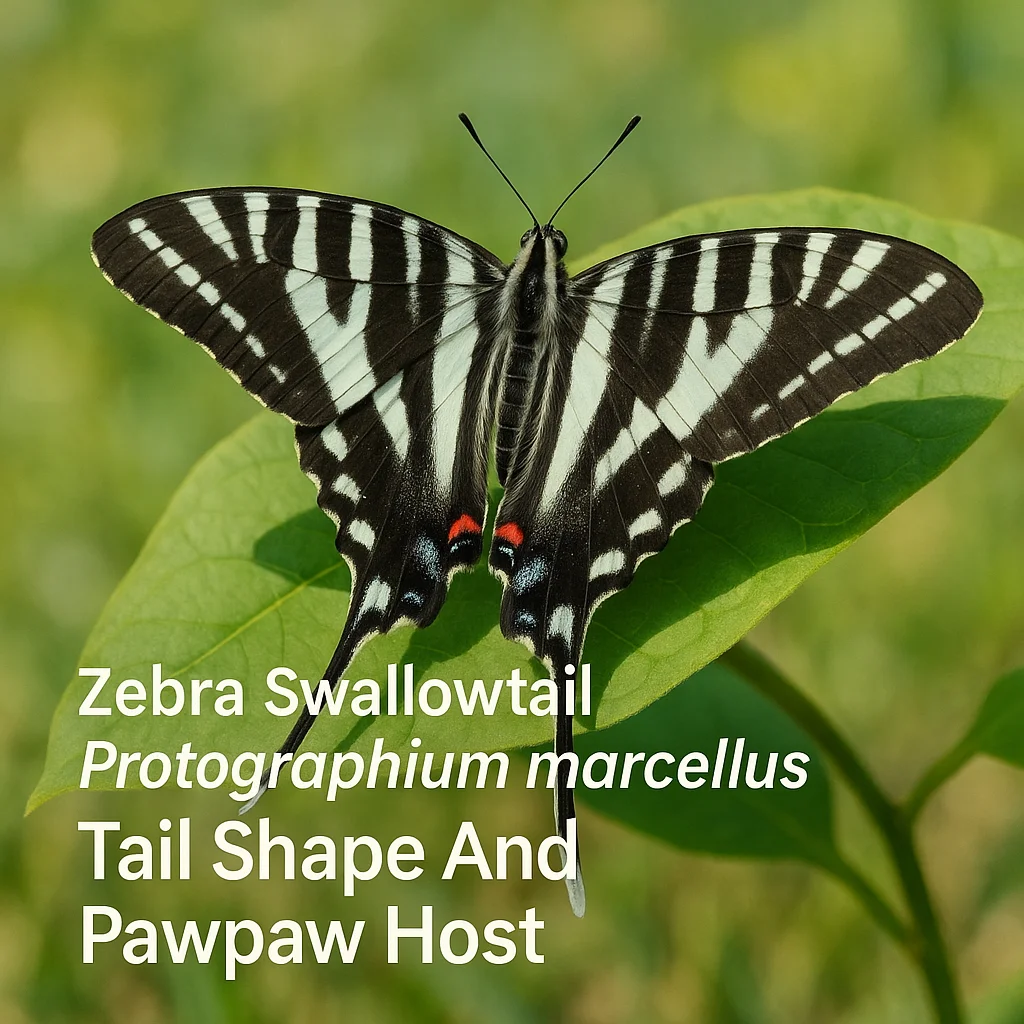
- Common names: Zebra Swallowtail, Pave Swallowtail
- Scientific name: Protographium marcellus
- Insect status: Invertebrate, belongs to the insect family
- Order / Family: Lepidoptera / Papilionidae
- Typical size range: 6.4 to 11.4 cm wingspan
- Key colors/patterns: White and black stripes with red and blue spots
- Activity: Diurnal (active during the day)
- Typical habitats: Woodlands, river edges, and areas with pawpaw plants
- Geographic range: Eastern United States, parts of Midwest
- Seasonality: March to September, varies by region
🔍 Identification
The Zebra Swallowtail is easily recognizable due to its distinctive wing patterns and shape. The butterfly boasts long hind wings that extend into tails, giving it a unique silhouette. Its body is slender, with fine black antennae. The notable white and black striped pattern on its wings resembles the markings of a zebra, with additional red and blue markings near the tails.
Legs are slim, allowing nimble movement among flowers. Despite its unique appearance, it is often confused with other swallowtails. However, the Zebra Swallowtail's striking tails and zebra-like stripes set it apart.
- Top ID Tips:
- Look for the long tails on hindwings
- Distinct black and white stripes
- Red and blue spots near the tail tips
- Slender, streamlined body
- Fine, black antennae
- No other swallowtail has the same tail shape in its range
- Commonly seen near pawpaw plants
🧠 Basic Body Structure
As an insect, the Zebra Swallowtail has a body divided into three main parts: the head, thorax, and abdomen. It possesses an external skeleton called an exoskeleton, which supports and protects its body. This butterfly has six legs, a characteristic of insects, and sports two pairs of wings. Like all insects, it undergoes molting to grow.
Being an invertebrate means it lacks a backbone, which is typical of many species within the animal kingdom, particularly outside of mammals, reptiles, birds, amphibians, and fish.
🌍 Habitat & Distribution
The Zebra Swallowtail thrives in habitats where the pawpaw plant, its larval host, is found. This includes moist, deciduous woodlands, riparian zones along rivers and streams, and regions abundant with secondary growths of pawpaw. The presence of this plant is crucial for the butterfly's lifecycle.
Geographically, it is found predominantly in the eastern United States, extending into the Midwest. Climate preferences include temperate zones where the host plants thrive, making it more common in warm, humid environments. Changes in habitat, especially through deforestation or urbanization, can affect their populations, as it impacts the availability of their host plants.
📅 Seasonal Appearance & Activity
The Zebra Swallowtail is primarily active during the warmer months, reflecting its dependency on temperate climates. They are usually visible from March through September, with the exact timing depending on regional climate patterns. During sunny days, they are actively seen fluttering around flowers and pawpaw patches.
- Best Time to Spot It:
- Early spring to late summer
- Sunny, warm days
- Mornings when they are most active
- Near flowering plants or pawpaw bushes
🥚 Reproduction & Egg-Laying
The Zebra Swallowtail engages in courtship through aerial displays. Males often patrol areas near pawpaw plants waiting to encounter females. Once mating occurs, females lay eggs singly on the underside of pawpaw leaves. The availability of these plants is essential for successful reproduction.
Typically, a single female may lay dozens of eggs, although this number can vary significantly based on environmental conditions. The pawpaw’s presence ensures that larvae have a food source immediately upon hatching.
🌀 Metamorphosis & Life Cycle
The Zebra Swallowtail undergoes complete metamorphosis, comprised of four stages: egg, larva (caterpillar), pupa (chrysalis), and adult.
Eggs are laid on pawpaw leaves and hatch into caterpillars that feed exclusively on these plants. This diet bestows a survival advantage due to chemicals acquired from the leaves, protecting them from predators. The caterpillar stage lasts approximately 3-4 weeks before pupation.
During the pupal or chrysalis stage, which lasts about 10-20 days, the creature undergoes transformation. Once emerged as an adult butterfly, it continues its life cycle, with adults living for a few weeks depending on environmental resources.
🍽️ Diet & Feeding Behavior
As adults, Zebra Swallowtails feed on nectar from a variety of flowers, aiding in their role as pollinators. The adults use their proboscis—a specialized mouthpart—for feeding, which acts like a straw for sipping nectar.
Larval caterpillars feed on the leaves of pawpaw plants. This exclusive relationship makes the availability of pawpaw critical throughout its lifecycle. As herbivores, they are integral in the plant-animal food web, particularly in their role as prey for other animals.
🦉 Predators & Defense
Zebra Swallowtails are preyed upon by birds, spiders, and predatory insects. However, their coloration provides a degree of camouflage, blending with dappled sunlight in forest environments. Additionally, their diet on pawpaw leaves imbues them with a chemical defense, making them distasteful to many predators.
- Defense Highlights:
- Chemical defense from pawpaw consumption
- Camouflaging coloration
- Swift, erratic flight patterns
- Mimicry potentially deterring predators
👥 Social Behavior & Swarms
The Zebra Swallowtail is generally a solitary butterfly, though temporary gatherings may occur at abundant flowering sites or puddles—collectively known as “puddling.” This behavior is often attributed to males seeking salts and nutrients.
Swarming behavior isn't common, but they can be seen in larger numbers during peak season in favorable conditions, especially in regions dense with their host plant.
🧭 Senses & Communication
Zebra Swallowtails rely heavily on their sense of vision and smell. They are adept at detecting colorful flowers and pheromones, which play a crucial role in their mating and feeding behavior. Pheromones released by females help attract males, facilitating reproduction.
These butterflies communicate mainly through visual cues and chemicals, engaging in courtship displays that demonstrate their fitness and readiness for mating.
🌱 Role in the Ecosystem
Ecologically, the Zebra Swallowtail serves as both a pollinator and a prey species. By feeding on nectar, they help pollinate plants, contributing to a balanced ecosystem. They exemplify mutualism in their interaction with the pawpaw plant, where their larvae depend on it for food.
As prey, they are important in food webs, supporting the populations of predatory birds and insects, thus maintaining ecosystem dynamics without overwhelming plant populations.
📉 Population & Conservation Notes
The Zebra Swallowtail is commonly found where suitable habitats persist, although local abundance may fluctuate with environmental changes. Deforestation and urbanization pose threats by diminishing pawpaw plant populations. Despite this, they remain common in many suitable habitats.
- How to Help (Low-Impact):
- Plant native pawpaw trees in gardens
- Avoid pesticide use in butterfly habitats
- Preserve woodlands and native vegetation
- Encourage local conservation efforts
⚠️ Human Interaction & Safety
The Zebra Swallowtail is harmless to humans and does not bite or sting. Observers should respect their natural habitats and avoid disturbing them during their life stages. Instead, enjoy their presence as a cue of healthy ecosystems.
For those concerned about butterfly habitats, minimizing habitat disruption and promoting native plant growth can foster better environments for these and other butterfly species.
📌 Summary
- Identification: Very distinct with zebra stripe wings and long tails
- Habitat: Prefers areas with pawpaw plants; found in eastern US
- Seasonality: Most active from March to September
- Life Cycle: Complete metamorphosis dependent on pawpaw
- Diet: Adults feed on nectar; larvae consume pawpaw leaves
- Predators: Birds and insects, but contain chemical deterrents
- Ecology: Helps pollinate flowers, part of food webs
- Human Notes: Safe to observe and enjoy respectfully