🕷️ Tiger moths (Arctiinae): warning colors and sounds
🧾 Quick Facts
The Arctiinae subfamily, commonly known as tiger moths, is a fascinating group of moths with vivid warning colors and intriguing sound-producing capabilities. These moths are characterized by their striking appearance and diverse habitats across various regions globally.
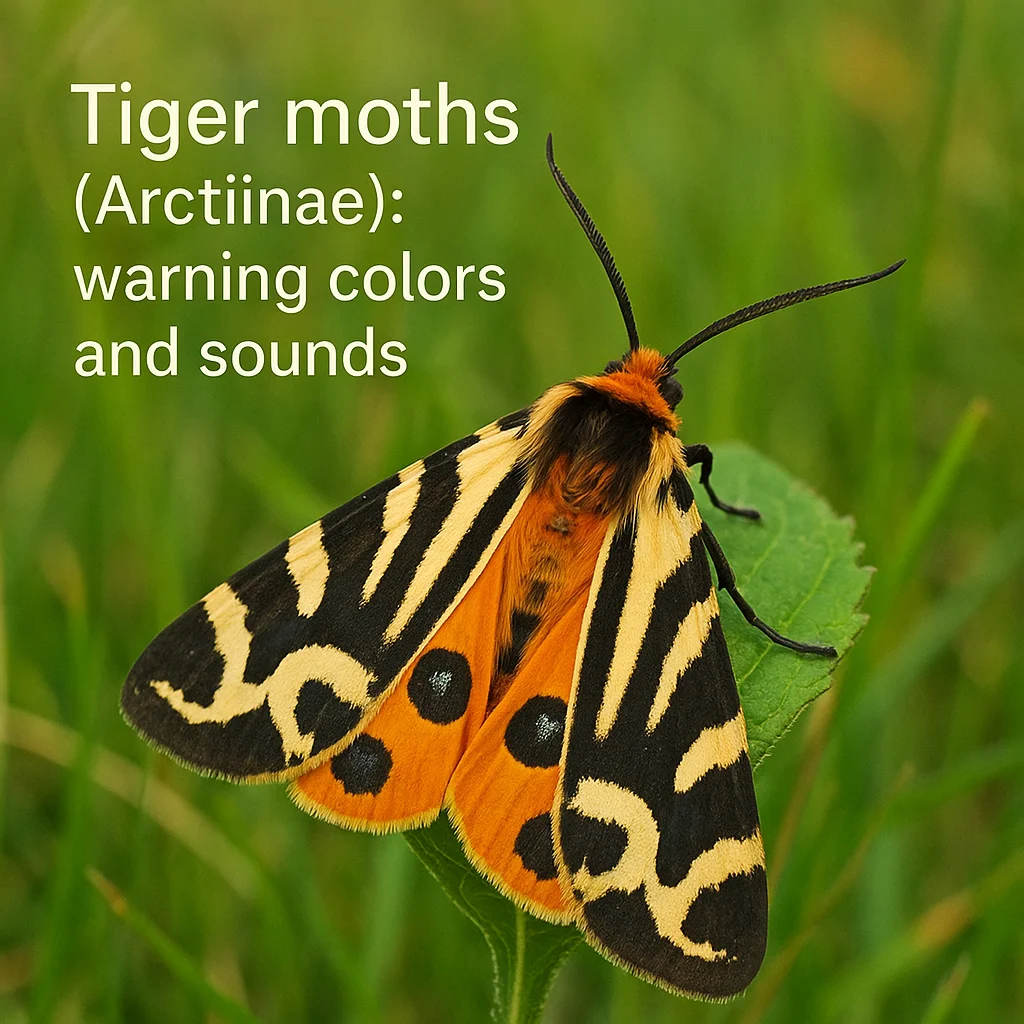
- Common names: Tiger moths
- Scientific name: Varies by species
- Insect or not: Insect (invertebrate)
- Order/family: Lepidoptera/Arctiinae
- Typical size range: 1.4 to 2.3 inches (3.5 to 6 cm) in wingspan
- Key colors/patterns: Brightly colored patterns, often with hues of orange, red, yellow, and black
- Activity: Mostly nocturnal
- Typical habitats: Forests, grasslands, gardens, and wetlands
- Where in the world: Found on all continents except Antarctica
- Seasonality: Most visible in late spring to early autumn
🔍 Identification
Tiger moths are easily recognizable due to their vibrant coloration and unique body structure. They exhibit a robust and furry body with wings featuring intricate and bright patterns. Typical identification cues include:
- Silhouette: Stout body with broad wings
- Antennae: Feathered or thread-like, depending on the species
- Wing features: Brightly colored patterns with contrasting spots and stripes
- Leg traits: Six legs that enable crawling and clinging to surfaces
- Movement style: Slow and deliberate in flight compared to other moths
- Bright colors serve as a warning for predators
- Thick, furry bodies help protect against cold
- Wide wings allow for easy gliding flights
- Antennae are key sensory organs for smelling
- Often confused with butterflies, but more robust
- Unique sounds produced as defense mechanisms
🧠 Basic Body Structure
As members of the Lepidoptera order, tiger moths share the typical insect body composed of three main parts: head, thorax, and abdomen. They possess six legs and two pairs of wings, covered by colorful scales. The head bears the antennae and complex eyes.
Being invertebrates, tiger moths lack a backbone, having an exoskeleton that provides structural support. They undergo a complete metamorphosis, transitioning through distinct life stages, including egg, larva, pupa, and adult.
🌍 Habitat & Distribution
Tiger moths thrive in diverse habitats, including temperate and tropical forests, grasslands, wetlands, and even urban gardens. They often inhabit areas abundant in vegetation, as plants are crucial for their larval stage and adult egg-laying activities.
Their geographic range spans across all continents, except Antarctica, adapting to various climates ranging from humid tropical regions to cooler temperate zones. Habitat changes such as deforestation or urbanization can impact their distribution and sightings.
📅 Seasonal Appearance & Activity
Adult tiger moths are predominantly active during the warmer months, with peak activity in late spring through early autumn. They exhibit nocturnal behaviors, becoming active after dusk when conditions are favorable.
Weather influences such as warm temperatures and moderate humidity promote their visibility, whereas rain and cold winds may reduce activity.
- Most sightings from May to September
- Nocturnal breeders, active at night
- Prefer warm evenings with moderate wind
- Activity declines significantly in colder months
- Visibility increases in areas with few predators
🥚 Reproduction & Egg-Laying
The mating rituals of tiger moths involve males locating females through pheromone signals. After mating, females typically lay eggs on suitable host plants that provide food for the hatching larvae.
Egg counts can vary widely among different species, with some laying hundreds of eggs in a single batch. By dispersing eggs across multiple plants, they increase the likelihood of larval survival, showcasing various egg-laying strategies based on environmental conditions.
🌀 Metamorphosis & Life Cycle
Tiger moths undergo a complete metamorphosis consisting of four stages: egg, larva (caterpillar), pupa (cocoon), and adult. Eggs hatch into larvae that feed voraciously on host plants, growing rapidly before entering the pupal stage.
During pupation, the caterpillar undergoes transformation within a silken cocoon. This stage varies in length based on temperature and humidity, potentially lasting weeks to months. The emerging adult will then focus on reproduction, completing the cycle.
🍽️ Diet & Feeding Behavior
Throughout their life stages, the diet of tiger moths changes significantly:
- Larvae: Herbivorous feeders with strong mandibles for chewing foliage, flowers, and sometimes fruits
- Adults: Rely on nectar sources for sustenance, though some species may not feed, focusing solely on reproduction
As caterpillars, they perform essential roles as herbivores, managing plant populations. Adults, while feeding on nectar, contribute to pollination.
🦉 Predators & Defense
Tiger moths face numerous natural predators, including birds, bats, and spiders. Their primary defense lies in vibrant warning coloration, signaling toxic or unpalatable qualities to potential predators.
In addition to visual deterrence, many species have evolved acoustic defenses, producing clicks or ultrasonic sounds that confuse or deter echolocating bats. Chemical defenses, camouflage, and quick flight bursts also contribute to their survival strategies.
- Bright colors signal distastefulness
- Ultrasonic sounds deter bats
- Chemicals make them unpalatable
- Quick escape flights when threatened
👥 Social Behavior & Swarms
Tiger moths are primarily solitary, interacting primarily for mating purposes. Males seek out females using pheromones and compete for mating opportunities.
While swarming or migrations are not common, certain species may appear in large numbers due to mass emergence or favorable environmental conditions, presenting a collective defense against predators.
🧭 Senses & Communication
Tiger moths possess keen senses that aid in survival and communication. Their compound eyes detect movement and light, essential for nocturnal navigation. Antennae play a crucial role in scent detection, aligning with their reliance on pheromonal communication for mating.
Sound production is unique to many tiger moths, serving as a defensive mechanism against predators. By creating ultrasonic clicks, they disrupt bats' echolocation and reduce predation risk.
🌱 Role in the Ecosystem
Tiger moths contribute significantly to ecosystems through their herbivorous larvae and nectar-feeding adults. Caterpillars control plant growth by feeding on foliage, while adults aid in pollination.
They serve as vital food sources for various predators, maintaining food web balance. Their presence benefits ecosystems, promoting biodiversity through mutual relationships with flora and fauna.
📉 Population & Conservation Notes
The abundance of tiger moths varies by region, with many species maintaining stable populations, though some face declines due to habitat loss, pesticide use, and climate change. Increased urban lighting and pollution further impact their numbers.
Conservation efforts focus on preserving habitats and reducing chemical reliance to ensure the continued survival of these striking insects.
- Plant native vegetation to support larval food sources
- Avoid pesticides in moth habitats
- Encourage diverse plantings to attract adults
- Support environmental policies that protect natural areas
⚠️ Human Interaction & Safety
Tiger moths do not pose direct threats to humans as they neither bite nor sting. Their vibrant colors and calm behavior make them interesting subjects for observation and photography.
When observing these moths, it is essential to respect their natural environment. Encouraging populations without disturbing them supports biodiversity and ecological balance.
📌 Summary
- Identified by bright warning colors and sound production
- Habitat ranges from forests to urban gardens worldwide
- Most active at night during warm months
- Complete metamorphosis includes distinct life stages
- Caterpillars are herbivorous, adults may aid pollination
- Predators include birds and bats; defenses are varied
- Important ecological roles in controlling and pollinating
- Conservation challenges involve habitat and pollution issues
- Safe and harmless to humans with fascinating behaviors