🕷️ Sulphur Butterflies Yellow ID Tips For Fields And Gardens
🧾 Quick Facts
Sulphur butterflies, belonging to the subfamily Coliadinae, are a group of butterflies known for their vibrant yellow coloration. Found primarily in open and sunny habitats, these butterflies are widespread and common in many parts of the world.
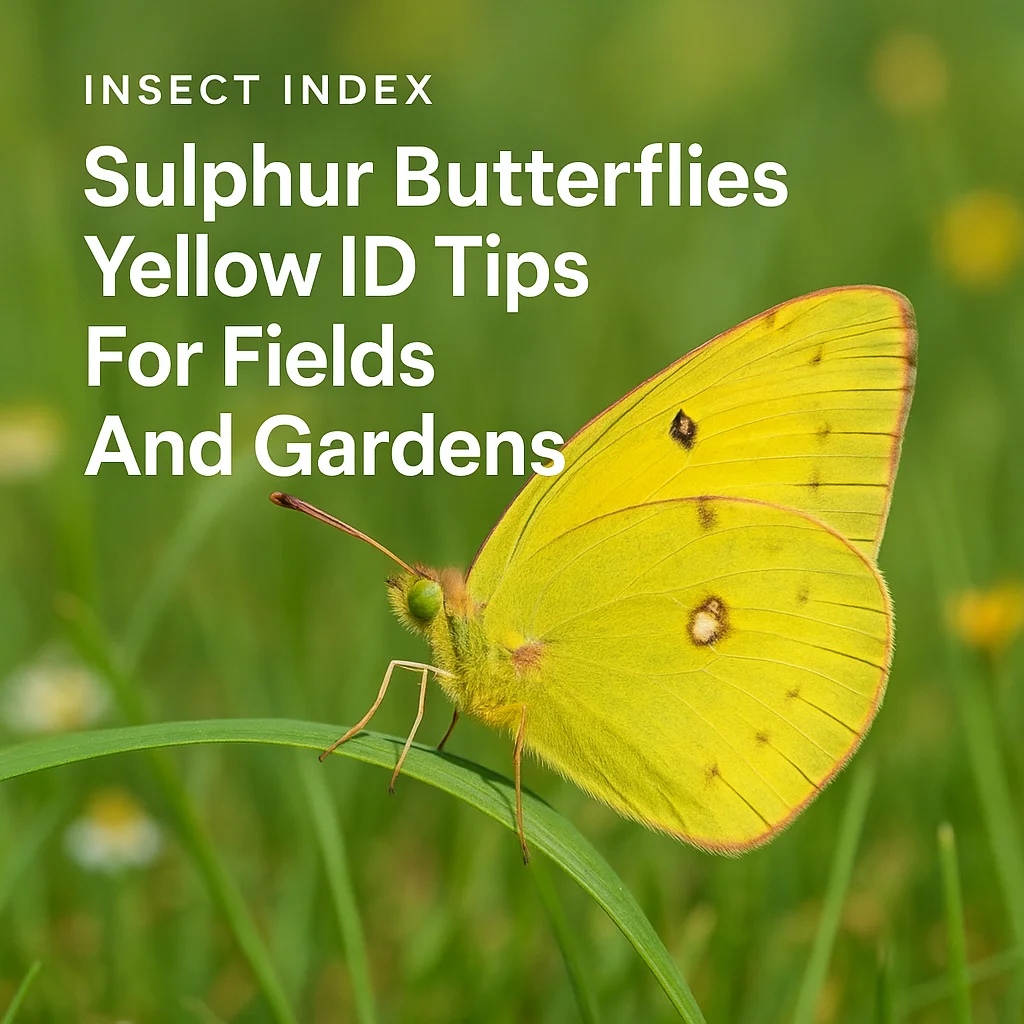
- Common names: Sulphur Butterflies
- Scientific name: Varies (common genera include Colias and Phoebis)
- Insect: Yes, they are invertebrates.
- Order / family: Lepidoptera / Pieridae
- Typical size range: 1.5 to 3 inches wingspan for adults
- Key colors/patterns: Bright yellow with black margins
- Activity: Diurnal (active during the day)
- Typical habitats: Meadows, gardens, fields
- Where in the world: North, Central, and South America, some parts of Europe and Asia
- Seasonality: Most visible in spring and summer
🔍 Identification
Recognizing sulphur butterflies in the field involves looking for their distinct yellow color. Their bodies are slender with narrow, elongated wings. The antennae are clubbed at the tips, which is a characteristic feature of butterflies. The wings are often bold yellow with black margins and occasionally show subtle white patterning.
- Body shape: Slender, with triangular wings
- Antennae: Clubbed and notably straight
- Wing features: Bright yellow, with occasional white spots
- Leg traits: Thin and used for gentle landings
- Common confusion: Other yellow butterflies, such as certain skippers and swallowtails
- Top ID Tips:
- Look for bright yellow coloration with black wing margins.
- Notice the clubbed tips of the antennae.
- Observe flight pattern: swift and fluttery.
- Females often have a paler hue compared to males.
- Typical habitats include sunlit gardens and open fields.
- Black spots may be visible near the wing edges.
🧠 Basic Body Structure
Sulphur butterflies, like all insects, have three primary body parts: the head, thorax, and abdomen. They possess six legs, befitting their classification as insects. Butterflies are invertebrates, meaning they lack a spinal column, instead having an exoskeleton. This hardened outer structure provides protection and support. During their lifecycle, they undergo molting, shedding skin to grow larger.
🌍 Habitat & Distribution
Sulphur butterflies favor sunny environments such as meadows, gardens, and agricultural fields. These environments provide ample nectar resources and open sunlit spaces for flight. Microhabitats include flower gardens, under shrubs, and along roadside verges. While predominantly found in the Americas, several species extend their range to Europe and Asia, thriving in temperate to warm climates.
📅 Seasonal Appearance & Activity
Sulphur butterflies are generally most active during spring and summer months. Being diurnal, they are best observed on sunny, warm days where they can be seen fluttering from flower to flower in search of nectar.
- Best Time to Spot It:
- Late morning to early afternoon for peak sun
- Warm, sunny weather encourages activity
- June through August are peak months
- Early autumn in certain warm regions
🥚 Reproduction & Egg-Laying
Mating behavior in sulphur butterflies involves chemical signals and visual displays where males typically patrol in search of receptive females. Eggs are laid singly or in small clusters on host plants, often those in the legume family. The number of eggs varies greatly, depending on the species and environmental conditions.
🌀 Metamorphosis & Life Cycle
Sulphur butterflies undergo complete metamorphosis. The life cycle begins with eggs hatching into caterpillars (larvae), which feed on host plants. This stage is critical for storing energy for the pupal phase.
The next stage is the pupa (chrysalis), where the caterpillar undergoes transformation before emerging as an adult. The journey from egg to adult butterfly can take several weeks, depending on temperature and moisture conditions.
🍽️ Diet & Feeding Behavior
Sulphur butterfly caterpillars primarily feed on the leaves of their host plants, which often belong to the legume family. As adults, they have a proboscis that allows them to sip nectar from a variety of flowers, acting as important pollinators.
🦉 Predators & Defense
Natural predators of sulphur butterflies include birds, spiders, and small mammals. Their primary defenses include swift flight and, in some species, subtle cryptic coloration when wings are closed.
- Defense Highlights:
- Flight speed to evade capture
- Employing camouflage when wings are at rest
- Blending in with flowers and yellow foliage
- Relying on toxic chemicals from host plants (rare)
👥 Social Behavior & Swarms
Sulphur butterflies are mostly solitary but can be seen congregating in swarms when migrating or when abundant resources are present. Migrations are mainly influenced by weather conditions and the availability of food resources.
🧭 Senses & Communication
Sulphur butterflies rely heavily on sight for finding partners and food. They use chemical cues and pheromones for mating and communication. Visual signaling is crucial for identifying mates and okay-shade color variants to reduce confusion.
🌱 Role in the Ecosystem
As pollinators, sulphur butterflies play a vital role in the ecosystem by aiding in the fertility of countless plant species. They contribute to the food web as prey for a variety of animals and assist in promoting biodiversity in their habitats.
📉 Population & Conservation Notes
Generally considered common and widespread, sulphur butterflies are not currently under significant threat. However, habitat loss and pesticide use can affect local populations.
- How to Help (Low-Impact):
- Plant native flowering plants in gardens
- Limit pesticide use in butterfly-friendly areas
- Participate in local butterfly counts for data collection
- Protect wildflower-rich grasslands and meadows
⚠️ Human Interaction & Safety
Sulphur butterflies do not bite or sting and are harmless to humans. Observing these butterflies should be done with care to avoid disturbing them. Encouraging natural habitats and respecting their ecosystem roles are the best ways to interact with these delightful insects.
📌 Summary
- Sulphur butterflies are easily identified by their vibrant yellow coloring and black wing margins.
- They are found in sunny, open areas such as meadows and gardens.
- Active mainly during the day, especially in warm weather.
- Undergo complete metamorphosis, with caterpillar and adult feeding on different resources.
- Face threats from habitat loss and chemical pesticide use.
- Serve important roles as pollinators within their ecosystems.
- Non-aggressive, safe butterflies to observe and encourage in gardens.