🕷️ Skipper Butterflies Hesperiidae Why They Look Like Mini Moths
🧾 Quick Facts
Skipper butterflies, members of the Hesperiidae family, are a fascinating group that often stir curiosity due to their resemblance to moths. Despite their distinctive characteristics, they remain a captivating subject for enthusiasts and scientists alike.
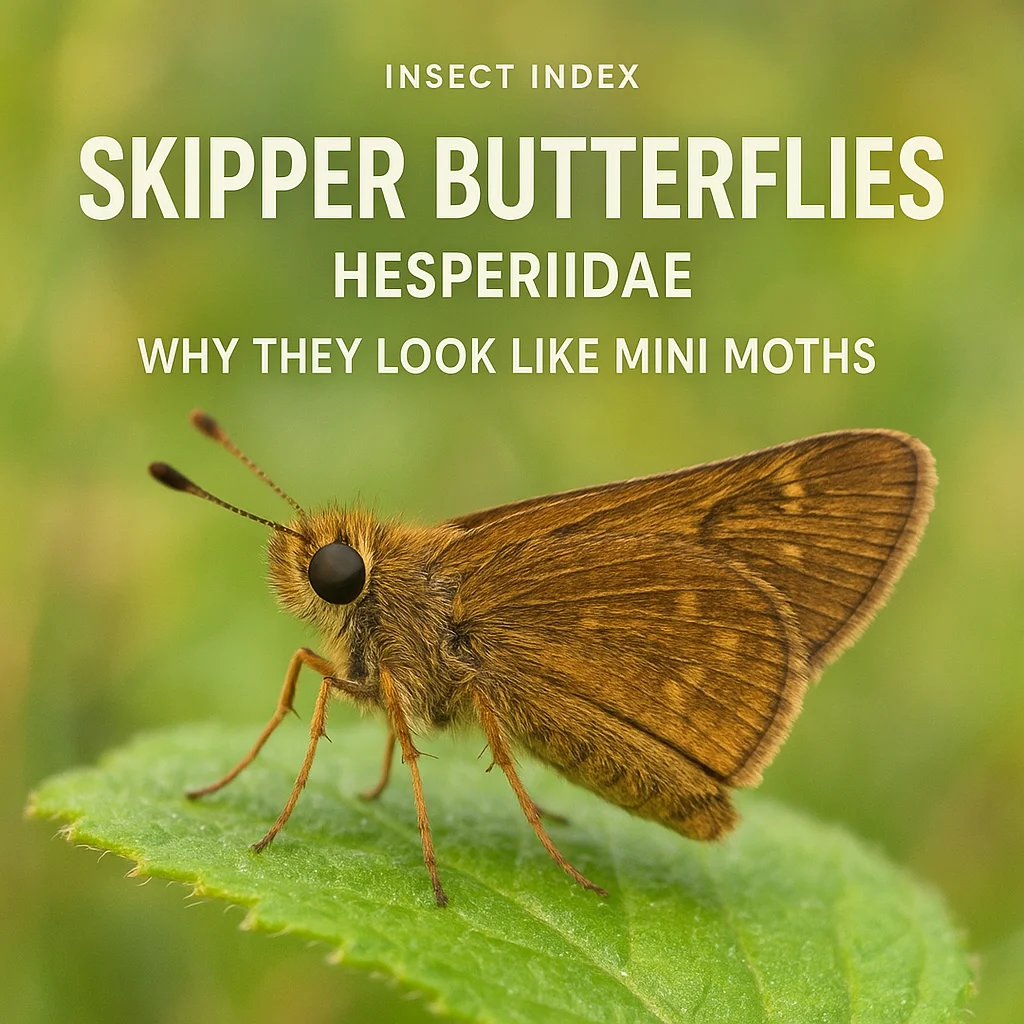
- Common Names: Skippers, Darts, Hesperids
- Scientific Name: Family Hesperiidae
- Insect Status: Yes, they are true insects.
- Order/Family: Lepidoptera/Hesperiidae
- Typical Size Range: 1.5 to 3.5 cm wingspan
- Key Colors/Patterns: Typically browns, grays, and orange with rapid wingbeats
- Activity: Primarily diurnal
- Typical Habitats: Grasslands, meadows, forest edges, gardens
- World Distribution: Globally distributed, especially in tropical areas
- Seasonality: Seen mostly from spring to late summer
🔍 Identification
Recognizing skipper butterflies requires keen observation, as they present a blend of butterfly and moth features.
- Body Shape and Silhouette: Compact, with a thick, furry body and hooked antennae tips.
- Antennae Type: Distinctively hooked, which distinguishes them from other butterflies.
- Wing Features: Wings are held at angles distinct from each other; forewings are often upright while hindwings are spread horizontally.
- Leg Traits and Movement Style: Skippers have long, powerful legs that aid in their quick, skipping flight pattern.
- Distinguishing Look-Alikes: Easily confused with moths due to their stout bodies and rapid, erratic flight style.
- Top ID Tips:
- Look for the characteristic hooked antennae.
- Observe their rest posture—wings often held at an angle.
- Notice their quick, skipping flight pattern.
- Check for their size—usually smaller than most butterflies.
- Search habitats with abundant grasses or open areas.
- Look for them in sunny areas—they prefer warmth and light.
🧠 Basic Body Structure
Skipper butterflies, like all insects, possess a segmented body divided into the head, thorax, and abdomen, supported by an outer exoskeleton.
- Head: Holds sensory organs such as compound eyes, antennae, and mouthparts.
- Thorax: Houses three pairs of legs and two pairs of wings.
- Abdomen: Contains digestive and reproductive systems.
As invertebrates, they rely on their exoskeleton for support and protection, shedding it periodically through molting.
🌍 Habitat & Distribution
Skipper butterflies thrive in diverse environments, including grasslands, meadows, forest edges, and urban gardens. They prefer areas that offer ample flowers for nectaring and suitable host plants for larvae. Skippers are found on every continent except Antarctica, with the richest diversity in tropical and subtropical regions. Habitat alteration, such as urbanization and agricultural development, can influence their abundance and distribution.
📅 Seasonal Appearance & Activity
The best time to observe skippers is typically during the warmer months of spring and summer. Being diurnal, they are most active during sunny, warm weather, although their activity can significantly decrease on cloudy or rainy days.
- Best Time to Spot It:
- Late morning to early afternoon.
- Warm, sunny days are ideal for observation.
- During spells of light wind conditions.
- Spring through to the end of summer.
🥚 Reproduction & Egg-Laying
Mating behavior among skippers involves complex courtship displays, often involving chasing and aerial maneuvers. Females typically lay eggs on designated host plants, selecting leaves that offer optimal nutrition for the emerging larvae. The number of eggs laid varies among species and can range from a few dozen to several hundred.
🌀 Metamorphosis & Life Cycle
Skippers undergo complete metamorphosis, progressing through the stages of egg, larva (caterpillar), pupa (chrysalis), and adult.
Eggs are usually laid on host plants, and upon hatching, the larvae consume the host plant leaves. The larval stage is crucial for growth and nutrient accumulation.
After sufficient feeding, larvae molt into a pupal stage, which can last several weeks and varies with environmental conditions. The adult emerges from the chrysalis and begins the cycle anew, searching for mates and feeding primarily on nectar.
🍽️ Diet & Feeding Behavior
During their larval stage, skippers primarily feed on the leaves of their host plants, employing chewing mouthparts. Adult skippers, however, transition to a diet consisting mostly of flower nectar, using their proboscis to consume liquid nutrition. They serve as pollinators while feeding, contributing to the pollination of various flowering plant species.
🦉 Predators & Defense
Skipper butterflies face predation from birds, spiders, and small mammals. They employ several defense strategies, such as camouflage, rapid flight, and mimicry to avoid capture.
- Defense Highlights:
- Camouflage with foliage to reduce visibility.
- Quick, erratic flight patterns to evade predators.
- Mimic moths and other distasteful species for protection.
- Hide on the undersides of leaves during rest.
👥 Social Behavior & Swarms
Skipper butterflies are solitary creatures, preferring to go about their activities independently. They establish territories, particularly during the mating season, and interactions primarily occur when seeking mates. Unlike some butterfly species, skippers do not form large migratory swarms, although they may be seen in groups where resources are plentiful.
🧭 Senses & Communication
Skippers utilize various senses and communication methods for survival and reproduction. Their vision is quite developed for detecting colors and movement. They also rely heavily on chemical cues, using pheromones to communicate and attract mates. Though they do not produce sounds, their fluttering and wing movements can serve as visual signals in courtship rituals.
🌱 Role in the Ecosystem
Skipper butterflies play a significant ecological role as pollinators, aiding in the reproduction of many flowering plants. Their larvae contribute to controlling certain plant populations by feeding on them. Moreover, they serve as prey for various predators, thus playing a vital part in the food web. Their interactions highlight the delicate symbiosis present in natural ecosystems.
📉 Population & Conservation Notes
While many skipper species are commonly found in their habitats, some experience population pressures due to habitat loss, pesticide use, and climate change. Conservation efforts focus on preserving natural habitats and promoting native vegetation that supports their life cycle.
- How to Help (Low-Impact):
- Plant native flowering plants and grasses.
- Minimize pesticide use in gardens and lawns.
- Leave areas of leaf litter for overwintering species.
- Create butterfly-friendly spaces that mimic natural habitats.
⚠️ Human Interaction & Safety
Skipper butterflies pose no threat to humans and do not bite or sting. They should be observed respectfully within their natural habitats without capturing or disturbing the insects. Encouraging educational experiences and photography can foster appreciation and support for conservation efforts.
📌 Summary
- ID: Hooked antennae, compact body, swift flight.
- Habitat: Prefers open, sunny areas with flowers and grasses.
- Seasonality: Most active in warm months, diurnal.
- Life Cycle: Complete metamorphosis from egg to adult.
- Diet: Larvae eat leaves; adults consume nectar.
- Predators: Birds, spiders, small mammals.
- Ecology: Important pollinators and part of the food web.
- Human Notes: Non-aggressive, encourage through habitat gardens.