🕷️ Rosy Maple Moth Candy Colors And Host Trees
🧾 Quick Facts
The Rosy Maple Moth is renowned for its vividly colored wings and is often found in areas with ample maple trees. Here's a quick overview of this captivating species:
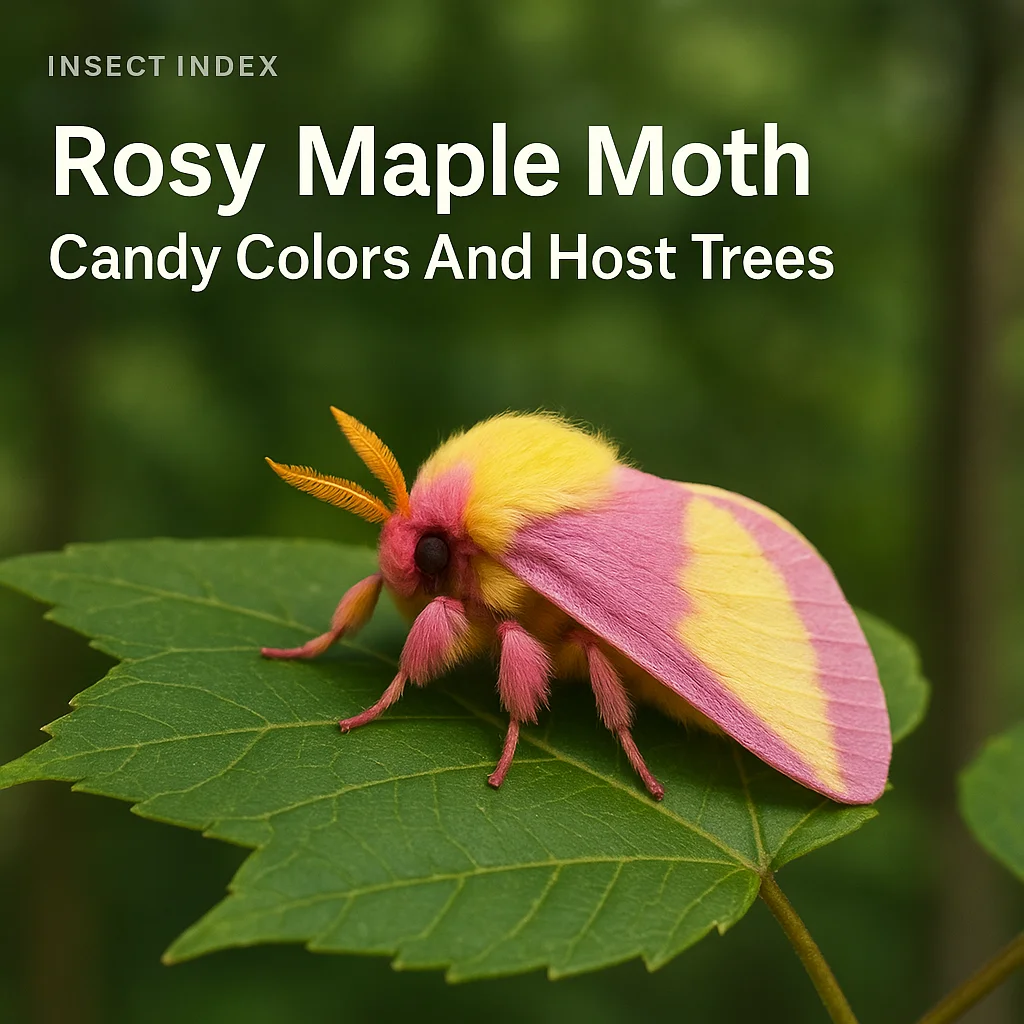
- Common names: Rosy Maple Moth
- Scientific name: Dryocampa rubicunda
- Insect: Yes, it is an invertebrate
- Order / family: Lepidoptera / Saturniidae
- Typical size range: Adult wingspan ranges from 3.2 to 5.1 cm
- Key colors/patterns: Bright pink and yellow coloration with varying intensity
- Activity: Nocturnal
- Typical habitats: Deciduous woodlands, near maple trees
- Where in the world it occurs: Eastern United States and parts of Canada
- Seasonality: Most visible in late spring and throughout summer
🔍 Identification
The Rosy Maple Moth is easily recognizable due to its striking pink and yellow coloration. It has a stout, furry body typical of the family Saturniidae, with medium-sized wings that are held flat when at rest. Its prominent antennae are feathery, especially in males. The wings, adorned with a pink and yellow pattern, can vary in the intensity of hues depending on the individual.
Other moth species might exhibit similar color patterns, so take note of the vibrant, distinct coloration of the Rosy Maple Moth to differentiate it from others.
- Top ID Tips:
- Look for a bright pink and yellow color scheme
- Check wingspan between 3.2 to 5.1 cm
- Notice the furry appearance
- Feathery antennae means you're likely seeing a male
- Active at night, so use a light source for better observation
- Compare color patterns; Rosy Maple Moths have unique intensity
🧠 Basic Body Structure
Like all insects, the Rosy Maple Moth is structured in three main parts: the head, thorax, and abdomen. The insect has six legs used for walking and clinging to surfaces at rest, while two pairs of wings enable it to fly. Its exoskeleton offers protection and support, but during development, it molts or sheds its skin to grow. The Rosy Maple Moth is an invertebrate, meaning it lacks a backbone.
🌍 Habitat & Distribution
The Rosy Maple Moth thrives in deciduous forests, particularly those with abundant maple trees—the primary hosts for larvae. These moths are often found near suburban and urban areas, where maples are used as ornamental trees. They generally inhabit parts of the eastern United States and extend into southeastern Canada.
These moths prefer temperate climates with warm, humid summers, ideal for their nocturnal activity. The availability of host trees directly impacts their population; thus, habitat destruction and deforestation are significant concerns.
📅 Seasonal Appearance & Activity
Rosy Maple Moths are most commonly seen from late spring through summer, largely at night as they are nocturnal creatures. Their presence is influenced by regional climates; warmer areas might see earlier seasonal appearances.
- Best Time to Spot It:
- Late spring through summer
- Warm, humid nights
- Areas near maple trees
- New moon nights increase activity with less light competition
🥚 Reproduction & Egg-Laying
During the breeding season, females release pheromones to attract male mates. After mating, the female lays clusters of eggs on the underside of host maple leaves. The number of eggs can vary greatly from a few dozen to over 100, depending on environmental conditions and individual health.
🌀 Metamorphosis & Life Cycle
The Rosy Maple Moth undergoes complete metamorphosis, which consists of four stages: egg, larva (caterpillar), pupa, and adult.
Eggs hatch within ten days and caterpillars begin their feeding journey on maple leaves, which lasts several weeks. As they grow, they molt four to five times. Eventually, caterpillars enter the pupal stage, where they form a cocoon under leaf litter or topsoil. This stage lasts about two weeks to several months, depending on environmental conditions, before emerging as adult moths.
🍽️ Diet & Feeding Behavior
The feeding behavior of the Rosy Maple Moth varies between its life stages. As caterpillars, they are herbivores, primarily consuming maple leaves, although they might munch on other deciduous trees if necessary. Adult Rosy Maple Moths do not eat; their main focus is reproduction.
🦉 Predators & Defense
Common predators of the Rosy Maple Moth include birds, bats, and predatory insects. To protect itself, this moth relies on its vibrant coloration, which can serve as both camouflage among flowers and a warning signal to potential predators of its unpalatability. Additionally, they stay hidden during the day to avoid diurnal predators.
- Defense Highlights:
- Camouflage in colorful environments
- Nocturnal habits minimize daytime exposure
- Phermones for quick mating interactions
- Coloration may suggest toxicity
👥 Social Behavior & Swarms
The Rosy Maple Moth is generally solitary, with interactions primarily occurring during mating season. They do not form swarms or colonies but instead engage in brief courtship displays, primarily involving pheromone attraction.
🧭 Senses & Communication
Rosy Maple Moths rely on their keen sense of smell to find mates. Their antennae detect pheromones released by females, allowing males to locate them over distances. While their vision is not highly developed, their reliance on chemical signals facilitates successful mating.
🌱 Role in the Ecosystem
The Rosy Maple Moth plays a key role as both a herbivore and part of the food web. Caterpillars aid in regulating the growth of maple trees, contributing to forest dynamics. As prey, they provide a food source for birds and small mammals, integrating into the ecosystem's balance.
📉 Population & Conservation Notes
The Rosy Maple Moth is commonly reported throughout its range, particularly where host trees are prevalent. However, its populations can fluctuate based on environmental factors, such as habitat destruction and climate change.
- How to Help (Low-Impact):
- Plant native maple trees
- Avoid using pesticides in gardens
- Leave leaf litter undisturbed, as it supports pupation
- Promote dark skies to reduce light pollution
⚠️ Human Interaction & Safety
The Rosy Maple Moth does not bite or sting and poses no direct threat to humans. To observe them respectfully, it is essential not to collect or disturb wild populations. Simply admire these moths from a distance to ensure they remain a valued part of their ecosystem.
📌 Summary
- The Rosy Maple Moth can be identified by its bright pink and yellow coloration.
- They inhabit areas near maple trees, primarily in eastern U.S. and southeastern Canada.
- Activity is mainly nocturnal from late spring to summer.
- The life cycle includes egg, larva, pupa, and adult stages.
- Diet consists of foliage for caterpillars; adults do not eat.
- Natural threats include birds and other predators.
- Their ecological role includes leaf regulation and serving as prey.
- Human impact through habitat changes should be minimized.
- Respectful observation without collecting wild specimens is encouraged.