🕷️ Moth Ears And Bat Sonar Nighttime Survival Arms Race
🧾 Quick Facts
The focus of this field guide profile is the intriguing dynamics between moths and bats. This ongoing evolutionary "arms race" involves moths developing ears to evade bat sonar. Here are key details:
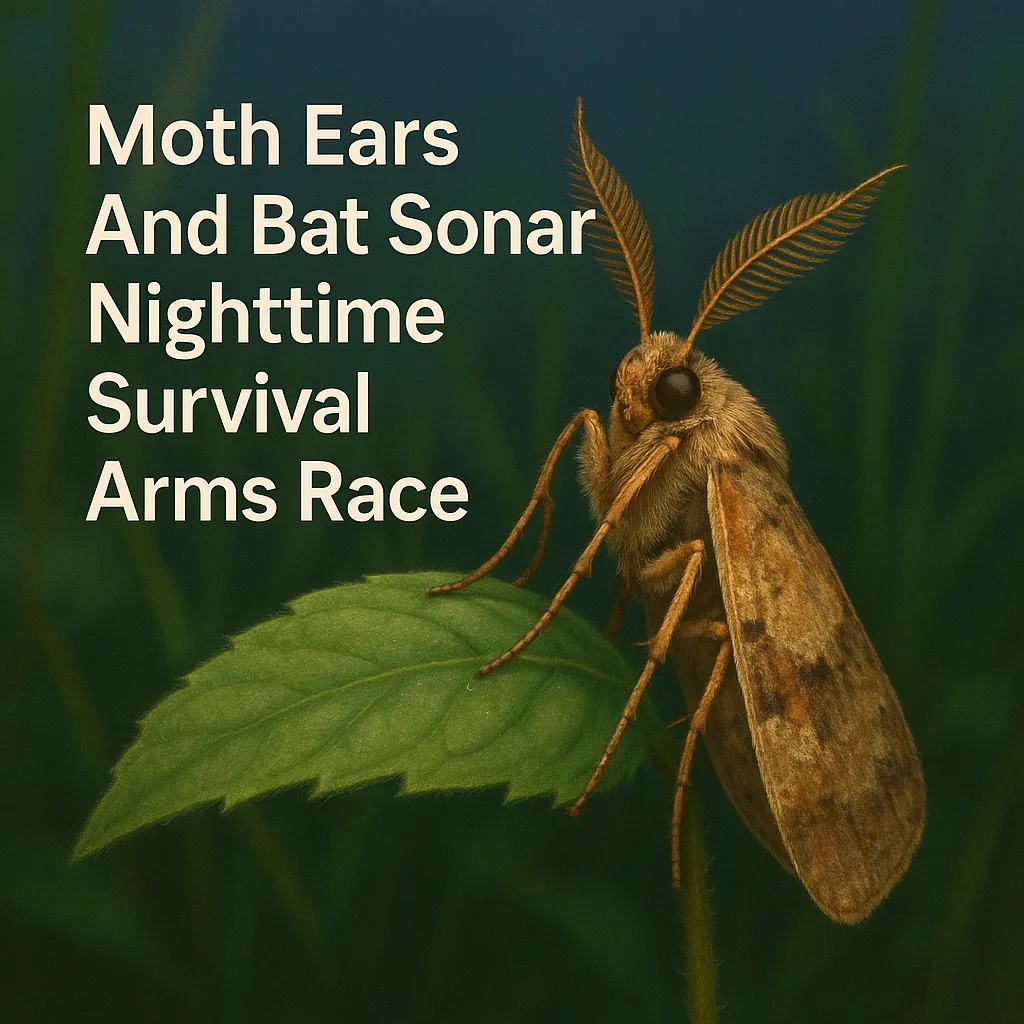
- Common names: Moth
- Scientific name: Varies
- Insect or not: Yes, it is an insect, belonging to the order Lepidoptera
- Order / family: Lepidoptera / varies with species
- Typical size range: 1 cm to 30 cm wingspan
- Key colors/patterns: Diverse; includes grays, browns, vibrant colors, various patterns
- Activity: Primarily nocturnal
- Typical habitats: Forests, grasslands, urban areas, wetlands
- Where in the world it occurs: Widely distributed; presence varies by region
- Seasonality: Varies by region; often more visible in warmer months
🔍 Identification
Moths can be recognized by their typically stout bodies and often furry thoraxes. Unlike butterflies, many moths rest with wings open or tent-like over their bodies. Antennae may be feathery or filamentous, depending on the species.
Wing features include various scales and colors adapted for camouflage. Moths have six legs and a variety of movement styles and wing patterns.
Due to diverse appearances, some moths can be confused with butterflies or other flying insects. However, moths often have thicker bodies and more muted coloration.
- Look for furry bodies.
- Observe the antennae shape.
- Notice the wing position at rest (often flat or tent-like).
- Check for nocturnal activity.
- Identify color patterns unique to moths.
- Match size within expected range for moths.
- Identify habitat preferences typical for moth presence.
- Use flight time (night) as a clue.
- Observe for chunky body structure.
🧠 Basic Body Structure
Moths, like other insects, have three main body parts: a head, a thorax, and an abdomen. Each moth has six legs and an exoskeleton that provides protection and structure.
Moths are invertebrates, meaning they lack a spine. The life stages include egg, larva (caterpillar), pupa (cocoon), and adult moth, involving complete metamorphosis through these stages.
🌍 Habitat & Distribution
Moths are highly adaptable and can inhabit various environments like forests, grasslands, wetlands, and urban gardens. They are also found under loose bark, within leaf litter, and near flowers.
Geographically, moths occur on all continents except Antarctica, with their presence and species richness varying by region. Habitat changes can alter moth visibility and presence.
📅 Seasonal Appearance & Activity
Moths are generally more visible during warmer months when they are most active. Being primarily nocturnal, they are seen flying at night. Weather conditions like temperature, rain, and humidity can affect moth activity and sightings.
- Most active during late spring to early fall.
- Best seen at night.
- High humidity nights may increase activity.
- Visible in warm, calm weather.
🥚 Reproduction & Egg-Laying
Moths utilize pheromones for attracting mates. Mating behaviors can include specific flight patterns and courtship displays.
Egg-laying occurs on host plants, which provide food for their young caterpillars. The number of eggs laid can be extensive, though it varies widely among species.
🌀 Metamorphosis & Life Cycle
Moths undergo complete metamorphosis. The cycle starts with eggs laid on plant surfaces, which hatch into caterpillars (larvae). These larvae primarily eat plant material, growing and molting several times before pupating.
During the pupal phase, they undergo transformation into adult moths. This stage occurs within protective cocoons (of silk or plant debris). The duration of each stage will vary largely based on environmental conditions and the specific species.
🍽️ Diet & Feeding Behavior
Moth larvae (caterpillars) predominantly feed on leaves, drawing nutrients necessary for growth. As adults, many moths possess a long proboscis suitable for sipping nectar.
Moths play key roles in pollination and as a food source within ecosystems, with caterpillars being herbivores and adults possibly acting as pollinators.
🦉 Predators & Defense
Natural enemies of moths include birds, bats, spiders, and even other insects. Many moths employ camouflage and mimicry as primary defense mechanisms, blending with backgrounds or resembling unpalatable species.
Some can produce startling displays or have chemical deterrents to ward off predators.
- Effective camouflage against predators.
- Mimicry of less edible species.
- Startling eye spots on wings.
- Chemical deterrents emitted from glands.
- Rapid erratic flight to evade capture.
👥 Social Behavior & Swarms
Moths are typically solitary in nature. Social behavior is minimal compared to insects like bees or ants. However, some species may form migratory swarms, often triggered by environmental changes like temperature fluctuations or food availability.
🧭 Senses & Communication
Moths possess acute senses, particularly smell and hearing, allowing them to detect pheromones and bat sonar. Their ability to perceive ultrasound is critical in evading predatory bats.
Communication involves the use of pheromones for mating signals. These chemical cues are potent even over long distances.
🌱 Role in the Ecosystem
Moths contribute significantly to ecosystems through pollination and as prey for higher trophic levels. They play a role in food webs, providing sustenance for birds and mammals.
Additionally, caterpillar feeding can impact plant growth, affecting ecological dynamics and plant competition.
📉 Population & Conservation Notes
Moth populations are often locally abundant but can be affected by habitat loss, pesticides, and light pollution. These factors can lead to declines in certain areas.
- Plant native species to provide host plants.
- Minimize use of pesticides to protect moths and food sources.
- Encourage night gardens to attract and support moth populations.
- Limit outdoor lighting to reduce light pollution effects.
⚠️ Human Interaction & Safety
Moths do not bite or sting humans and are generally harmless. If encountering them indoors, gently encouraging them out is a humane approach.
Respect wild moths by observing rather than capturing or disturbing their habitats.
📌 Summary
- Identify moths by their nocturnal activity and diverse appearances.
- Habitats include forests, urban gardens, and wetlands.
- Most visible during warmer, humid months at night.
- Perform complete metamorphosis with varied life stage durations.
- Caterpillars are herbivores; adults may be pollinators.
- Predators include birds and bats; defense strategies involve camouflage.
- Contribute to ecosystems through pollination and as food.
- Conservation influenced by habitat change and light pollution.
- Non-aggressive; safe to observe respectfully.