🕷️ Butterfly Puddling Why They Gather On Mud And Sand
🧾 Quick Facts
Butterfly puddling is a fascinating behavior observed in various species of butterflies, primarily those seeking essential nutrients. They are often seen congregating on mud, sand, or shallow water edges.
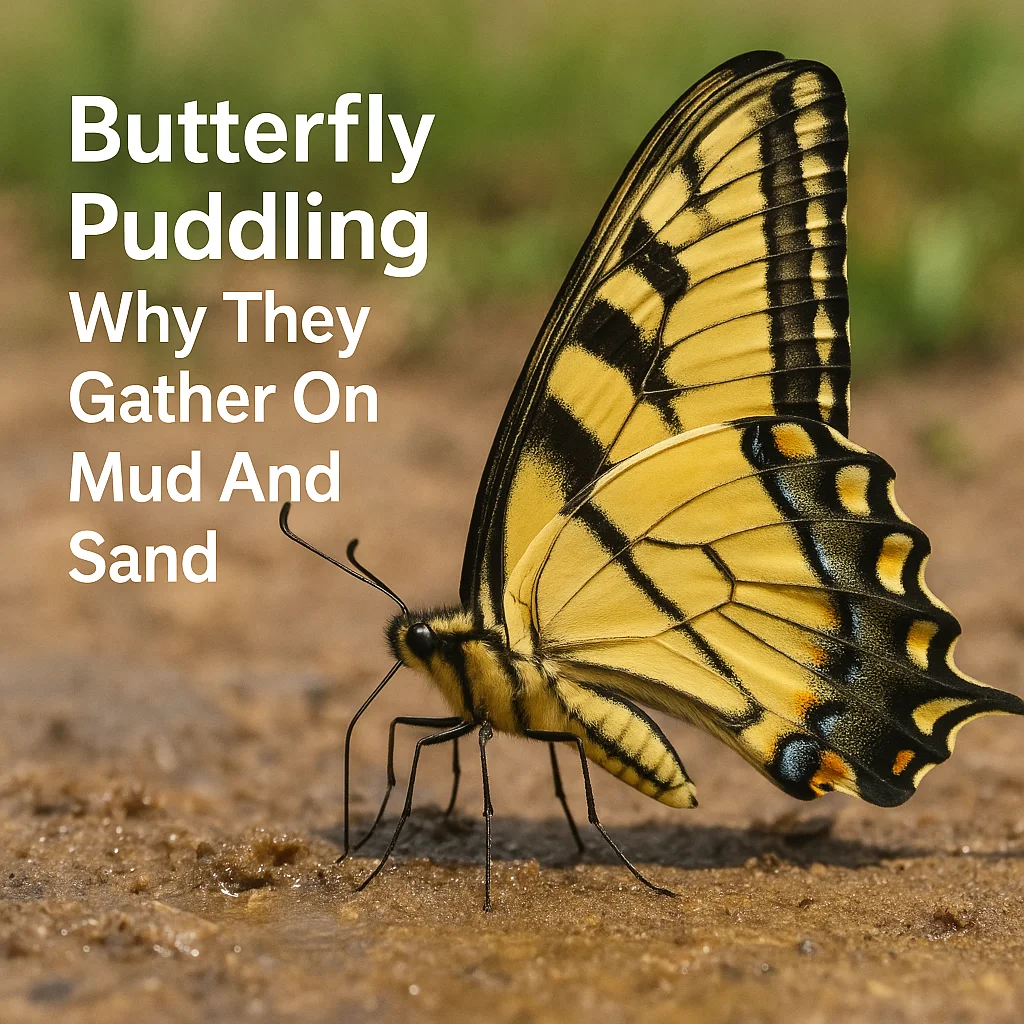
- Common names: Butterfly Puddling
- Scientific name: varies (includes multiple species)
- Insect or not: Insect; they are invertebrates
- Order / family: Lepidoptera (often Nymphalidae, Papilionidae)
- Typical size range (adult): 2 to 4 inches wingspan
- Key colors/patterns: Varied; often bright or pastel colors
- Activity: Day (diurnal)
- Typical habitats: Gardens, forests, meadows, riverbanks
- Where in the world it occurs: Globally, except polar regions
- Seasonality: Spring to late summer, depending on climate
🔍 Identification
Identifying a butterfly during puddling involves observing its distinctive body shape, wing patterns, and behavior.
- Body shape and silhouette: Slender bodies with large wings that close vertically over the back when resting
- Antennae type: Clubbed antennae typical of butterflies
- Wing features: Brightly colored with diverse patterns, often iridescent
- Leg traits and movement style: Six legs with tarsi adapted for gripping surfaces
- Distinguishing look-alikes: Moths are often confused with butterflies; distinguishable by activity time (moths are usually nocturnal) and antenna shape (feathered or threadlike in moths)
- Top ID Tips:
- Look for groups gathered on mud or sand
- Observe the clubbed antennae
- Note vibrant wing patterns
- Single butterflies dart quickly when disturbed
- Activity peaks in daylight hours
- Often found near water sources
🧠 Basic Body Structure
Butterflies exhibit typical insect morphology, divided into three main body parts: head, thorax, and abdomen. They possess six legs and are covered by a protective exoskeleton. As invertebrates, they lack a backbone.
The wings, attached to the thorax, undergo “molting,” where they transition through life stages. The wings' presence is a notable feature aiding identification.
🌍 Habitat & Distribution
Butterflies engaging in puddling typically inhabit areas rich in moisture, such as forests, riverbanks, meadows, and gardens. They favor tropical and temperate climates, avoiding extreme cold regions like the poles.
Microhabitats include muddy river edges where minerals are abundant. Changes in habitat, such as urbanization and agriculture, can influence butterfly sightings, with decreased visibility in heavily altered landscapes.
📅 Seasonal Appearance & Activity
Butterflies are most visible during warmer months, generally from spring through summer, with activity primarily during daylight (diurnal).
- Best Time to Spot It:
- Late morning to early afternoon
- Following rainfall, when minerals are flushed to surface soil
- Spring and early summer for most species
- In sunny, warm weather
🥚 Reproduction & Egg-Laying
Butterfly mating often involves elaborate courtship where males may use visual and chemical cues to attract females. Eggs are typically laid on or near host plants, where emerging larvae (caterpillars) will have immediate access to food.
Egg counts and laying strategies vary widely; some species lay singularly, while others cluster their eggs for collective protection.
🌀 Metamorphosis & Life Cycle
Butterflies undergo complete metamorphosis, marked by four distinct stages: egg, larva (caterpillar), pupa (chrysalis), and adult.
The larval stage is primarily herbivorous, consuming leaves. This stage varies in length but is generally a few weeks. Pupation, a resting phase, transforms the caterpillar into an adult butterfly. This stage often lasts several weeks, after which the butterfly emerges to seek mates and nectar sources.
🍽️ Diet & Feeding Behavior
At the adult stage, butterflies primarily feed on nectar using proboscis mouthparts adapted for sucking. They may also extract moisture and minerals from soil, dung, and carrion.
As larvae, they are herbivores, with selector host plants forming their primary diet. Their feeding behavior plays roles in pollination and plant vitality control.
🦉 Predators & Defense
Butterflies face numerous natural enemies, including birds, spiders, and small mammals. Defense mechanisms include camouflage, where wing patterns mimic the environment, and mimicry, appearing like less palatable species.
- Defense Highlights:
- Camouflage with foliage
- Mimicry of toxic species
- Quick, erratic flying patterns
- Startle displays with eye-spot wings
👥 Social Behavior & Swarms
While butterflies are generally solitary, puddling behavior represents a rare social congregation. These gatherings are non-hierarchical, attracting multiple species within a single location.
Swarms are triggered by environmental conditions that lead to an abundance of nutrients, often following rain when conditions for puddling are ideal.
🧭 Senses & Communication
Butterflies rely heavily on vision and smell, with antennae well-adapted for detecting pheromones. They engage in chemical communication to find mates and suitable sites for puddling.
Visual signals also play a crucial role, both in locating partners and in predator defense.
🌱 Role in the Ecosystem
Butterflies are key pollinators, facilitating plant reproduction. They also contribute to the food web, serving as prey to a wide variety of predators. Their interactions with plants can range from mutualistic, benefiting both parties, to parasitic, where plant health is compromised.
Additionally, they serve as indicators of ecosystem health as their presence often reflects environmental quality.
📉 Population & Conservation Notes
Butterfly populations vary locally. Some are abundant, while others face threats from habitat loss, pesticides, and climate change. Conservation efforts emphasize habitat restoration and pesticide reduction.
- How to Help (Low-Impact):
- Plant native flowering species
- Avoid using chemical pesticides
- Preserve natural habitats
- Support conservation organizations
⚠️ Human Interaction & Safety
Butterflies pose no harm to humans; they neither bite nor sting. They should be observed respectfully, ensuring habitats remain undisturbed.
For those interested in observation, it's recommended to use binoculars or cameras, avoiding direct capture to preserve their populations.
📌 Summary
- Butterfly puddling involves nutrient-rich congregation on mud and sand.
- They are brightly colored insects found globally except in polar regions.
- Best seen in spring and summer, mainly in temperate climates.
- Butterflies undergo complete metamorphosis through four life stages.
- Nectar feeders as adults, with caterpillars consuming leaves.
- Natural predators include birds and spiders, with defense strategies like mimicry.
- Play critical roles in pollination and ecosystem health indicators.
- Conservation efforts focus on habitat restoration and pesticide control.
- They are harmless to humans and should be observed with care.