🕷️ Bagworm moths: case-building larvae
🧾 Quick Facts
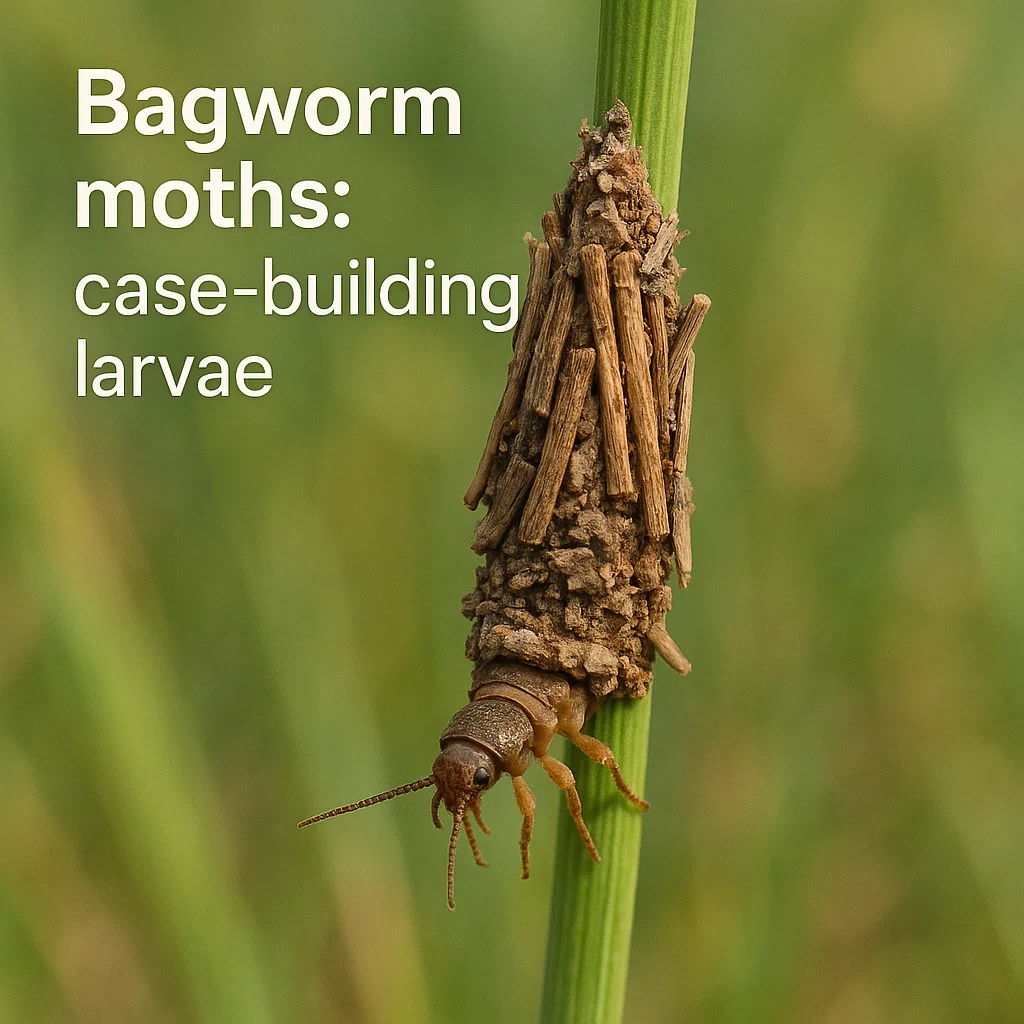
Bagworm moths represent a fascinating group of insects known for their unique larval habit of building protective cases or bags around themselves. These cases are crafted utilizing materials from their environment, such as twigs and leaves, making them excellent examples of adaptation and camouflage in nature.
- Common Names: Bagworm, Case moth
- Scientific Name: Varies by species
- Insect or Not: Yes, they are insects and are invertebrates
- Order: Lepidoptera; Family: Psychidae
- Typical Size Range: Adults 1 to 4 cm in wingspan
- Key Colors/Patterns: Wing patterns are generally subdued browns or tans
- Activity: Nocturnal
- Typical Habitats: Forests, gardens, and shrubbery areas
- Where in the World: Found globally, especially in temperate and subtropical regions
- Seasonality: Adults are most visible in late spring through summer
🔍 Identification
Bagworm moths are unique among moths due to their larvae's construction of protective cases. Adult males are moths with wings, while females are wingless and resemble the larvae. Identification in the field often focuses more on the larvae and their distinctive cases.
- Body shape and silhouette: When in their case, they have a teardrop shape. Adult males are typical of moths.
- Antennae type: Adult males have feathered antennae to detect pheromones from females.
- Wing features: Adults have wings, though females are often wingless.
- Leg traits and movement style: Slow-moving, larvae are often stationary or moving within their case.
- Distinguishing look-alikes: Often confused with similar pantries of moths, but the larval case is distinctive.
- Look for larvae with cases made of surrounding twigs and leaves.
- Check for adult moths around trap environments like gardens.
- Note the time of day; sightings are more common in the evening.
- Observe the feathered antennae of males when flying.
- Females are generally larger but flightless.
🧠 Basic Body Structure
As insects, bagworm moths have three main body sections: the head, thorax, and abdomen. All adults have six legs. Unlike vertebrates, they have an exoskeleton, which they molt as they grow. Most adult males have wings, though it's important to note that adult females often lack them.
Bagworm moths are invertebrates, meaning they lack a vertebral column or spine, relying instead on their tough exoskeleton for structural support and protection.
🌍 Habitat & Distribution
Bagworm moths prefer environments where their larvae can easily gather materials for their protective cases. They thrive in forests, gardens, and areas with shrubs and trees. Within these environments, they are typically found hanging on branches or nestled among foliage.
Their geographic range is widespread, found in temperate and subtropical regions worldwide. Changes in these environments, such as urbanization and deforestation, can affect their distribution and local abundance, leading to increased visibility in urban and suburban areas.
📅 Seasonal Appearance & Activity
Bagworm moths are most visible during the warmer months. This is when adults, primarily males, are actively seeking mates. These moths are generally nocturnal, reducing the chances of encountering them during daylight hours unless disturbed.
- Best observed in late spring through summer months.
- Most active during the night.
- Increased sightings post-rain due to foliage movement.
- Preferably warm temperatures enhance visibility.
- Humidity can occasionally affect light attraction behaviors.
🥚 Reproduction & Egg-Laying
Mating typically involves males flying to locate females, who often remain within their silk cases. Once mating is successful, females lay eggs inside their cases, providing immediate protection to the next generation. Egg-laying environments include plant stems and branches, and the number of eggs can vary, but females typically lay many eggs, ensuring species continuation.
🌀 Metamorphosis & Life Cycle
Bagworm moths undergo complete metamorphosis, moving through the stages of egg, larva, pupa, and adult. After hatching, larvae quickly begin constructing their protective cases, feeding on the host plant's foliage, and growing within the security of their case through successive molts.
The larval stage can last several weeks to months depending on environmental conditions, eventually leading to pupation within the case. This pupal stage lasts anywhere from several weeks to a month, culminating in adult emergence.
🍽️ Diet & Feeding Behavior
In their larval stage, bagworms are primarily herbivorous, feeding on the leaves of their host plants. They utilize chewing mouthparts to consume the foliage. As adults, males generally do not feed, while females may continue to absorb some nutrients but do not actively search for food, focusing on reproduction instead.
🦉 Predators & Defense
Bagworms face predation from birds, mammals, and parasitoid wasps, all of which can breach their defensive cases. To protect themselves, bagworm larvae rely heavily on their camouflage for avoiding detection. The cases they build mimic surrounding foliage, effectively deterring predators.
- Case construction provides physical and visual protection.
- Environment-specific camouflage helps blend into surroundings.
- Pupal stage often occurs at less conspicuous locations to avoid predation.
- Larvae remain dormant if threatened, reducing movement visibility.
👥 Social Behavior & Swarms
Bagworm moths are primarily solitary, especially during the larval stage. However, populations may appear to swarm when emerging together in some environments, signaling widespread adult emergence and mating behavior. These events are natural and primarily driven by environmental cues like temperature and humidity.
🧭 Senses & Communication
Bagworms rely predominantly on the sense of smell, using sensitive antennae to detect pheromones, especially in males seeking females. They also respond to vibrations and touch, which aid in environmental interaction and predator awareness. Communication among individuals primarily involves pheromone signaling for mating purposes.
🌱 Role in the Ecosystem
Bagworms play an essential role in ecosystems as herbivores, affecting plant community structures. Their feeding can influence the health and growth of host plants, though too many bagworms may stress individual plants. These moths serve as a food source for various predators and contribute indirectly to controlling plant overgrowth. Their interactions with other species demonstrate the ecological balance within their habitats.
📉 Population & Conservation Notes
Bagworm moths are generally common in available habitats, with populations varying based on local environmental conditions. Concerns about habitat loss, pesticide use, and climate changes can influence their distribution and abundance.
- Plant native shrubs to support local biodiversity.
- Avoid excessive pesticide use that could impact bagworm populations.
- Encourage urban gardening to create small sanctuaries for wildlife.
- Leave leaf litter when possible to provide larval refuge.
⚠️ Human Interaction & Safety
Bagworm moths are harmless to humans in terms of biting or stinging. However, heavy infestations can damage ornamental or young trees through defoliation. It's crucial to manage tree health through monitoring and avoid handling wild specimens unnecessarily. Always observe nature with respect and encourage educational appreciation instead of collection.
📌 Summary
- Identification: Look for distinctive cases hung on trees.
- Habitat: Prefers wooded and shrubby areas globally.
- Seasonality: Most visible in warmer months.
- Life Cycle: Undergoes complete metamorphosis.
- Diet: Herbivorous, mainly feeding on leaves.
- Predation: Faces threats from birds and insects.
- Ecology: Plays roles in plant dynamics and food webs.
- Human Interaction: Generally harmless and fascinating to observe.