🕷️ Raising Caterpillars Ethically Do's And Don'ts For Beginners
🧾 Quick Facts
Raising caterpillars can be a rewarding experience, introducing budding enthusiasts to the fascinating world of lepidopteran metamorphosis. Here are some quick facts about caterpillars, which are the larval stage of butterflies and moths.
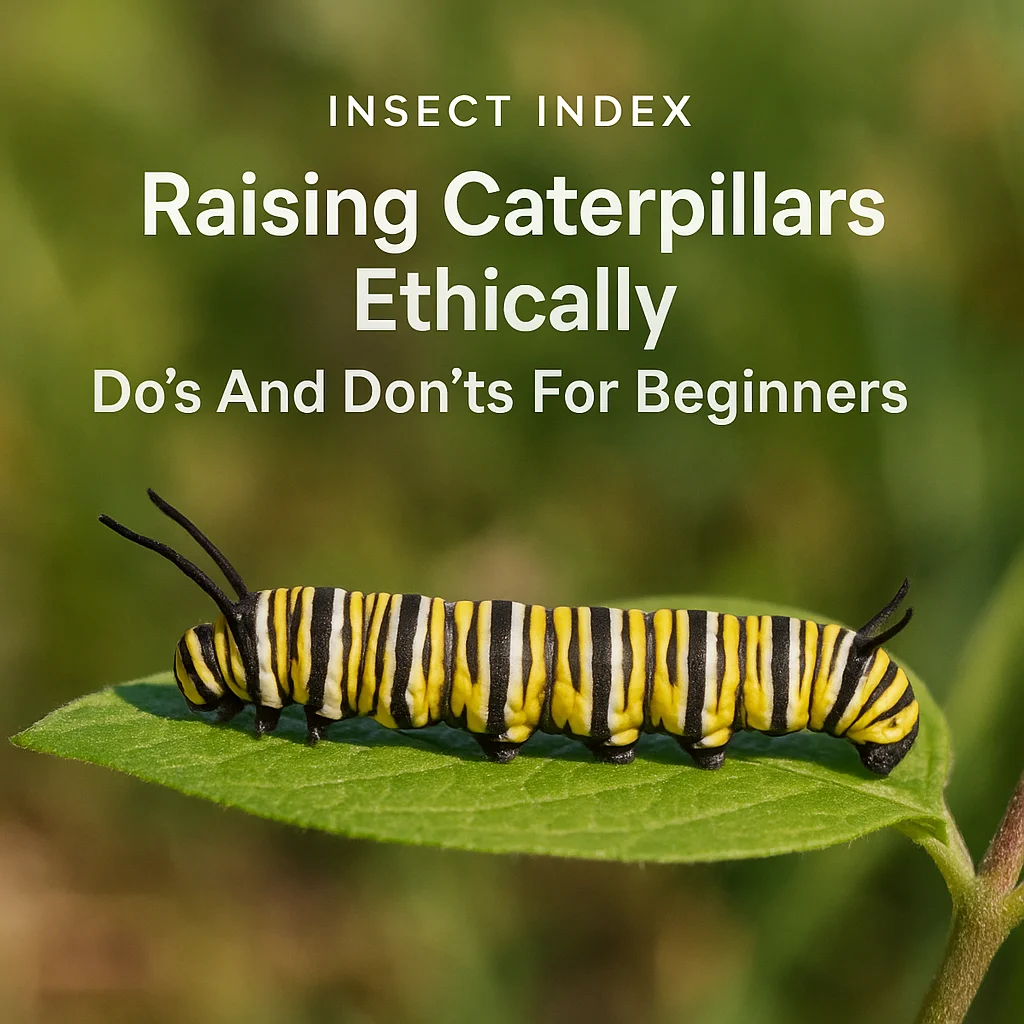
- Common names: Caterpillars
- Scientific name: Varies depending on species
- Insect or not: Yes, it's an invertebrate
- Order / family: Lepidoptera
- Typical size range (adult): Varies, from 1 cm to several inches depending on species
- Key colors/patterns: Greens, browns, yellows; often striped or spotted
- Activity: Primarily day for most species, night for some moth caterpillars
- Typical habitats: Forests, meadows, gardens, tropical and temperate regions
- Where in the world it occurs: Worldwide, except Antarctica
- Seasonality: Spring through late autumn in temperate regions
🔍 Identification
Caterpillars are easy to spot with their elongated, cylindrical bodies and distinct segments. Most species have simple, short antennae and lack wings at this stage. Their movement involves a distinct looping gait, often stretching the front of the body before dragging the rear towards the head.
- Body shape: Long, cylindrical, often segmented visibly
- Antennae: Short, stumpy, and often difficult to see
- Wing features: None (larval stage)
- Leg traits: True legs at the front; prolegs with 'crochets' mid-body
- Distinguishing look-alikes: Some species mimic twigs or bird droppings
- "Top ID Tips":
- Look for prolegs and true legs
- Observe feeding on leaves or stems
- Note the presence of silk strands on plants
- Check for specific horn-like structures on some species
- Look at coloration for camouflage against foliage
- Watch movement style with looping gait
- Best Time to Spot It:
- Spring and summer months
- Warm and humid weather
- Daytime, when basking in sun
- After rain, when foliage is lush
- Defense Highlights:
- Camouflage blending with leaves
- Mimicking elements in their environment
- Chemical releases to deter predators
- Sudden defensive displays to startle
- How to Help (Low-Impact):
- Plant native host plants in gardens
- Avoid use of pesticides
- Preserve leaf litter and natural foliage
- Encourage creation of conservation gardens
- Identification relies on long, segmented bodies with true and prolegs.
- Found in forested areas, meadows, gardens worldwide, except Antarctica.
- Active mainly in spring and summer, with warm and humid weather.
- Undergo complete metamorphosis from egg, caterpillar, pupa to adult.
- Mainly herbivores, feeding on leaves, flowers, and fruits.
- Natural enemies include birds, reptiles, and spiders.
- Caterpillars contribute to ecosystems as herbivores and part of the food web.
- Conservation concerns due to habitat loss and pesticide use.
🧠 Basic Body Structure
Caterpillars, as insects, have a basic body structure divided into three parts: the head, thorax, and abdomen. They possess six true legs located on the thorax and additional prolegs on the abdomen that help with movement. Their body is covered with an exoskeleton made of chitin, which they shed through a process called molting.
Invertebrate: This means they do not have a backbone, unlike vertebrates.
🌍 Habitat & Distribution
Caterpillars can be found in a wide variety of habitats. They thrive in environments rich in vegetation, like forests, grasslands, wetlands, and even urban gardens. They are often found near the host plants that they consume.
Geographically, caterpillars are present on all continents except Antarctica. Their habitat range may be influenced by changes in climate, showing variability in sightings due to weather conditions or habitat disturbances.
📅 Seasonal Appearance & Activity
Most caterpillars are typically seen in warmer months, with peak activity in spring and summer. Many are diurnal, meaning they are active during the day, while some species, especially moth caterpillars, are nocturnal.
Weather plays a significant role, as warm temperatures and humidity can boost caterpillar visibility.
🥚 Reproduction & Egg-Laying
Butterflies and moths exhibit fascinating courtship behaviors, with some species using pheromones or visual displays to attract mates. Typically, female moths and butterflies lay eggs directly on host plants, ensuring the emerging caterpillars have immediate access to food.
The number of eggs laid varies significantly with species; some may lay a few dozen, while others produce hundreds.
🌀 Metamorphosis & Life Cycle
Caterpillars undergo complete metamorphosis, transitioning from egg to larva (caterpillar), pupa (chrysalis or cocoon), and finally to adult moths or butterflies.
The caterpillar stage is primarily about growth. They may feed on a variety of plant materials and molt several times before pupation—a critical period where their bodies are reorganized to emerge as adults.
🍽️ Diet & Feeding Behavior
Caterpillars are predominantly herbivores, equipped with chewing mouthparts to consume leaves, flowers, and fruits. Their role can vary, from leaf-munching herbivores to important pollinators when they mature to adults.
🦉 Predators & Defense
Caterpillars have numerous natural enemies, including birds, reptiles, amphibians, and spiders. To defend themselves, they may employ camouflage, mimicry, or even release irritating chemicals when threatened.
👥 Social Behavior & Swarms
The majority of caterpillars are solitary, focusing on feeding and growth individually. However, a few species display aggregative behavior, particularly when young, as protection or to collectively enhance feeding efficiency.
🧭 Senses & Communication
Caterpillars rely heavily on tactile and chemical senses. They have a well-developed sense of smell to identify host plants and detect predators. Communication is minimal, mostly restricted to physical contact or occasional sound production to deter threats.
🌱 Role in the Ecosystem
Caterpillars play significant ecological roles. They are primary consumers, feeding on vegetation and thereby facilitating plant growth through natural pruning. Once matured, they can become pollinators. They are also crucial in the food web, providing nourishment for various predators.
📉 Population & Conservation Notes
While many caterpillar species are common, others face threats from habitat loss, pesticides, and climate change. To better support these important creatures, it's crucial to promote environmental health through various low-impact actions.
⚠️ Human Interaction & Safety
While most caterpillars are harmless to humans, a few have irritating hairs or spines. In case of contact, wash the affected area and avoid scratching it. If a severe reaction occurs, seek professional advice. Always observe caterpillars in their natural habitat, respecting their ecological role.