🕷️ Butterfly Host Plants 101 Choosing Plants For Larvae
🧾 Quick Facts
The selection of host plants is a critical aspect of butterfly conservation and successful butterfly gardening. By understanding the needs of caterpillars, also known as larvae, you can create an environment that supports the complete life cycle of these fascinating creatures.
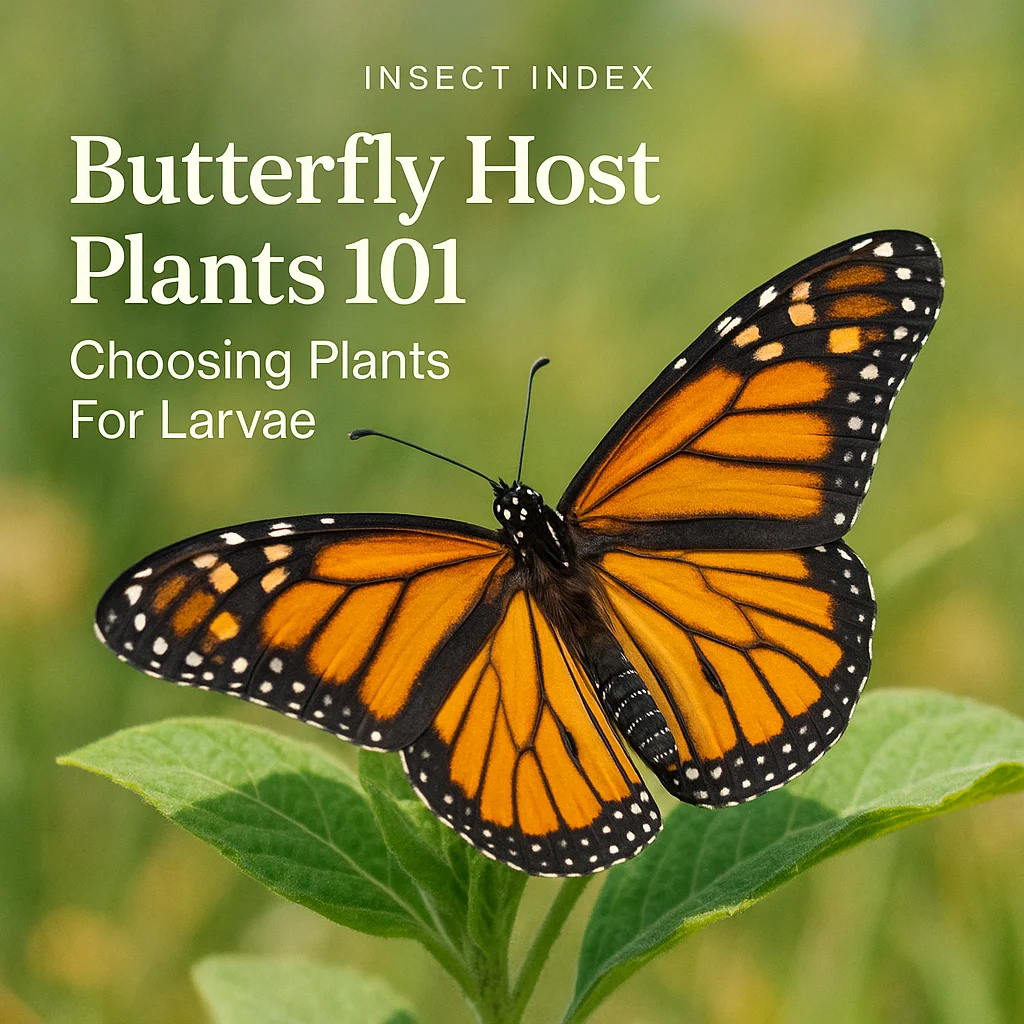
- Common names: Varies by species
- Scientific name: Also varies by species
- Insect or not: Yes, butterflies are insects
- Order / family: Lepidoptera; specific families vary
- Typical size range: 0.5 to 12 cm wingspan
- Key colors/patterns: Brightly colored wings with various patterns
- Activity: Mostly diurnal
- Typical habitats: Meadows, gardens, woodlands
- Where in the world it occurs: Worldwide, except extreme polar regions
- Seasonality: Most visible in warmer months
🔍 Identification
Butterflies are easily recognizable by their vibrant wings and delicate flight. Observing their structure closely can help identify different species, although this varies significantly among them.
- Body shape and silhouette: Slender body with pronounced wings
- Antennae type: Clubbed or hooked antennae
- Wing features: Four wings; often colorful and patterned
- Leg traits and movement style: Six legs; front pair may be reduced in size in some families
- Distinguishing look-alikes: Moths often confused with butterflies but are generally nocturnal, with thicker bodies and feathery antennae
- Check for clubbed antennae
- Observe the flight pattern (often fluttery)
- Look for daytime activity
- Note the wing position when at rest (usually upright for butterflies)
- Examine color patterns for unique markings
- Diversity often seen in wing shape
🧠 Basic Body Structure
Butterflies, as insects, have a three-part body structure with a head, thorax, and abdomen. They possess six legs and four wings covered in tiny scales, which give them their color and patterns. Their exoskeleton provides protection and support, and they grow through a process called molting.
Butterflies are invertebrates, which means they lack a backbone. This group is characterized by an external skeleton and segmented body parts.
🌍 Habitat & Distribution
Butterfly habitats include a wide variety of environments, from tropical rainforests to temperate gardens. They are often found in areas rich in flowering plants which provide nectar and host plants for their larvae.
Their geographic range spans every continent except Antarctica, with abundance in warm and temperate climates. Habitat changes such as urbanization and agriculture can impact butterfly populations by reducing available host plants and shelter.
📅 Seasonal Appearance & Activity
Butterflies are most commonly seen during the warmer months when their activity is influenced by temperature and the availability of flowering plants. The best sightings occur in spring and summer, extending into early fall in many regions.
- Late spring to early fall in temperate areas
- Year-round in tropical regions
- Diurnal, actively seen during the day
- More visible on sunny, warm days
🥚 Reproduction & Egg-Laying
Butterfly reproduction involves complex courtship rituals, often including visual and chemical signals. Males attract females with vibrant displays and pheromones. After mating, females lay eggs on specific host plants that their larvae will eat.
Egg-laying strategies vary widely; some species lay a single egg, while others deposit hundreds, ensuring survival in numbers. Eggs can be laid on leaves, stems, or even hidden within crevices in the host plant.
🌀 Metamorphosis & Life Cycle
Butterflies undergo a complete metamorphosis, consisting of four distinct stages: egg, larva (caterpillar), pupa (chrysalis), and adult.
After hatching, the larvae consume large quantities of the host plant. Caterpillars are voracious feeders and molt several times as they grow, eventually pupating into a chrysalis. Inside the protective casing, the transformation into an adult butterfly occurs. This stage varies but can last a few weeks to several months.
The adult butterfly emerges, dries its wings, and begins the cycle anew, feeding on nectar and seeking mates.
🍽️ Diet & Feeding Behavior
Throughout their life cycles, butterflies exhibit different dietary needs. Caterpillars primarily feed on host plants, utilizing chewing mouthparts to eat leaves. In contrast, adults have a proboscis adapted for sipping nectar from flowers and sometimes consuming pollen, minerals, or even ripe fruits.
Butterflies play a critical role as pollinators, contributing to the fertilization of many flowering plants.
🦉 Predators & Defense
Butterflies face numerous predators, including birds, spiders, and small mammals. They employ various defense strategies such as camouflage, mimicry, and warning colors to deter potential threats. Some can produce noxious chemicals, making them unpalatable to predators.
- Camouflage among leaves and flowers
- Aposematic coloring to warn predators
- Mimicking more dangerous or unpalatable species
- Swift flight and erratic movement to escape
👥 Social Behavior & Swarms
Most butterflies are solitary, interacting mainly for mating. However, some species exhibit social behaviors, forming swarms during migration or communal roosts at night. These gatherings can be triggered by environmental factors such as temperature changes or food scarcity.
🧭 Senses & Communication
Butterflies rely on a combination of senses for survival. They have excellent vision, especially for detecting colors, aiding in locating flowers and mates. Chemical cues are crucial for communication and navigation, with pheromones being used to attract mates.
Vibration and tactile awareness also play roles in communication, particularly among larvae within large groups.
🌱 Role in the Ecosystem
Butterflies contribute significantly to their ecosystems as pollinators, helping maintain biodiversity and plant reproduction. They are part of important food webs, serving as prey for a variety of animals while also acting as hosts for parasitic insects.
Their presence indicates a healthy environment, as they rely on specific plants and conditions, highlighting the interconnectedness of ecosystems.
📉 Population & Conservation Notes
Butterfly populations show a wide range of variability, with some species thriving in local habitats while others face significant threats. Factors like habitat destruction, pesticide use, and climate change contribute to declines in some areas. Conserving natural habitats and promoting butterfly-friendly plants can aid their survival.
- Plant native flowering plants
- Reduce or eliminate pesticide use
- Leave portions of land untended for natural growth
- Maintain gardens with host and nectar plants
⚠️ Human Interaction & Safety
Butterflies are generally harmless to humans and do not bite or sting. They can be safely observed in their natural habitats without risk. It's important to respect these creatures by avoiding capture or interference with their life processes.
For those interested in butterfly gardening or conservation, it is recommended to observe them in a way that supports their welfare and enhances biodiversity.
📌 Summary
- Butterflies are diurnal insects recognizable by their colorful wings
- Prefers habitats with abundant flowers and suitable host plants
- Most visible during spring through early fall
- Undergoes complete metamorphosis with distinct life stages
- Consumes host plants as larvae, nectar, and other substances as adults
- Faces threats from predators, employs varied defenses
- Critical role as pollinators within ecosystems
- Encouraging wild butterfly populations involves habitat conservation
- Safe and enriching to observe without interference