🕷️ Hummingbird Hawkmoth: daytime hovering behavior
🧾 Quick Facts
The Hummingbird Hawkmoth is an intriguing insect known for its hummingbird-like flight patterns and its ability to hover while feeding on nectar. Here are some essential facts about this fascinating creature:
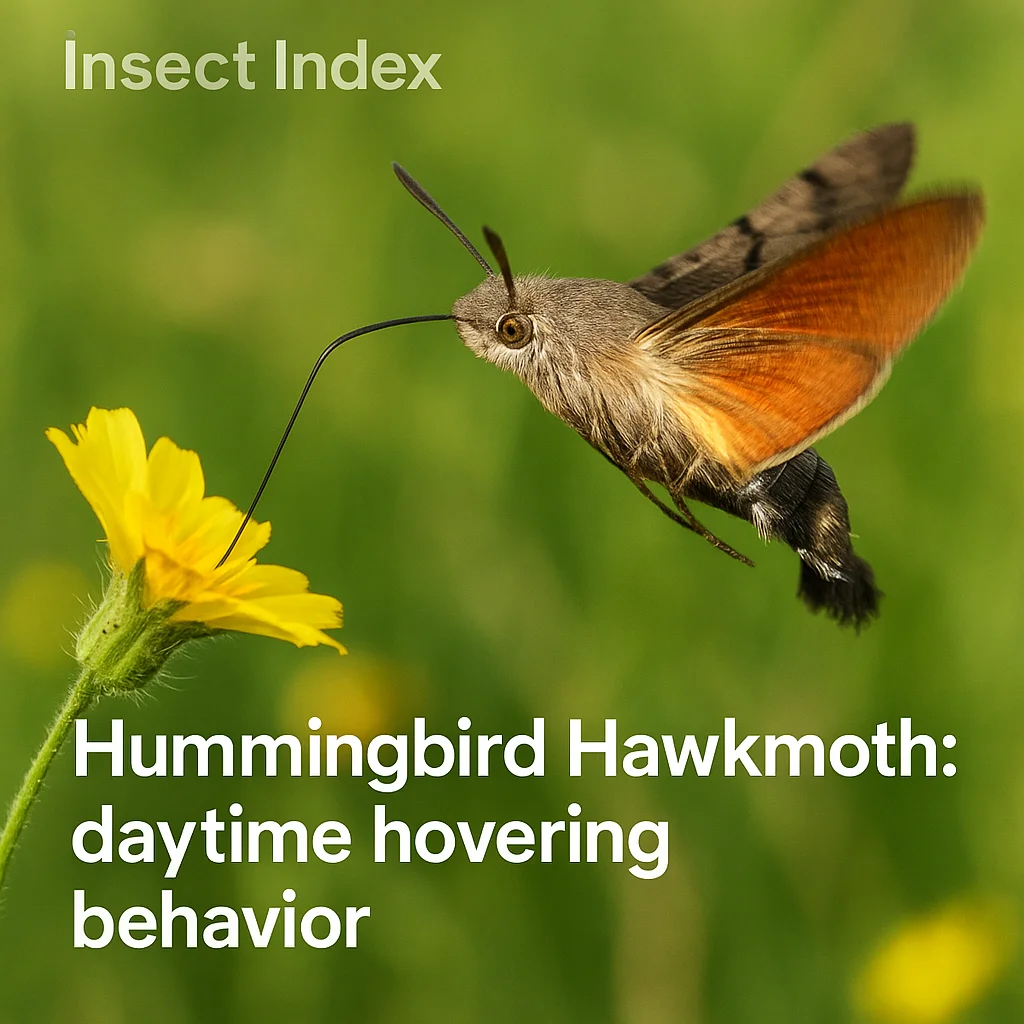
- Common names: Hummingbird Hawkmoth, Sphinx moth
- Scientific name: Macroglossum stellatarum
- Insect: Yes, it is an invertebrate
- Order: Lepidoptera (Moth family: Sphingidae)
- Typical size range (adult): Wingspan of 40-45 mm
- Key colors/patterns: Grey-brown body, orange hindwings, striped abdomen
- Activity: Diurnal (active during the day)
- Typical habitats: Gardens, meadows, open areas with flowers
- Where in the world it occurs: Europe, Asia, and North Africa
- Seasonality: Most visible in summer months
🔍 Identification
The Hummingbird Hawkmoth can be recognized by its swift, buzzing flight and ability to hover near flowers. Its slender, elongated body and long, narrow wings are similar to those of a hummingbird. The antennae are clubbed, which is characteristic of moths in this family.
- Body shape and silhouette: Slender, resembling a hummingbird in flight
- Antennae type: Clubbed
- Wing features: Long, narrow forewings; rounded orange hindwings
- Leg traits and movement style: Quick and smooth hovering
- Distinguishing look-alikes: Resembles hummingbirds but is smaller with moth-like features
- Top ID Tips
- Look for a hovering moth near flowers
- Orange hindwings are visible during flight
- Grey-brown coloration
- Distinct buzzing sound while hovering
- Active during the day, unlike many moths
- Feeds from tubular flowers with long proboscis
🧠 Basic Body Structure
As an insect, the Hummingbird Hawkmoth has a segmented body consisting of a head, thorax, and abdomen. It possesses six legs and two pairs of wings. The moth has an exoskeleton, which provides structure and protection. As an invertebrate, it lacks a backbone, in common with other insects.
🌍 Habitat & Distribution
The Hummingbird Hawkmoth thrives in a variety of environments, including gardens, meadows, and open areas with plentiful flowers. It is often found in regions with temperate climates, particularly in Europe, Asia, and North Africa. Changes in habitat due to urbanization and climate shifts can impact sightings, as moths may relocate in search of suitable environments.
📅 Seasonal Appearance & Activity
This moth is most active during the warmer months, typically from late spring to early autumn. It is diurnal, meaning it is active during daylight hours, especially on warm, sunny days. Its activity may decrease during cooler or wetter weather.
- Best Time to Spot It
- Late spring through early autumn
- Warm, sunny days
- Mid-morning to late afternoon
- In regions with abundant flowering plants
🥚 Reproduction & Egg-Laying
Mating behaviors in the Hummingbird Hawkmoth involve pheromone communication and courtship flights. Females lay eggs on host plants, typically low-growing foliage. The exact number of eggs varies, but a female may lay several dozen during her lifetime, carefully placing them on leaves where caterpillars can feed when they hatch.
🌀 Metamorphosis & Life Cycle
The Hummingbird Hawkmoth undergoes complete metamorphosis consisting of four distinct stages: egg, larva (caterpillar), pupa, and adult. Eggs hatch into caterpillars that feed on host plants. The caterpillar stage lasts about 20-30 days, after which it pupates, eventually emerging as an adult moth ready to forage and reproduce.
🍽️ Diet & Feeding Behavior
As caterpillars, they consume a variety of foliage, primarily from plants like bedstraws and honeysuckles. As adults, Hummingbird Hawkmoths have a preference for nectar, which they extract from flowers using their long proboscis, making them important pollinators.
🦉 Predators & Defense
Natural enemies of the Hummingbird Hawkmoth include birds, bats, and predatory insects like wasps. To defend themselves, these moths employ camouflage, speed, and mimicry. Their coloring helps them blend into natural surroundings, and their flight patterns can confuse predators.
- Defense Highlights
- Camouflage against flowers and foliage
- Quick flight and evasive maneuvers
- Mimicry of hummingbirds to deter predators
- Resting in hidden, hard-to-reach places
👥 Social Behavior & Swarms
Hummingbird Hawkmoths are primarily solitary creatures. They do not form colonies or swarms but may be seen congregating in areas with abundant flowering plants and nectar sources. Males and females interact primarily during the mating season.
🧭 Senses & Communication
The senses of the Hummingbird Hawkmoth include keen vision, particularly suited for recognizing colors and patterns of flowers. Olfactory cues are used extensively for detecting pheromones and finding food sources. Communication involves pheromones for attracting mates during the breeding season.
🌱 Role in the Ecosystem
These moths play a crucial role in pollination, especially for plants with tubular flowers. By feeding on nectar, they facilitate the transfer of pollen, aiding plant fertilization and reproduction. They are also part of the food chain, serving as prey for various animals.
📉 Population & Conservation Notes
Hummingbird Hawkmoths are generally common in suitable habitats, but their presence is affected by habitat destruction, climate change, and pesticide use. Conservation efforts focus on preserving habitats and reducing chemical usage to support their populations.
- How to Help (Low-Impact)
- Plant native flowering plants
- Limit pesticide and herbicide use
- Provide habitat with diverse flora
- Leave areas of undisturbed vegetation
⚠️ Human Interaction & Safety
Hummingbird Hawkmoths are harmless to humans. They do not bite or sting. To respect their role in the ecosystem, it is important to observe them without disturbing or collecting wild specimens. Viewing these moths in their natural habitats provides a rewarding opportunity for nature enthusiasts.
📌 Summary
- ID: Hummingbird-like moth active during the day
- Habitat: Gardens, meadows, and open areas
- Seasonality: Active in warmer months
- Life Cycle: Complete metamorphosis
- Diet: Nectar from flowers; caterpillars feed on foliage
- Predators: Birds, bats, wasps
- Ecology: Important pollinators
- Human Notes: Harmless and beneficial