🕷️ Stag Beetle Jaws What They Can And Can't Do
🧾 Quick Facts
Stag beetles are a fascinating group of insects known for their strikingly large mandibles, especially in males. Often admired for their formidable appearance, these insects have a unique role in the ecosystem. Here's a quick overview of their characteristics:
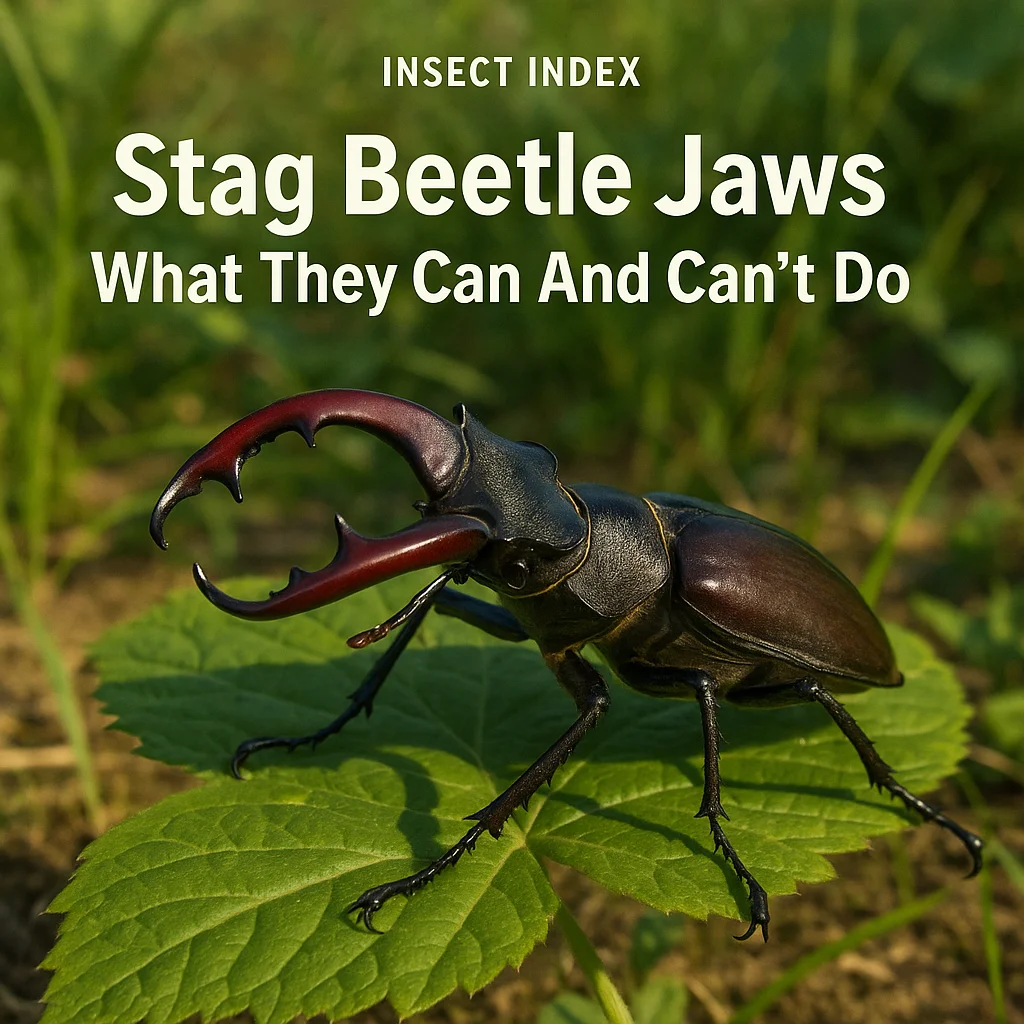
- Common names: Stag beetle
- Scientific name: Varies (includes genera such as Lucanus)
- Insect or not: Yes, they are invertebrates
- Order: Coleoptera, Family: Lucanidae
- Typical size range: 3-12 cm (adults)
- Key colors/patterns: Dark brown to black body with metallic sheen in some species
- Activity: Mostly nocturnal
- Typical habitats: Woodlands, forests, and gardens
- Where in the world it occurs: Found globally, though distribution varies
- Seasonality: Adults are most visible in the late spring to early autumn, varying by region
🔍 Identification
Stag beetles are easily recognizable by their robust body and formidable mandibles. To identify them in the field, pay attention to the following features:
- Body shape and silhouette: Robust and elongated with a smooth, shiny exoskeleton
- Antennae type: Clubbed antennae with segments capable of folding out
- Wing features: Hardened forewings protect membranous hind wings used for flying
- Leg traits and movement style: Strong legs for gripping wood; slow, deliberate movement
- Distinguishing look-alikes: Can be confused with rhinoceros beetles; stag beetles have larger mandibles
- Top ID Tips
- Look for large, antler-like mandibles in males
- Check for shiny, hard exoskeleton
- Notice clubbed antennae
- Observe the size; males can be quite large
- Dark coloration with occasional metallic sheen
- Typically found near decaying wood
🧠 Basic Body Structure
Stag beetles, like other beetles, possess a three-part body structure comprising the head, thorax, and abdomen. They have six legs, characteristic of insects, connected to the thorax. Their hard exoskeleton provides protection and must be periodically shed through molting as they grow.
As an invertebrate, the stag beetle lacks a backbone. Instead, its skeleton is external, known as an exoskeleton, which provides support and protection.
🌍 Habitat & Distribution
Stag beetles thrive in a variety of ecosystems, predominantly favoring areas with abundant trees. They are usually found in:
- Forests and woodlands
- Urban gardens with old trees
- Areas with decaying wood or log piles
These beetles are distributed worldwide, with notable populations in Europe, Southeast Asia, and parts of North America. Their presence is heavily influenced by the availability of decaying wood, which is crucial for their larvae.
📅 Seasonal Appearance & Activity
Most active when the weather is warm, stag beetles are typically visible from late spring to early autumn. Activity is mainly nocturnal, especially during mild, humid evenings when they seek mates.
- Best Time to Spot It
- Late spring and early summer
- Mild, warm evenings
- After rainfall, when humidity is high
- In wooded areas during twilight
🥚 Reproduction & Egg-Laying
Stag beetle courtship involves the male flaunting its mandibles to attract females. Once mating has occurred, females lay eggs in decaying wood, which serves as both a home and food source for their larvae. The number of eggs laid can vary, influenced by environmental conditions.
🌀 Metamorphosis & Life Cycle
Stag beetles undergo complete metamorphosis, progressing through the stages of egg, larva, pupa, and adult.
Egg: Laid in rotting wood, hatching after several weeks.
Larva: Often lasting for 1-3 years, the larva consumes wood, gaining nutrients necessary for development.
Pupa: Formed within a cell made of soil and frass, it lasts a few months before breaking into adulthood.
Adult: Primarily involved in reproduction; they live for several months depending on climate conditions.
🍽️ Diet & Feeding Behavior
Adult stag beetles primarily feed on tree sap and decaying fruit, using their supplementary mouthparts. Larvae, however, spend their lives within decaying wood, digesting lignin-rich material with the help of symbiotic bacteria.
In their larval stage, stag beetles are essential decomposers, while adults participate minimally in feeding.
🦉 Predators & Defense
Stag beetles face a number of natural predators, including birds, mammals, and reptiles. Their primary defense mechanisms include:
- Defense Highlights
- Thick exoskeleton for protection
- Camouflage with surroundings
- Large mandibles for intimidation
- Flight to escape threats
👥 Social Behavior & Swarms
Though generally solitary, stag beetles congregate during mating seasons. Males occasionally engage in combat to win mating rights in their territories. They do not form swarms or collaborate in social groups like ants or bees.
🧭 Senses & Communication
Stag beetles rely on a combination of vision, smell, and vibration for navigation and communication. Their antennae play a crucial role in detecting pheromones released during mating seasons. Communication largely involves pheromone trails and visual displays with their mandibles.
🌱 Role in the Ecosystem
Stag beetles act as decomposers, facilitating nutrient recycling by breaking down decaying wood. This process enriches soil, benefiting plant life. Additionally, they provide food for a range of predators, integrating into the food web. Stag beetles indirectly support pollinator species by maintaining healthy ecosystems.
📉 Population & Conservation Notes
While generally common in suitable habitats, certain stag beetle populations face threats due to habitat destruction, specifically the removal of deadwood and mature trees. Pesticides and climate change also contribute to their decline in some areas.
- How to Help (Low-Impact)
- Maintain native trees and shrubs
- Leave deadwood in natural spaces
- Avoid using pesticides in gardens
- Create small log piles for habitats
⚠️ Human Interaction & Safety
Stag beetles are generally harmless to humans. They rarely bite and are non-venomous. Their impressive mandibles are designed for territorial disputes rather than aggression towards humans. If interacting, encourage gentle observation and seek professional advice if severe reactions occur from potential bites, though this is unlikely.
📌 Summary
- Stag beetles are notable for their large mandibles and robust size.
- They thrive in woodland and garden habitats.
- Most visible during warm, humid evenings in summer.
- Undergo complete metamorphosis with long larval stages.
- Feed on tree sap and decaying wood.
- Have natural enemies like birds and mammals.
- Crucial decomposers in forest ecosystems.
- Faces threats from habitat destruction and climate change.
- Generally harmless and fascinating to observe.