🕷️ Japanese Stag Beetle (Dorcus hopei): popularity overview
🧾 Quick Facts
The Japanese Stag Beetle, or Dorcus hopei, is a striking member of the Lucanidae family, often admired for its impressive mandibles and glossy exoskeleton. This beetle is prevalent in East Asia, especially in Japan, where it is a popular species for beetle enthusiasts.
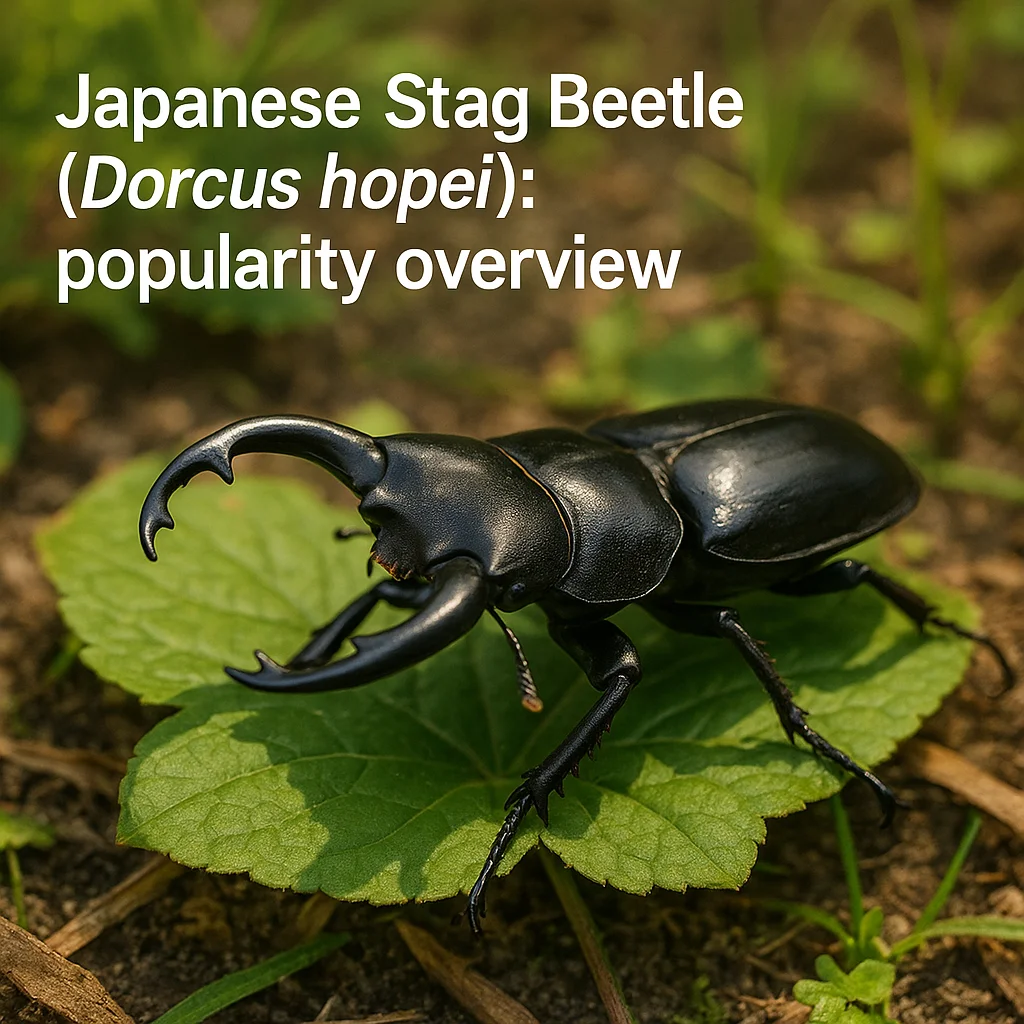
- Common names: Japanese Stag Beetle
- Scientific name: Dorcus hopei
- Insect or not: Insect (invertebrate)
- Order / Family: Coleoptera / Lucanidae
- Typical size range: 4 to 9 cm (adult males, smaller for females)
- Key colors/patterns: Shiny black or dark brown
- Activity: Primarily nocturnal
- Typical habitats: Deciduous forests, especially those with old trees
- Where in the world it occurs: East Asia, particularly Japan
- Seasonality: Mostly visible in summer months
🔍 Identification
The Japanese Stag Beetle is easily recognizable due to its large size and prominent mandibles, particularly in males. Its body shape is elongated and robust with a distinct division between the thorax and the abdomen.
- Body Shape and Silhouette: Elongated with broad mandibles
- Antennae Type: Clubbed antennae
- Wing Features: Elytra (hardened forewings) are smooth and cover the entire abdomen
- Leg Traits and Movement Style: Strong, spiny legs for gripping tree bark
- Look-alikes: Often confused with other stag beetle species, but typically larger and darker in color
- Look for large, pincer-like mandibles
- Glossy, dark exoskeleton
- Robust body with distinctive segmentation
- Strongly clubbed antennae
- Prefers wooded areas
- Nocturnal; active after dusk
- Distinctive termite and log preference
🧠 Basic Body Structure
Like all insects, Dorcus hopei has three main body parts: the head, thorax, and abdomen. It possesses six legs, a key characteristic of insects. The beetle's exoskeleton is a hard protective layer that aids in defense against predators. As an invertebrate, it lacks a backbone and relies on molting to grow. The beetle also has wings protected by hard elytra.
🌍 Habitat & Distribution
The Japanese Stag Beetle thrives in deciduous forests rich in old trees, where it can find ample food and mates. Its preferred microhabitats include under loose bark and inside rotten logs. This beetle is predominantly found in Japan and neighboring regions in East Asia, favoring temperate climates. Habitat changes such as deforestation can significantly reduce its sightings.
📅 Seasonal Appearance & Activity
This beetle is most commonly observed during the warmer months, from late spring to early autumn. Being nocturnal, it is generally active after dusk, especially following warm, humid days, which enhance its visibility.
- Best spotted in summer
- Look for activity at nightfall
- Warm and humid weather increases sightings
- Often noticed after rain
🥚 Reproduction & Egg-Laying
Mating behavior includes males using their large mandibles to fight for females. After mating, females lay eggs in decaying wood, where their larvae can thrive on decomposing material. The exact number of eggs varies, but females typically lay several at a time, ensuring offspring survival.
🌀 Metamorphosis & Life Cycle
Dorcus hopei undergoes complete metamorphosis, which includes four stages: egg, larva, pupa, and adult. The larval stage is the longest, lasting up to two years, during which larvae feed on decaying wood. Pupation occurs within a chamber made from soil, lasting several weeks before emerging as adults. Adult beetles surface in warmer months and focus mainly on reproduction and feeding.
🍽️ Diet & Feeding Behavior
In its larval stage, the Japanese Stag Beetle consumes rotten wood, utilizing strong jaws to grind through the material. As adults, they primarily feed on tree sap and occasionally on ripe fruits. Their feeding behavior highlights their role as both scavengers and decomposers in their ecosystem.
🦉 Predators & Defense
Predators of the Japanese Stag Beetle include birds, small mammals, and larger insects. Defense mechanisms include their hardened exoskeleton and large mandibles, which can deter small predators. Camouflage with their environment minimizes detection.
- Hard exoskeleton provides protection
- Mandibles can be used defensively
- Camouflage with trees
- Mostly active when predators are less present
👥 Social Behavior & Swarms
The Japanese Stag Beetle is primarily solitary except during breeding seasons when males compete for access to females. No evidence suggests that this species forms swarms or migrates over long distances.
🧭 Senses & Communication
Primarily relying on their strong sense of smell, these beetles use pheromones to locate mates. Their vision is adapted for low light, useful for nocturnal activity. Physical combat using mandibles is a form of communication and competition among males.
🌱 Role in the Ecosystem
Japanese Stag Beetles are vital recyclers in forest ecosystems, breaking down decomposing wood and returning nutrients to the soil. By consuming dead and decayed vegetation, they help control forest litter and contribute to nutrient cycling. They might also aid in seed dispersal through fruit consumption.
📉 Population & Conservation Notes
While the Japanese Stag Beetle is relatively common in its native habitats, factors like deforestation and habitat degradation can impact local populations. Preserving woodlands and avoiding pesticides can support their populations.
- Promote native plant growth in gardens
- Avoid using chemical pesticides
- Leave dead wood in forests undisturbed
- Create beetle-friendly habitats by retaining old trees
⚠️ Human Interaction & Safety
This beetle is harmless to humans and does not bite unless provoked. To avoid harm, it is best to observe them without handling. Encouraging respectful observation helps preserve their presence in natural settings.
📌 Summary
- Identify by large mandibles and glossy black color
- Prefers deciduous forests with old trees
- Active mostly during summer nights
- Undergo complete metamorphosis with long larval stage
- Primarily feed on rotten wood and tree sap
- Key role in decomposition and nutrient cycling
- Observed mostly in East Asia, particularly Japan
- Avoids human harm; observation advised over handling