🕷️ Scarab beetle seasonal activity tips
🧾 Quick Facts
Scarab beetles are a fascinating group of insects, renowned for their significant roles in various ecosystems. This field guide profile provides essential information for understanding and observing these intriguing creatures.
- Common names: Scarab beetle, dung beetle (for certain species)
- Scientific name: Family Scarabaeidae, species vary
- Insect Status: They are insects, characterized by their exoskeleton
- Order/Family: Coleoptera/Scarabaeidae
- Typical size range (adult): 0.2 to 4 inches long
- Key colors/patterns: Black, green, brown, metallic sheens
- Activity: Diurnal and nocturnal, depending on species
- Typical habitats: Forests, grasslands, deserts, agricultural areas
- Where in the world it occurs: Global, with higher diversity in tropics
- Seasonality: Most visible in late spring to early fall
🔍 Identification
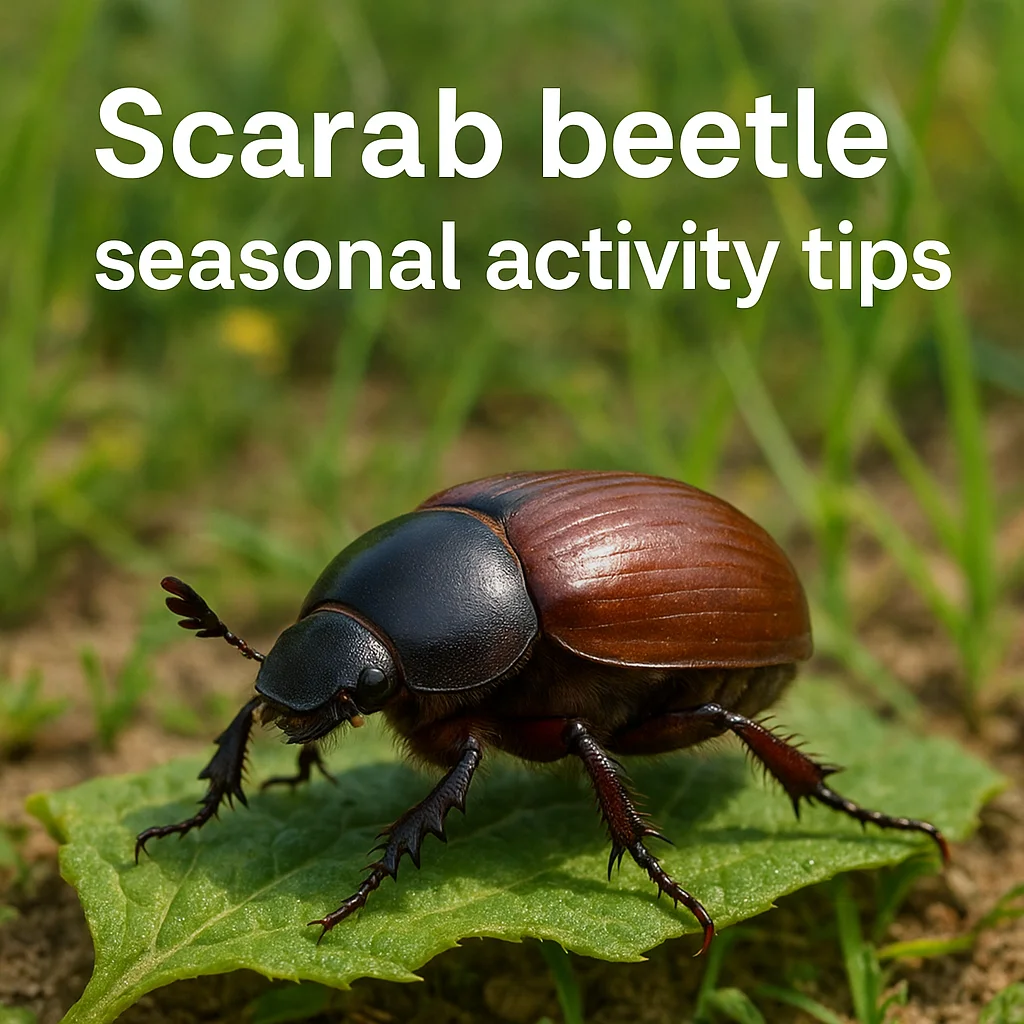
Scarab beetles can be easily recognized in the field by their distinctive body shape and robust build. Their body is often oval-shaped, with a hard shell-like exoskeleton. The antennae of scarab beetles are clubbed with a distinctive lamellate (leaf-like) tip, useful for sensing their environment.
Scarab beetles typically possess powerful hind legs adapted for digging, and they may be seen rolling balls of dung (in the case of dung beetles) or burrowing into soil, depending on the species. The wing covers, or elytra, are usually smooth and may have various textures such as ridges or punctures. They can be confused with similar beetles like ground beetles or click beetles, so look closely for their particular antennae and wing structure.
- Oval, robust body shape
- Lamelliclate or clubbed antennae
- Hard elytra covering wings
- Powerful hind legs for digging
- Often metallic or glossy appearance
- Activity around dung or decaying matter
- Varying sizes from small to relatively large
- Color range from black to vibrant metallic green
🧠 Basic Body Structure
Scarab beetles, like all insects, have a body divided into three main parts: the head, thorax, and abdomen. They have six legs, characteristic of all insect species, and possess a hard exoskeleton that offers protection and support.
As invertebrates, they lack a backbone, unlike vertebrate animals. The exoskeleton not only provides structure but also undergoes molting to accommodate growth. Their wings, if present, are typically protected under hard wing covers. Particularly important for their life cycle, scarab beetles may experience several molts as they develop through larval stages.
🌍 Habitat & Distribution
Scarab beetles are versatile and occupy a variety of environments. They are often found in forests, especially tropical rainforests, where the vegetation and decomposing matter provide ample food resources. Many species inhabit grasslands and agricultural areas, where they play significant roles in recycling nutrients.
Microhabitats are crucial for scarab beetles, with many species dwelling under leaf litter, beneath logs, or in dung piles. Their geographic range is extensive, found on every continent except Antarctica. The areas with the highest diversity are warm, humid regions. Changes in land use and habitat fragmentation can impact their availability and visibility in natural settings.
📅 Seasonal Appearance & Activity
Scarab beetles are more visible during the warmer months, particularly from late spring to early fall. Optimal times for sightings often align with the emergence of adults from pupation, as they seek mates and areas to lay eggs. Diurnal species are active during the daylight hours, while nocturnal species emerge at night.
Weather conditions, such as temperature and humidity, also influence their activity. Rain can stimulate movement in dung beetles that are searching for fresh dung sources.
- Late spring to early fall
- Daytime activity for diurnal species
- Nighttime emergence for nocturnal species
- Post-rain activity increases in some species
- Warm temperatures promote activity
🥚 Reproduction & Egg-Laying
Scarab beetles employ a variety of mating strategies, often involving the use of pheromones to attract mates. Males may engage in physical displays or compete for access to a female.
Egg-laying habits vary greatly; some species lay eggs in dung, others in decaying plant matter or underground. Dung beetles, for example, are known for creating dung balls in which they place their eggs. The number of eggs laid can range from just a few to several dozen, depending on environmental conditions and resource availability.
🌀 Metamorphosis & Life Cycle
Scarab beetles experience complete metamorphosis, undergoing four life stages: egg, larva, pupa, and adult. The larvae, often called grubs, primarily feed on decomposing organic matter and roots, residing in soil or within substrate materials.
The larval stage can last several months, depending on the species, during which they grow and molt multiple times. Pupation occurs within a protected space where the larvae transform into adults. Upon emerging, adults pursue reproduction and feeding, marking the beginning of the next generation.
🍽️ Diet & Feeding Behavior
At different life stages, scarab beetles display diverse feeding behaviors. Larvae primarily feed on organic material, roots, or dung, depending on the species. Adults may feed on a variety of substances including plant material, dung, or nectar.
Scarab beetles have chewing mouthparts that allow them to consume solid foods. They serve important ecological roles as scavengers, decomposers, and in some cases, pollinators, contributing to nutrient recycling and pollination processes.
🦉 Predators & Defense
Natural predators of scarab beetles include birds, mammals, amphibians, and reptiles. Various wasp species may parasitize larval stages. To defend themselves, scarab beetles use several strategies, which might include cryptic coloration for camouflage, hard exoskeletons, and in some cases, the ability to release foul-smelling chemicals.
- Exoskeleton provides physical protection
- Some use camouflage to blend with surroundings
- Release of deterrent chemicals
- Strong, speedy digging ability to escape predators
👥 Social Behavior & Swarms
While many scarab beetles are solitary, some demonstrate interesting social behaviors, particularly in species that roll and bury dung. These beetles may work in pairs to efficiently transport and place their dung balls, indicating a form of cooperation.
Mass emergences can occur in certain species, particularly following rain or during peak breeding times. While not social in the traditional sense, these aggregations could be misinterpreted as social behavior.
🧭 Senses & Communication
Scarab beetles rely heavily on their highly sensitive antennae to detect environmental cues and pheromones, crucial for mating and locating food. Their vision is generally less developed, as they primarily operate in tactile and olfactory environments.
Pheromonal communication is prevalent, allowing them to find mates and coordinate during breeding events. Some beetles may also use vibrations or auditory signals to communicate within their environment.
🌱 Role in the Ecosystem
Scarab beetles play vital roles in ecosystems through pollination, decomposition, and nutrient cycling. Dung beetles, specifically, contribute significantly to the breakdown and recycling of animal waste.
They form mutualistic relationships with certain plants, aiding in seed dispersal or pollination. Although not universally beneficial, their ecological roles are crucial, with some species considered pests due to their feeding habits on crops.
📉 Population & Conservation Notes
Generally, scarab beetles are common and thrive in suitable habitats, although specific populations can be threatened by habitat loss, pesticide use, and climate change. Their presence can indicate ecosystem health due to their role in nutrient cycling.
Conservation status varies by species, with many not assessed. Supporting these creatures involves promoting sustainable land practices and minimizing pesticide use.
- Encourage native plant growth
- Reduce pesticide use in gardens and fields
- Promote leaf litter retention for habitat support
- Maintain healthy natural landscapes
⚠️ Human Interaction & Safety
Scarab beetles generally do not pose a threat to humans. They do not bite or sting, even when handled, but it is always best to observe respectably from a distance to prevent disturbance.
If handling encounters occur, it is advisable to wash hands thoroughly afterward to maintain hygiene. In all cases, promote respect and observation without collecting specimens from wild environments.
📌 Summary
- Distinctive oval, robust body and clubbed antennae
- Found in diverse habitats: forests, grasslands, and more
- Active late spring to early fall, varies by species
- Complete metamorphosis: egg to larva to pupa to adult
- Feed on organic matter, important decomposers
- Predators include birds and mammals; use camouflage for defense
- Essential ecosystem roles: nutrient cycling, pollination
- Conservation through sustainable practices and reduced pesticide use
- Safe to observe, minimal impact on humans