🕷️ Goliath Beetles (Goliathus): African giants
🧾 Quick Facts
Goliath Beetles, scientifically known as the genus Goliathus, are some of the largest insects on the planet, showcasing the magnificence of mother nature's creations. Native to Africa, these beetles are a subject of fascination for both scientists and enthusiasts. Below are some quick facts about them:
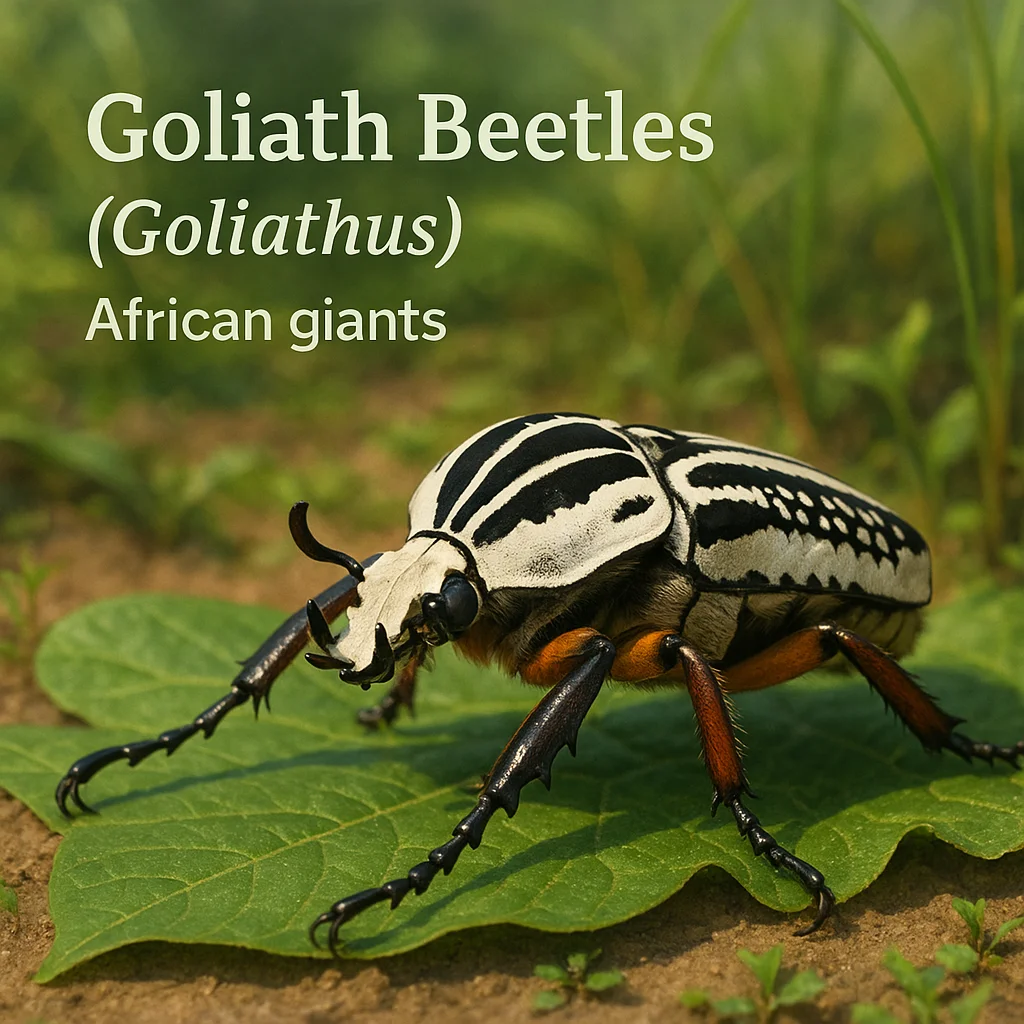
- Common Names: Goliath Beetle
- Scientific Name: Goliathus
- Insect or Not: Yes, they are invertebrates.
- Order / Family: Coleoptera / Scarabaeidae
- Typical Size Range (Adult): 6–11 centimeters (2.4–4.3 inches)
- Key Colors/Patterns: Typically black and white, with some brownish hues in certain species
- Activity: Primarily diurnal
- Typical Habitats: Tropical forests
- Where in the World It Occurs: Central Africa, including regions like the Congo Basin
- Seasonality: Adults are most visible during the wet season
🔍 Identification
Identifying Goliath Beetles in the field involves looking for a combination of size, color patterns, and specific physical traits:
- Body Shape and Silhouette: Broad and heavy-bodies with a hard shelled appearance
- Antennae Type: Clubbed antennae commonly seen in scarab beetles
- Wing Features: Possess two pairs of wings, with the outer pair being hard and protective, called elytra
- Leg Traits and Movement Style: Strong legs adapted for digging, equipped with claws for gripping wood and foliage
- Distinguishing Look-Alikes and Common Confusion: Can be confused with other large beetles, such as the Hercules Beetle, but the Goliath's black and white coloration is distinctive
- Top ID Tips:
- Look for the massive size and hefty body
- Check for distinctive black and white striped pattern on their exoskeleton
- Notice the absence of horns which distinguishes them from related species like the rhinoceros beetle
- Observe during the daytime when they are most active
- Listen for buzzing sound during flight, common in large beetles
- Spot them on tree trunks and wide leaves in tropical forests
🧠 Basic Body Structure
As insects, Goliath Beetles possess the standard body plan common to their kind, segmented into three primary parts:
- The head houses their clubbed antennae and chewing mouthparts
- The thorax connects to the legs and wings
- The abdomen forms the posterior part of their body, shielded by their elytra
- Goliath Beetles, like all insects, have a hard exoskeleton which requires molting for them to grow
- They exhibit a complete life cycle including wings, allowing for flight despite their considerable size
- Being invertebrates, they lack a backbone, contrasting vertebrates like mammals and birds
🌍 Habitat & Distribution
Goliath Beetles are typically found in the rich biodiversity of Central Africa and thrive in environments that offer ample food and security:
- Preferred Environments: These beetles favor tropical forests with plenty of organic material like dead wood and leaf litter
- Microhabitats: They are often seen under tree bark or among decomposing vegetation
- Geographic Range: Mostly confined to regions in Central Africa, specifically areas like the Congo Basin, which provide suitable humidity and warmth
- Changes in habitat due to deforestation can affect local sightings, threatening their populations as natural foliage diminishes
📅 Seasonal Appearance & Activity
Seasonal patterns of Goliath Beetles align closely with climatic changes in their native regions:
- Months/Seasons: Most visible during the wet season, when conditions support active foraging and reproduction
- Time of Day: Diurnal, being active and visible during daylight hours
- Weather Influences: Humid and warm weather conditions increase likelihood of sightings as these are optimal for outdoor activities
- Best Time to Spot It:
- Wet season (local variation)
- Mid-morning to afternoon
- After rain when humidity levels rise
- During warmer months
🥚 Reproduction & Egg-Laying
The reproduction behavior of the Goliath Beetle is as majestic as its size:
- Mating Behavior: Males actively court females, engaging in aerial displays and physical contests with other males
- Egg-Laying Places: Females deposit eggs in nutrient-rich soil, often under the protective blanket of leaf litter where larvae will find an abundant food source
- Variability: Egg counts can vary, with some laying up to dozens, depending on environmental factors
🌀 Metamorphosis & Life Cycle
The Goliath Beetle undergoes complete metamorphosis, a journey through distinct life stages:
- Egg Stage: Eggs are securely laid in rich soil; this stage varies due to environmental conditions
- Larval Stage: Grubs that primarily feed on decomposing plant matter to gather energy for their metamorphosis
- Pupal Stage: Larvae develop protective cocoons where they transform, lasting several months
- Adult Stage: Emerges as the impressive adult form, seeking food and mates, with a lifespan extending up to several months in the wild
🍽️ Diet & Feeding Behavior
- What it Eats: Adult beetles primarily consume a diet rich in tree sap and fruits, while larvae feast on decomposing wood material
- Feeding Tools: Possess chewing mouthparts fitted for breaking down plant matter and consuming fruit flesh
- Role: Act as decomposers and, occasionally, pollinators, contributing to the ecological balance by recycling nutrients
🦉 Predators & Defense
Surviving in the wild comes with its fair share of challenges; Goliath Beetles have natural enemies and defense mechanisms:
- Natural Enemies: Include birds, small mammals, and parasitic insects that target larvae and adult beetles alike
- Defense Strategies:
- Armor: Possess a tough exoskeleton that provides physical protection
- Camouflage: Employ coloration that blends with forest environments
- Strength: Use strong legs to escape or avoid predators
- Elusive: Tend to remain still under threat, avoiding detection
- Defense Highlights:
- Tough exoskeleton
- Natural coloration
- Powerful legs
- Elusiveness in foliage
👥 Social Behavior & Swarms
- Despite their size, Goliath Beetles are mostly solitary creatures.
- Social Interactions: Often limited to mating encounters, but males may engage in territorial displays to ward off rivals.
- Lacking communal structures common to species like ants or bees, they tend to live independently without forming large groups or colonies.
🧭 Senses & Communication
- Senses:
- Vision: Strong visual senses despite limited night activity
- Olfactory: Highly developed sense of smell for locating food and recognizing pheromones
- Tactile: Antennae and limbs assist in navigation and environment interaction
- Communication:
- Relies on pheromone signals primarily for mating purposes, allowing them to find each other in the dense forest environment
🌱 Role in the Ecosystem
- Goliath Beetles contribute significantly to their ecosystems:
- As decomposers, they accelerate the decomposition process, returning valuable nutrients to the soil
- They serve as prey for a range of animals, forming an integrated element of the food web
- While they play a smaller role in pollination, their feeding activity on flowers aids in this process
- Their presence indicates a healthy, balanced ecosystem as they require specific conditions to thrive
📉 Population & Conservation Notes
- Goliath Beetles face threats due to habitat loss and environmental changes
- While still common in undisturbed areas, populations can be fragile and local abundance varies based on environmental pressures
- How to Help (Low-Impact):
- Planting native flora that supports insect life
- Reducing pesticide use
- Conserving natural habitats
- Allowing leaf litter and organic matter to accumulate
⚠️ Human Interaction & Safety
- Human Interaction: Generally harmless and do not bite unless provoked
- Should bites/stings occur, wash the area and seek medical advice if symptoms persist
- Observe them respectfully and avoid collecting wild specimens to preserve their natural populations
📌 Summary
- Massive beetles native to Central Africa, distinguished by their size and black and white coloration
- Reside in tropical forests, active during the daytime and most visible in wet conditions
- Undergo complete metamorphosis from egg to adult
- Feed on fruit, tree sap, and decomposing matter, playing key roles as decomposers in their habitat
- Protected by a tough exoskeleton, naturally camouflaged against predators
- Solitary but engage in aggressive encounters during mating seasons
- Key part of the ecosystem, contributing to nutrient cycling and supporting food webs
- Conservation efforts focus on habitat preservation and pesticide reduction
- Non-threatening to humans, advocating respectful and educational observation