🕷️ Rhinoceros Beetles (Dynastinae): horn function
🧾 Quick Facts
Rhinoceros Beetles, belonging to the subfamily Dynastinae, are known for their distinctive horn-like structures on the males. These insects are fascinating not only for their appearance but also for their roles in ecosystems around the world.
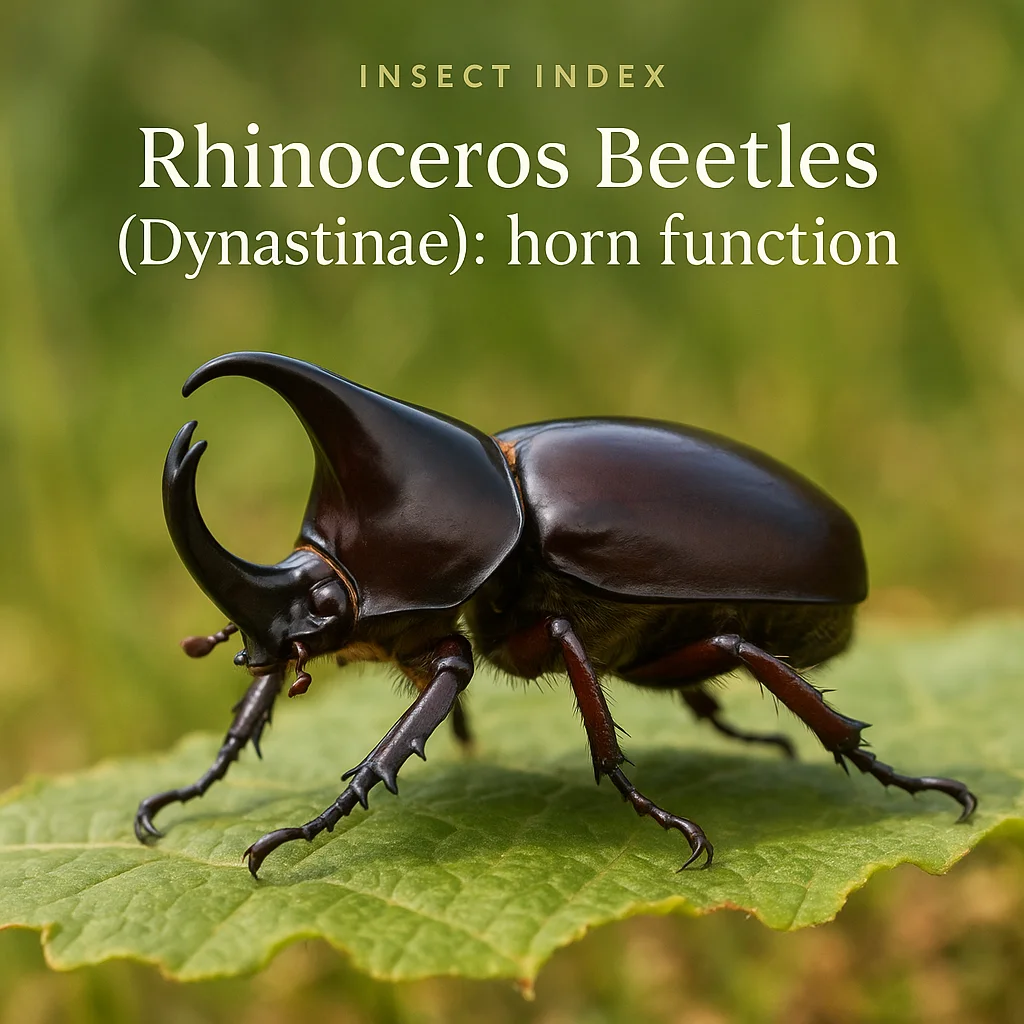
- Common names: Rhinoceros Beetles, Horn Beetles
- Scientific name: Varies; includes various genera such as Oryctes, Xylotrupes
- Insect or not: Yes, they are insects, which are invertebrates
- Order / family: Coleoptera / Scarabaeidae
- Typical size range: Adult size varies, commonly 30–60 mm
- Key colors/patterns: Shiny black, brown, or green with horned males
- Activity: Primarily nocturnal
- Typical habitats: Forests, farmlands, gardens
- Where in the world it occurs: Found on every continent except Antarctica
- Seasonality: Most active in warm months
🔍 Identification
Rhinoceros Beetles are recognized by their large size and horn-like projections on their head and thorax, particularly in males. They have robust bodies and a smooth, shiny exoskeleton. Their antennae are clubbed and often have sensory structures to detect scents. While they possess wings, they are covered by protective elytra.
- Distinctive horn structures, especially in males
- Strong, clawed legs for gripping surfaces
- Smooth, shiny carapace; mostly dark colors
- Large, heavy-bodied silhouette
- Elytra covering membranous flight wings
- Typically mistaken for similar large beetles
- Noticeable mandibles but not aggressive
🧠 Basic Body Structure
As true insects, Rhinoceros Beetles have three main body parts: the head, thorax, and abdomen. They possess six legs adapted for powerful gripping and climbing. Rhinoceros Beetles have an exoskeleton which they periodically shed in a process known as molting. They are invertebrates, meaning they lack a vertebral column.
🌍 Habitat & Distribution
Rhinoceros Beetles are adaptable and thrive in a range of environments, including tropical, subtropical, and temperate forests. They can also be found in grasslands and urban gardens. These beetles often reside in microhabitats such as under bark or in leaf litter, and their presence is influenced by the availability of decaying plant material and trees.
📅 Seasonal Appearance & Activity
These beetles are most visible during the warmer months, primarily summer, when adults emerge to mate and feed. Rhinoceros Beetles are nocturnal, actively engaging in their various activities mostly at night. Mild and humid weather enhances their nocturnal endeavors.
- Best spotted on warm, humid nights
- Peak activity during summer months
- Nocturnal, seen at night
- Prefer environments with ample decaying matter during wet seasons
🥚 Reproduction & Egg-Laying
Mating in Rhinoceros Beetles often involves competition among males, which use their horns for jousting to win over a mate. Females lay their eggs in decaying wood or soil, a nutrient-rich environment for growing larvae. The number of eggs varies by species, but females typically lay batches that range into dozens.
🌀 Metamorphosis & Life Cycle
Rhinoceros Beetles undergo complete metamorphosis, transitioning through stages of egg, larva, pupa, and adult. The larvae, or grubs, are voracious feeders on decaying organic matter, aiding in decomposition. The larval stage can last from months to several years depending on conditions, after which they pupate in a protective cocoon before emerging as adults.
🍽️ Diet & Feeding Behavior
Adults primarily feed on fruit, nectar, and plant sap, using their strong mandibles to access these food sources. Larvae play a critical role in ecosystem decomposition by breaking down decaying wood and plant matter. Their dietary habits categorize them as herbivores and decomposers, contributing to nutrient cycling in their habitats.
🦉 Predators & Defense
Rhinoceros Beetles face predation from birds, mammals, reptiles, and large insects. Their defense strategies include thick, durable exoskeletons that deter predators. When threatened, they might burrow or use their powerful legs to hold onto vegetation tightly.
- Tough carapace protects against predators
- Strong legs used for defensive holding on
- Horns used for male-to-male competition more than defense
- Coloration provides some camouflage in forested areas
👥 Social Behavior & Swarms
Rhinoceros Beetles are generally solitary, with interactions primarily occurring during mating seasons. They do not form colonies or swarms, and males may exhibit territorial behaviors when vying for females. The jousts among males are spectacular displays of their iconic horns.
🧭 Senses & Communication
Rhinoceros Beetles have well-developed senses, particularly smell, which they use for locating food and mates. Their clubbed antennae are specialized for detecting pheromones and environmental cues. Visual cues are less significant, as they are predominantly active at night.
🌱 Role in the Ecosystem
These beetles play multiple roles in their ecosystems. As decomposers, their larvae accelerate nutrient cycling, while adults contribute to pollination in some capacities as they feed on fruits and flowers. They are also an integral part of the food web, providing sustenance for numerous predators.
📉 Population & Conservation Notes
Rhinoceros Beetles are generally abundant, but specific species may face threats due to habitat loss and pesticide use. Conservation efforts focus on habitat protection and reducing chemical usage in agriculture. Awareness and education about their roles in ecosystems are key to their conservation.
- Promote planting native flora to support ecosystems
- Encourage reduction in pesticide use
- Leave leaf litter and decaying wood undisturbed
- Support initiatives for forest conservation
⚠️ Human Interaction & Safety
Rhinoceros Beetles are harmless to humans. They do not bite or sting and are not aggressive. Observers should respect these creatures by avoiding handling and preventing habitat disturbance. If they are found indoors, gently move them outside with care.
📌 Summary
- ID: Notable horns in males, shiny large body
- Habitat: Forested, urban, gardens
- Seasonality: Most visible in warm, humid conditions
- Life Cycle: Complete metamorphosis with significant larval development
- Diet: Adults eat fruit/sap, larvae are decomposers
- Predators: Birds, mammals, reptiles
- Ecology: Decomposition and pollination roles
- Human Notes: Safe to humans, preserve habitats