🕷️ How strong are rhino beetles? (measured facts)
🧾 Quick Facts
Rhino beetles, known for their formidable strength and impressive horns, are fascinating insects that have captured the attention of nature enthusiasts worldwide. Here are some essential facts about these beetles:
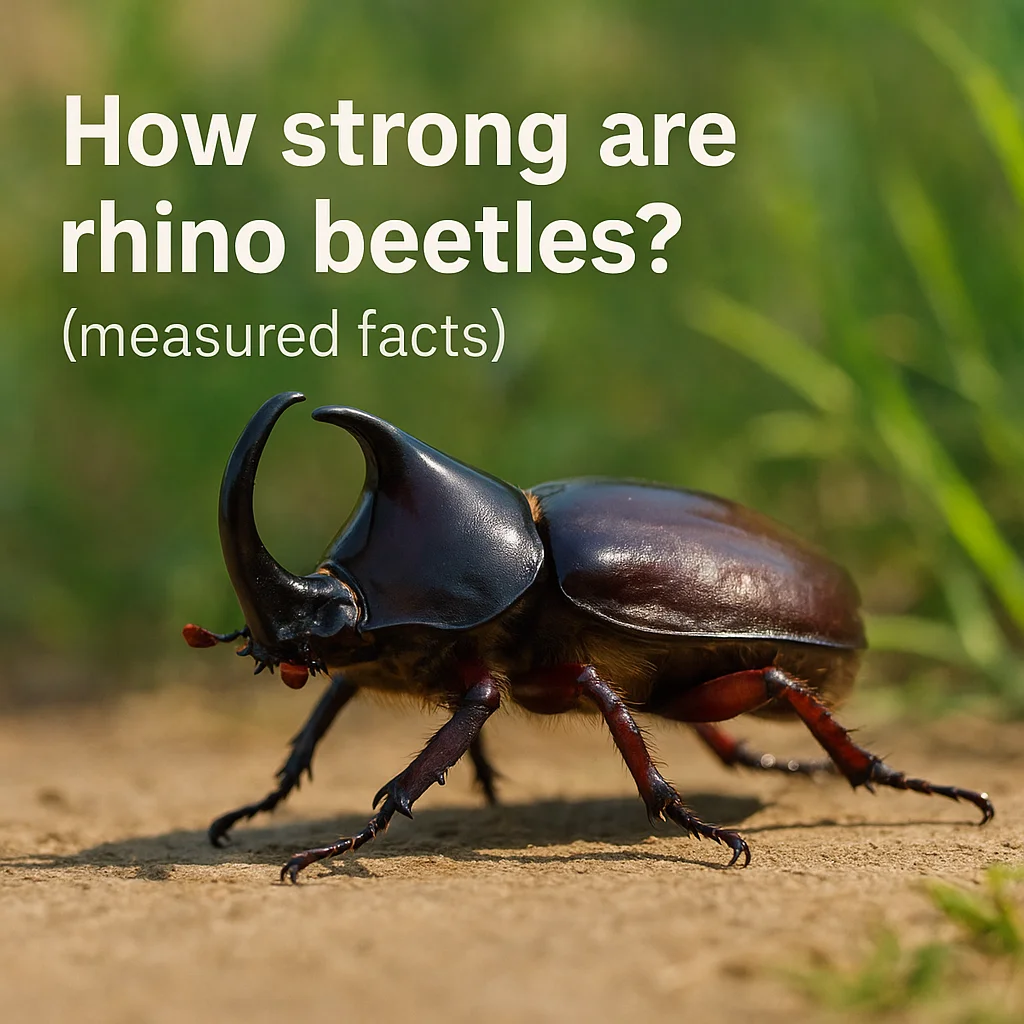
- Common names: Rhino beetle, Hercules beetle (specific species)
- Scientific name: Varies by species (e.g., Dynastinae, Dynastes hercules for the Hercules beetle)
- Insect or not: Yes, they are invertebrates belonging to the insect category.
- Order / family: Coleoptera / Scarabaeidae
- Typical size range (adult): 1.2 to 6.7 inches (3 to 17 cm)
- Key colors/patterns: Brown, black, green; males often have vivid vibrantly colored shells
- Activity: Primarily nocturnal
- Typical habitats: Forests, gardens, woodlands
- Where in the world it occurs: Predominantly found in tropical and subtropical regions
- Seasonality: Most active during warm months; varies by location
🔍 Identification
Identifying rhino beetles in the field can be done by observing their distinctive features. Males are known for their horn-like projections on the head, used for battles with other males. Here’s how you can recognize these beetles:
The body shape is bulky and rounded with a smooth, hard exoskeleton. They possess clubbed antennae which are relatively short and strong.
The wings are encased under hard forewings called elytra, which protect their delicate hind wings used during flight. The legs are stout with strong claws, which help them grasp surfaces and dig into soil and plant matter.
While there are other similar insects, the rhino beetles can be distinguished by their significant horn extensions and size. Some species are occasionally confused with other large beetles such as Goliath beetles; however, the horn structure makes them unique.
- Top ID Tips:
- Look for horn-like projections on males.
- Large, rounded body with shiny exoskeleton.
- Short, clubbed antennae.
- Hard forewings with hidden hind wings for flight.
- Stout legs with strong claws.
- Mostly nocturnal; often found near lights at night.
- Varying colors depending on species.
- Prominent in regions with tropical climates.
- Distinctive sound when flying due to size.
🧠 Basic Body Structure
Understanding the fundamental anatomy of a rhino beetle provides insight into its strength and lifestyle. As insects, rhino beetles have three primary body segments: the head, thorax, and abdomen. Along with these are three pairs of legs, making a total of six legs that equip them well for various movements.
They possess a formidable exoskeleton that provides protection and support and requires molting for growth. Their hard elytra cover the delicate hind wings, which enables flight.
Being invertebrates, they lack a backbone. This category includes all creatures without a vertebral column, including insects like the rhino beetle.
🌍 Habitat & Distribution
Rhino beetles are predominantly found in environments that are rich in flora and dense underbrush. These beetles thrive in habitats ranging from thick forests to urban gardens where decomposing matter is abundant.
They often dwell in microhabitats such as beneath bark, amidst leaf litter, and within rotting logs, which provide nutrients and shelter. The geographic range of rhino beetles spans tropical and subtropical regions across continents such as South America, Southeast Asia, and Africa.
Changes in habitats due to deforestation or urbanization can significantly impact rhino beetle sightings, as they depend heavily on natural shelter and food sources.
📅 Seasonal Appearance & Activity
The presence of rhino beetles is most noticeable during warm seasons when they are highly active. As primarily nocturnal creatures, these beetles are commonly spotted during nighttime, drawn to artificial lights.
Moderate temperatures and humidity levels appear to be favorable for their activity, while extreme weather events may hinder their presence.
- Best Time to Spot It:
- During warm, humid months.
- In the evening, after sunset.
- After periods of rain when the ground is moist.
- Locations with abundant plant matter and wooded areas.
🥚 Reproduction & Egg-Laying
Rhino beetle mating involves remarkable courtship behaviors, especially territorial battles between males to win over females. The interactions are often determined by the size and strength of the horns.
Females typically lay eggs in environments rich with decaying organic matter, like soil with decomposing wood or dense leaf litter. While the exact number of eggs can vary, a single female is capable of laying a significant number to ensure species propagation.
🌀 Metamorphosis & Life Cycle
Rhino beetles undergo complete metamorphosis, which includes the stages of egg, larva, pupa, and adult.
In the larval stage, these beetles are voracious feeders, consuming decomposing plant material and contributing to nutrient cycling. The larval stage can last several months, depending on environmental conditions.
Following this is the pupal stage, where they remain inactive and undergo transformation. This period can last anywhere from a few weeks to several months. Once they reach adulthood, rhino beetles focus on reproduction and continue to complete their life cycle, usually living for a few months.
🍽️ Diet & Feeding Behavior
Rhino beetles have different feeding habits depending on their life stage. Larvae predominantly feed on decaying wood, leaf litter, and organic material, which aids in decomposition processes.
Adult beetles consume fruit, nectar, and sap. These food sources provide the necessary energy for their nightly activities and reproductive endeavors. Rhino beetles are primarily classified as saproxylophagous, contributing importantly to ecological decomposition.
🦉 Predators & Defense
Rhino beetles face predation from various animals such as birds, mammals, reptiles, and arachnids. While these predators pose a threat, rhino beetles have developed numerous defense strategies.
Their hardened exoskeleton acts as a physical barrier, while their size and strength can help in physical encounters. Some species use mimicry and camouflage to avoid being detected by predators.
- Defense Highlights:
- Hardened exoskeleton for protection.
- Mimicry and camouflage in natural habitats.
- Robust legs and offensive horn displays.
- Nocturnal behavior to evade diurnal predators.
👥 Social Behavior & Swarms
Rhino beetles are primarily solitary except during the mating season when males and females converge for reproduction. Males may engage in dashing territorial battles to secure the attention of females.
They do not form swarms or colonies, but during specific seasonal peaks, increased encounters may appear as a semblance of gregarious behavior.
🧭 Senses & Communication
The senses of rhino beetles are well-adapted for their nighttime activity, with strong reliance on smell and touch. They sense environmental cues primarily through their antennae and tactile interactions.
While communication between these beetles is limited, pheromones play a vital role during mating to attract partners. The competition among males for females often involves visual and physical cues rather than auditory signals.
🌱 Role in the Ecosystem
Rhino beetles are essential players in their ecosystems. As decomposers, they break down complex plant polymers, aiding in nutrient cycling and soil health. Their preference for decomposing matter ensures they contribute to ecological balance.
While not directly involved in pollination, the feeding behavior of adults on rotting fruits and sap helps disperse seeds and spores. However, they sometimes impact agriculture by consuming fruit, requiring careful management.
📉 Population & Conservation Notes
While rhino beetles are frequently reported as common in suitable habitats, their populations can be threatened by habitat destruction, pesticide use, and climate change impacts. Even though data is limited, localized conservation efforts can help support healthy populations.
- How to Help (Low-Impact):
- Promote planting of native flora.
- Minimize use of chemical pesticides.
- Conserve leaf litter to allow natural decomposition.
- Support habitat preservation initiatives.
⚠️ Human Interaction & Safety
Rhino beetles are harmless to humans and pets, as they do not bite or sting. They are gentle giants of the beetle world. When interacting with these beetles, it's important to observe respectfully and avoid capturing wild specimens. If handling is necessary, ensure gentle methods to prevent stress or injury to the beetle.
📌 Summary
- Rhino beetles are notable for their strength and horn-like projections.
- These beetles thrive in tropical and subtropical regions, with varied species distribution.
- They experience life stages of complete metamorphosis: egg, larva, pupa, and adult.
- Their diet includes decomposing organic matter and fruits.
- Natural predators include birds, mammals, and reptiles.
- Ecological roles involve decomposition and nutrient cycling.
- Human impacts relate to habitat disturbance and chemical use.
- Safe observation practices are encouraged to appreciate these unique insects.