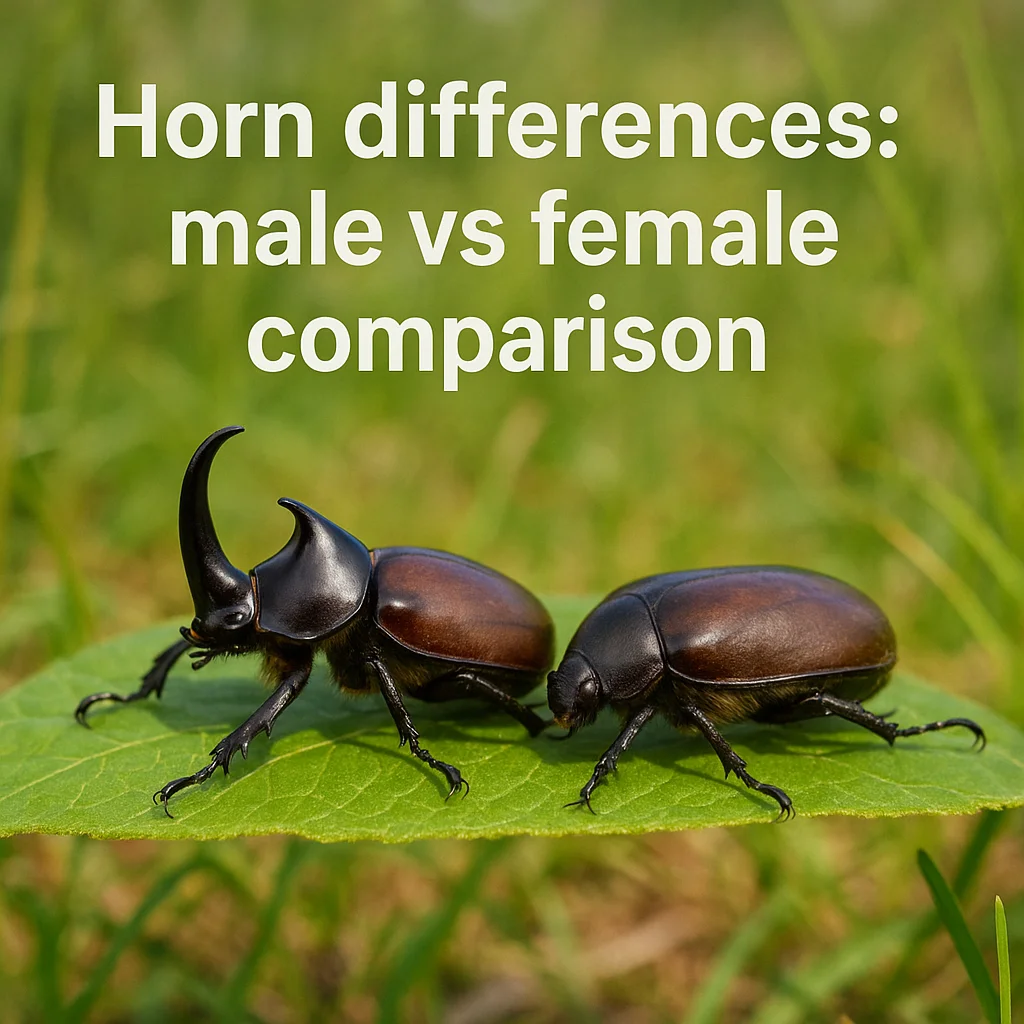
🕷️ Horn differences: male vs female comparison
🧾 Quick Facts
Insects with horn-like structures often exhibit significant sexual dimorphism, where males and females of the same species have noticeable differences in appearance due to these horns. These distinctions are primarily observed in certain beetles and some other arthropods.
- Common names: Horned beetles, Rhinoceros beetles, Stag beetles
- Scientific name: Varies (e.g., Dynastinae, Lucanidae)
- Insect or not: Insect (these are true beetles)
- Order / family: Coleoptera / Various families
- Typical size range: 20 mm to over 100 mm (adult)
- Key colors/patterns: Typically dark with glossy black or brown bodies, some with iridescent colors
- Activity: Mostly nocturnal
- Typical habitats: Forests, gardens, woodlands
- Where in the world it occurs: Globally, especially in tropical regions
- Seasonality: Adults are most visible during the warmer months
🔍 Identification
Horned beetles are easily recognized by their unique body shape, characterized by a robust and armored body and prominent horns on the head or thorax. These horns are typically used in male combat over mates or territory, while females usually have smaller or no horns.
- Body shape and silhouette: Robust with a rounded or oval silhouette.
- Antennae type: Clubbed or fan-like at the tips.
- Wing features: Elytra that cover the wings are often hard and shiny.
- Leg traits and movement style: Strongly built; slow, steady movement.
- Distinguishing look-alikes and common confusion: Often confused with similar beetles but distinguishable by the pronounced size and shape of horns.
- Look for a stocky body with a glossy shell.
- Males will often have more pronounced horns.
- Note the texture of the exoskeleton; it is typically smooth and shiny.
- Check for clubbed antennae at the tips.
- Observe the legs: they are thick and adapted for gripping.
- Distinguish from similarly sized beetles by the horn presence and size.
🧠 Basic Body Structure
Horned beetles, being insects, have a basic body structure consisting of three main parts: the head, thorax, and abdomen. Like all insects, they possess six legs and an exoskeleton that protects their internal organs and provides support. The exoskeleton is periodically shed through molting as they grow. Some of these beetles have well-developed wings for flight covered by protective elytra. They are invertebrate, meaning they lack a backbone.
🌍 Habitat & Distribution
Horned beetles are primarily found in forested areas where they can be closely associated with decomposing wood. They can also be found in urban gardens or parklands where suitable conditions exist. Their geographic range is widespread, extending across many continents, with the highest diversity found in tropical regions. Habitat alterations can affect local populations, changing how frequently they are encountered.
📅 Seasonal Appearance & Activity
The appearance of horned beetles corresponds with warmer months when they emerge as adults. Their activity is mostly nocturnal, with some being seen at dusk or after rain during warmer weather periods. The availability of food resources and suitable mating environments during specific times of the year influences their presence.
- Most active in spring and summer.
- Best seen at night or post-rainfall.
- Mating season peaks when temperatures are highest.
- Rainy seasons enhance their visibility.
- In tropical regions, they may be active year-round.
🥚 Reproduction & Egg-Laying
Horned beetles exhibit unique mating behaviors, often involving aggressive displays by males to win over females or secure territory. Males use their horns to wrestle with rivals. After mating, females seek suitable places to lay their eggs, typically in decaying wood or under bark where larvae can safely develop while feeding on decomposing matter. Egg counts vary with species and environmental conditions.
🌀 Metamorphosis & Life Cycle
Horned beetles undergo complete metamorphosis, which includes egg, larva, pupa, and adult stages. The larvae, often grub-like, feed within the wood where they were deposited, growing over several months. Pupation occurs in a cell made in the wood itself, and the duration may be influenced by environmental conditions. The adult stage is characterized by the emergence into the world, typically happening in the warmer months.
Larvae are primarily wood borers, relying on rotting wood for sustenance. They remain in this stage the longest, sometimes taking years to mature. After pupation, adults may live several months, focusing energy on reproduction and dispersal.
🍽️ Diet & Feeding Behavior
Horned beetle adults have varying diets. Some consume tree sap or fruit, while others may focus on pollen or other plant materials. Larvae are primarily detritivores, feeding on decaying wood. Adult feeding tools vary from chewing mouthparts suited for grinding wood to tools for slicing softer materials.
🦉 Predators & Defense
Natural predators include birds, reptiles, small mammals, and specific predatory insects. Horned beetles have evolved defense strategies such as thick armor, which offers physical protection, and the ability to dig into the earth or wood to escape threats. Some species have a surprising strength and use their hardened body to push away attackers.
- Use thick exoskeletons as armor.
- Burrow to hide from predators.
- Horns used for defense and combat.
- Strength aids in evasion and escape.
👥 Social Behavior & Swarms
Horned beetles are generally solitary. However, during the mating season, they may congregate around resources attractive to mates. The competition among males is pronounced, with territorial behaviors often observed in species with larger horns. Swarming isn't typical behavior; rather, encounters are usually competitive or opportunistic.
🧭 Senses & Communication
These beetles possess acute senses, particularly for smell, which is used to locate food and mates. They communicate primarily through pheromones and sometimes through stridulation — creating sound by rubbing body parts together. Their vision is adequate for night-time navigation, complemented by the sensitive reception of vibrations.
🌱 Role in the Ecosystem
Horned beetles are vital for the decomposition process as larval stages recycle nutrients back into the ecosystem through wood breakdown. They also contribute to the biological control of pest species and pollination, given adults sometimes visit flowers. They have complex relationships with plants and animals, sometimes acting as mutual partners or decomposers.
📉 Population & Conservation Notes
Most species of horned beetles are common, although specific populations can be affected by habitat destruction and changes in climate. The use of pesticides and deforestation poses significant threats to these beetles, compromising their habitat and food sources.
- Encourage native plant diversity.
- Avoid using chemical pesticides.
- Preserve dead trees and logs as habitat.
- Promote awareness and habitat protection.
- Participate in citizen science projects to monitor populations.
⚠️ Human Interaction & Safety
While horned beetles are not known to bite or sting humans, picking up these insects can provoke a defensive response. They are best observed respectfully from a distance, ensuring no harm to them or their habitat. If handling is necessary, avoid prolonged contact and ensure safe release back into their environment.
📌 Summary
- The distinguishing feature is the presence of horns, predominantly in males.
- Found in forests and wooded areas globally, especially tropical zones.
- Nocturnal, with peak activity during warmer months.
- Undergo complete metamorphosis involving egg, larva, pupa, and adult stages.
- Adults feed on sap, fruit, and pollen, while larvae consume decomposing wood.
- Face predation from a variety of animals but have numerous defenses.
- Play crucial roles in ecosystem dynamics through decomposition and nutrient cycling.
- Population management requires habitat preservation and reduced pesticide use.