🕷️ Dynastine Beetle Sizes From Small Horned Beetles To Giants
🧾 Quick Facts
Dynastine beetles, often termed as rhinoceros beetles, are a fascinating group of insects within the scarab family. Renowned for their impressive horns, they range from small to giant sizes. Below are some quick facts about these intriguing beetles:
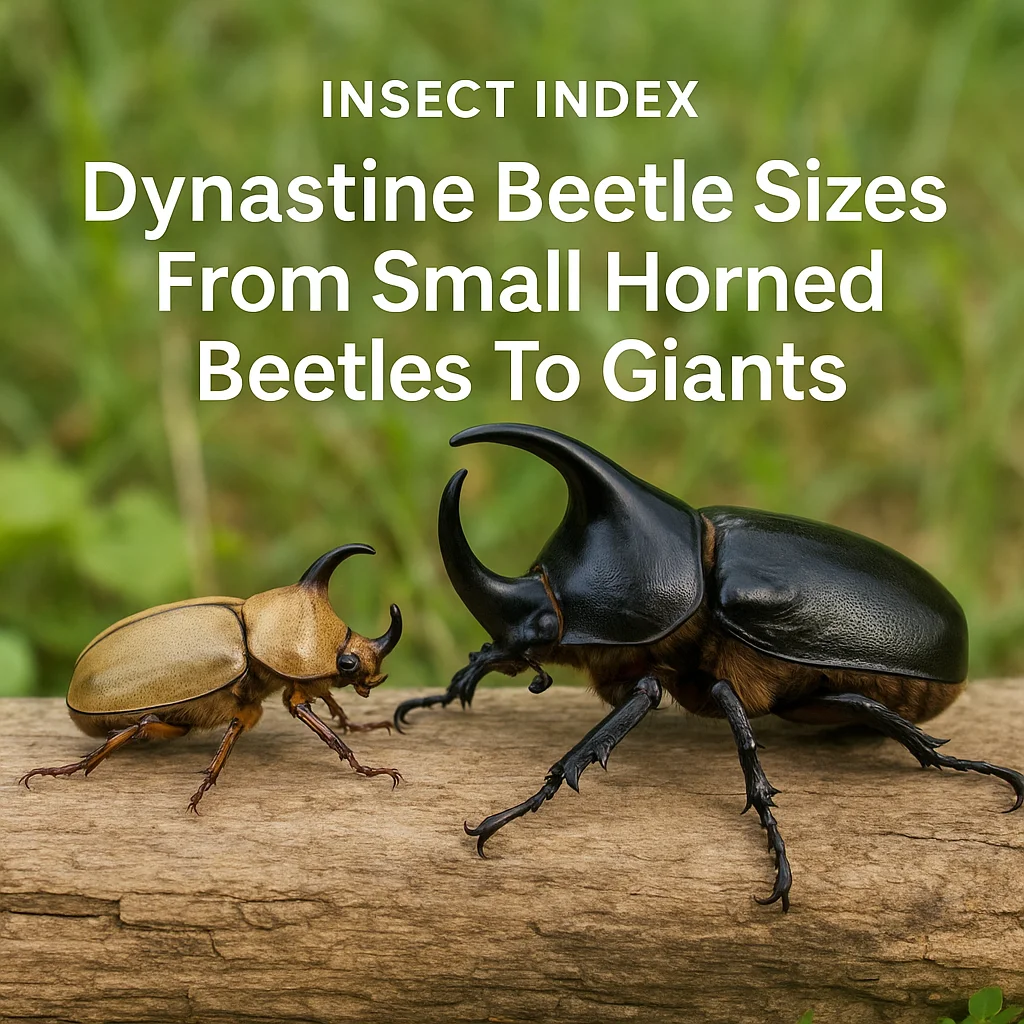
- Common names: Rhinoceros beetle, Hercules beetle
- Scientific name: Varies, common genera include Dynastes, Xyloryctes
- Insect or not: Yes, they are insects and thus invertebrates
- Order / family: Coleoptera / Scarabaeidae
- Typical size range: 0.5 to 6 inches (1.3 to 15 cm) in length
- Key colors/patterns: Usually black, brown, or green with some species having intricate patterns
- Activity: Nocturnal, primarily active at night
- Typical habitats: Forests, gardens, and agricultural areas
- Where in the world it occurs: Found globally in tropical and subtropical regions
- Seasonality: Adults are most visible during warmer months
🔍 Identification
Dynastine beetles can be identified by their robust body shape and distinctive horns, though horn prominence varies between species. They generally have clubbed antennae and well-developed wings. The males are often more prominently horned than females.
- Body shape: Robust, with a domed back and horn(s) on males
- Antennae: Clubbed and specialized for sensory detections
- Wing features: Hardened forewings (elytra) protect the membranous flight wings
- Leg traits: Strong legs adapted for digging into soil and gripping surfaces
- Look-alikes: May be confused with other scarab beetles; distinguishable by horn and large size
🧠 Basic Body Structure
As insects, dynastine beetles have a body divided into three primary sections: the head, thorax, and abdomen. Each has a pair of antennae, six legs, and a protective exoskeleton. Unlike vertebrates, they lack internal bones but molt their exoskeleton as they grow. Wings are present for flight in most adult forms.
They are invertebrate, meaning they do not possess a backbone, and their exoskeleton provides both protection and structural support.
🌍 Habitat & Distribution
Dynastine beetles thrive in diverse habitats including dense forests, agricultural lands, and even urban gardens. They tend to seek moist environments where organic matter is plentiful, often dwelling under logs, in decaying wood, or burrowed in soil.
Geographically, they are distributed across various continents, predominantly within tropical and subtropical regions. Countries such as Brazil, Mexico, and many parts of Southeast Asia are prominent locations for these beetles.
Habitat changes, such as deforestation and urban development, can affect their sightings.
📅 Seasonal Appearance & Activity
These beetles are typically observed during warmer months, with their activity predominantly at night. They are most active in humid and warm environments, which is when mating and foraging occur.
- Best spotted during summer and late spring
- Active during warm, humid nights
- Rainfall can increase activity levels
- Warm climates support the longest periods of activity
🥚 Reproduction & Egg-Laying
The mating behavior of dynastine beetles involves horn displays and sometimes physical battles. Courtship can include the male using his horns to flip the rival. Eggs are usually laid in decaying plant matter or soil, providing a food source for emerging larvae.
Typical egg production and survival can vary, often depending on environmental conditions. Females may lay up to several dozen eggs in conducive habitats.
🌀 Metamorphosis & Life Cycle
Dynastine beetles undergo complete metamorphosis consisting of four stages: egg, larva, pupa, and adult. The larval stage is significant, with larvae feeding on decomposing organic matter for several months to years, depending on species and conditions.
The pupal stage generally occurs underground, where larvae transform into adults. This stage can last a few weeks, resulting in the emergence of fully formed adults ready to reproduce.
🍽️ Diet & Feeding Behavior
In their larval stage, dynastine beetles primarily consume decomposing organic matter, playing a critical role in nutrient recycling within ecosystems. Adults are less voracious, often consuming fruit, nectar, or plant sap when available.
Their feeding tools include robust mandibles suitable for grinding and chewing organic material, rather than piercing-sucking mouthparts.
🦉 Predators & Defense
Natural predators of these beetles include birds, reptiles, and small mammals. Some wasp species can parasitize the larvae. Dynastine beetles have various defense strategies such as their tough exoskeleton for protection, camouflage, and sometimes the ability to emit noises to startle threats.
- Exoskeleton armor provides strong defense
- Coloration helps in blending with natural surroundings
- Night activity reduces exposure to diurnal predators
- Some species can produce hissing sounds
👥 Social Behavior & Swarms
Dynastine beetles are generally solitary creatures, primarily interacting for mating purposes. Males may be territorial when competing for mates but otherwise show little social interaction outside of reproduction.
No significant swarming or migratory behaviors are noted for these beetles.
🧭 Senses & Communication
These beetles rely on their keen sense of smell to locate food and mates, with antennae highly sensitive to pheromones. They are equipped with a decent vision to navigate during nocturnal activities, although much of their communication is through chemical signals rather than visual.
Acoustic signals, such as hissing or stridulation, can also be used as a form of communication or defense.
🌱 Role in the Ecosystem
Dynastine beetles contribute significantly to ecosystem health by decomposing dead plant material, thus recycling nutrients back into the soil. They also aid in pollination of certain plant species by feeding on nectar.
Their larvae, by feeding on decomposing matter, help in reducing plant litter. However, in some agricultural settings, they may become minor pests if populations grow large and target crops.
📉 Population & Conservation Notes
These beetles are commonly encountered in their preferred habitats, although exact population numbers are challenging to determine due to their concealed lifestyles. Threats include habitat destruction, pesticide use, and climate change impacts.
- How to Help (Low-Impact):
- Plant native vegetation
- Avoid chemical pesticides
- Preserve local woodlands
- Maintain natural areas with minimal disturbance
⚠️ Human Interaction & Safety
Dynastine beetles are generally harmless to humans and do not bite or sting. As with observing any wildlife, it's recommended to respect their habitat and avoid handling them to prevent stress or unintended harm.
Should any reaction occur from contact, such as itching, basic care involves gently washing the area with soap and water and seeking professional advice if symptoms are concerning.
📌 Summary
- Recognizable by their large size and horns
- Common in forests and gardens of tropical regions
- Primarily active during warm, humid nights
- Undergo complete metamorphosis with notable larval stages
- Feed on decomposing organic material and nectar
- Numerous natural predators include birds and mammals
- Important ecological roles in decomposition and pollination
- Generally harmless to humans, with minimal interaction noted