🕷️ Longhorn beetles: long antennae ID guide
🧾 Quick Facts
Longhorn beetles are a diverse and fascinating group of beetles known for their extremely long antennae. These beetles are primarily found in wooded areas and are notable for their endless variety of colors and patterns, making them a favorite among insect enthusiasts for field identification.
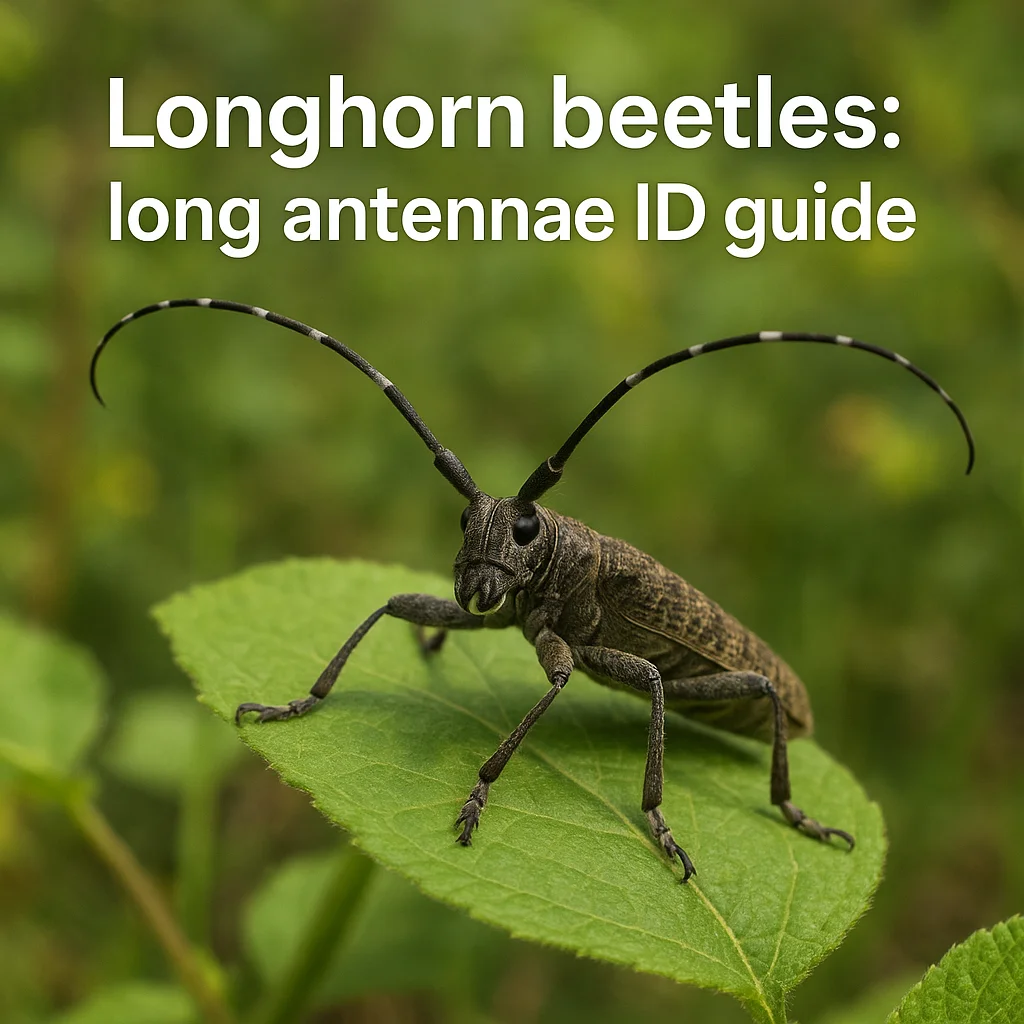
- Common names: Longhorn beetles, Longicorns
- Scientific name: Varies by species, under the family Cerambycidae
- Insect or not: Yes, they are insects (invertebrates)
- Order / Family: Coleoptera / Cerambycidae
- Typical size range (adult): 3 mm to 200 mm (0.1 to 8 inches)
- Key colors/patterns: Diverse, often striped or spotted; colors include brown, black, red, yellow, and metallic hues
- Activity: Primarily diurnal, but some species are nocturnal
- Typical habitats: Woodlands, forests, gardens, areas with wood decay
- Where in the world it occurs: Worldwide, particularly dense in tropical and temperate regions
- Seasonality: Adults most visible in spring and summer months
🔍 Identification
Longhorn beetles can be identified by their elongated bodies and their hallmark antennae, which are often as long as or longer than their bodies. Their body shape is generally cylindrical, contributing to a streamlined silhouette. While their wing covers, called elytra, can vary between species, they are generally smooth and often patterned.
Their antennae are segmented and have a distinctive length and flexibility allowing the beetles to explore their surroundings. They have robust legs adapted to their specific movement styles, mostly designed for climbing and negotiating intricate surfaces.
Longhorn beetles are sometimes confused with other beetles, such as the blister beetles or the click beetles, but their long antennae are a key differentiating factor.
- Top ID Tips:
- Look for distinctly long antennae
- Note the body length being matched or surpassed by antennae length
- Watch for colorful or patterned wing covers
- Observe cylindrical body shape
- Check for preference for wooded areas
- Identify through daytime activity patterns
- Listen for absence of loud sound or stridulation
- Spot them feeding on plant matter or wood
- Look under logs or on tree bark
🧠 Basic Body Structure
As insects, longhorn beetles possess a head, thorax, and abdomen. They have six legs attached to their thorax, eyes for basic vision, and mouthparts specialized for chewing. Their outer body is covered with a hard exoskeleton that serves as armor and must be shed periodically as they grow, a process known as molting.
They have wings, although in some species, they may not be used actively for flying. Longhorn beetles are invertebrates, meaning they do not have a spine, instead relying on their exoskeleton for structural support.
🌍 Habitat & Distribution
Longhorn beetles typically thrive in habitats rich in dying or decaying wood, such as forests, woodlands, and sometimes gardens with ample tree coverage. They can also be found in man-made environments like wooden structures or fence posts, where larvae can feed on timber.
Their distribution is global, with different species adapted to specific temperate and tropical climates. Changing habitats due to deforestation or urban development have affected their sightings, often reducing populations in some regions while increasing presence in others due to habitat loss elsewhere.
📅 Seasonal Appearance & Activity
The best time to observe longhorn beetles is during the warmer seasons. Their activity periods can vary, with some being more active during the day and others at night, depending greatly on the species and environmental conditions.
Weather can influence their activity, with many species preferring warm, dry days. Humid, rainy conditions may drive some species to seek shelter and reduce visibility.
- Best Time to Spot It:
- Late spring to early summer months
- Warm, sunny days
- Mild, dry evenings
- Post-rain humidity bursts
🥚 Reproduction & Egg-Laying
When it comes to reproduction, longhorn beetles engage in diverse behaviors. Males may produce pheromones to attract females for mating. After mating, females typically lay eggs in or on wood, depending on the species, taking advantage of the nutrients for their developing larvae.
The number of eggs varies based on the beetle's species, environmental conditions, and how well resources can support their development.
🌀 Metamorphosis & Life Cycle
Longhorn beetles undergo complete metamorphosis, which includes four distinct stages: egg, larva, pupa, and adult. The egg stage, laid on wood, leads to larvae hatching and boring into the wood, feeding on the material for sustenance.
Larval stage durations can vary, often lasting several months to years, depending on the environmental conditions and resource availability. The pupation phase commonly happens within the wood, and after several weeks to months, adult beetles emerge, ready to continue the cycle.
🍽️ Diet & Feeding Behavior
Longhorn beetles, depending on their life stage, primarily consume plant material. Larvae focus on wood, decomposing it as a means to extract necessary nutrients. Their mouthparts are suited to chewing, making wood an ideal food source.
As adults, their diets may diversify somewhat; they might consume nectar, pollen, or other plant-based materials, contributing to their roles in pollination.
🦉 Predators & Defense
Longhorn beetles face numerous natural predators, including birds, mammals, reptiles, amphibians, spiders, and parasitoid wasps. Their defenses can range from strong camouflage, blending into the woody environments, to mimicry strategies where they resemble other less palatable species.
Other defense strategies include releasing noxious chemicals that deter predators, utilizing speed to escape threats, and using their hardened exoskeleton as a form of protection.
- Defense Highlights:
- Effective camouflage in wooded environments
- Pheromone-based camouflage adaptations
- Poisonous or distasteful chemical secretions
- Strong exoskeleton armor
👥 Social Behavior & Swarms
Generally solitary, longhorn beetles are not known for social behaviors such as living in colonies or forming swarms. They primarily encounter each other during mating seasons or when resources are scarce. Their interactions are generally limited to reproductive activity, with no roles that would classify them as social insects.
🧭 Senses & Communication
Senses play an integral role in longhorn beetles' survival. Their antennae act as powerful sensory tools detecting pheromones emitted by mates or potential food sources. Vision is relatively simple, focused more on light detection than detailed sight.
Communication among longhorn beetles often hinges on chemical cues like pheromones rather than sounds or physical demonstrations, which are minimal or absent.
🌱 Role in the Ecosystem
Longhorn beetles are valuable to ecological networks as decomposers. By breaking down dead wood, they facilitate nutrient release and circulation within forest ecosystems. Adults that feed on flowers contribute to pollination, assisting in plant reproductive cycles.
Their interaction with plants and their various forms of biological importance continue to have significant roles in maintaining ecological balance and biodiversity.
📉 Population & Conservation Notes
Longhorn beetles are generally common in their suitable habitats; however, some species face threats from habitat loss, introduction of pesticides, and climate change, which can affect their populations. Efforts to conserve forests and reduce chemical inputs can help support their populations by offering more stable and safe environments.
- How to Help (Low-Impact):
- Plant native trees and plants
- Avoid using pesticides
- Maintain and protect dead wood in forests
- Encourage diverse plant habitats
⚠️ Human Interaction & Safety
Interactions with longhorn beetles are generally safe, as they do not bite or sting humans. If handling is necessary, care should be taken not to harm them. If one feels irritation or discomfort following contact, washing the area gently with soap and water can alleviate symptoms.
Observing longhorn beetles in their natural setting fosters respect for wildlife and highlights the importance of their roles in ecosystems.
📌 Summary
- Identified by long antennae and cylindrical bodies
- Found in wooded habitats across the globe
- Active in warmer months, during day or night depending on species
- Complete metamorphosis: egg, larva, pupa, adult stages
- Wood and plant materials as primary food sources
- Facilitate decomposition and pollination in ecosystems
- Camouflage and deterrent chemicals for defense
- Conservation through habitat maintenance and reducing pesticides